
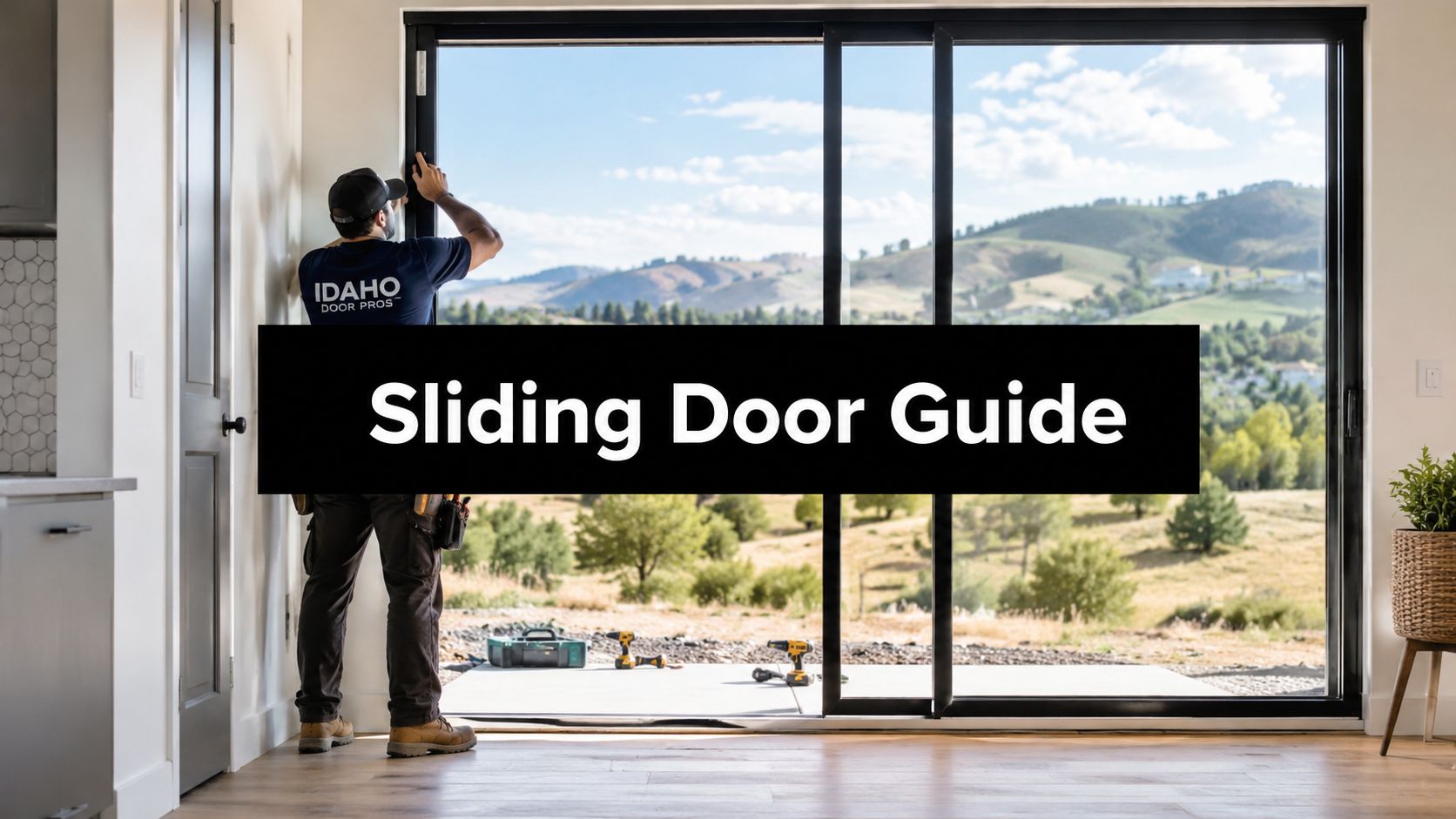
You open the patio door in January and feel that thin strip of cold air hit your ankles. In July, the glass turns that same room into a heat trap by late afternoon. The door sticks on the track, the lock feels loose, and there's haze between the panes that no cleaner will touch. That's usually the moment Treasure Valley homeowners stop asking whether their sliding door is annoying and start asking whether it's still worth keeping.
A good sliding door should do three things well in Boise, Meridian, Eagle, Nampa, and the rest of the valley. It should move smoothly, seal tightly, and give you the view you bought the house for. When one of those fails, comfort drops fast. When two or three fail at once, replacement usually makes more sense than another round of patchwork repairs.
Table of Contents
- Is It Time to Replace Your Sliding Door
- Choosing the Best Door for the Treasure Valley Climate
- Budgeting and Planning Your Replacement Project
- The Professional Measurement and Installation Process
- Post-Installation Care and Warranty Protection
- Frequently Asked Questions About Door Replacement
- How long does sliding door replacement usually take
- Do I need HOA approval
- What's usually covered under a lifetime labor warranty
- Should I replace windows at the same time
- What are homeowners choosing now
- Is sliding door replacement in Treasure Valley worth it if my old door still opens
- What should I ask during an estimate
Is It Time to Replace Your Sliding Door
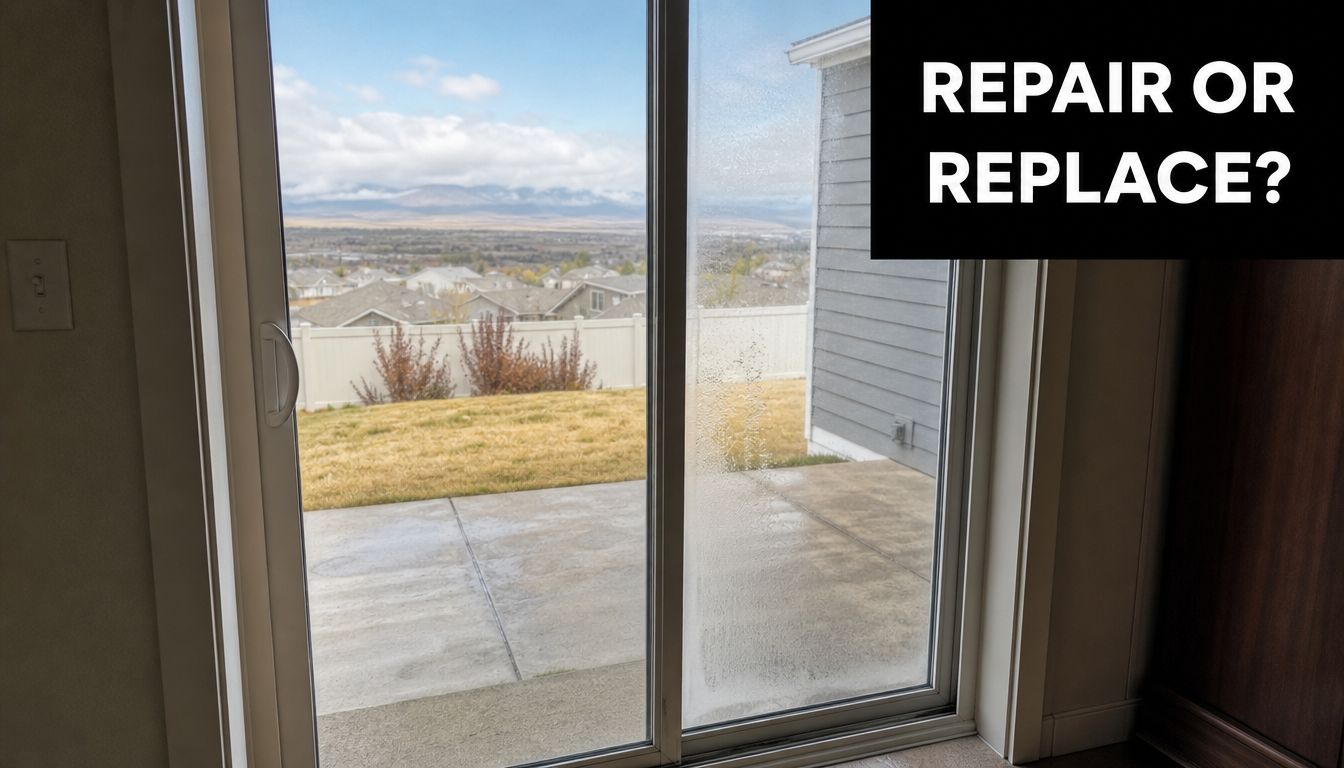
Waiting too long often occurs because the decline is gradual. The rollers wear out, so the panel gets harder to move. The weatherstrip starts leaking air, so the room near the door feels colder in winter and hotter in summer. Then the insulated glass seal fails, moisture gets trapped between panes, and you lose both clarity and performance.
What usually fails first
In older patio doors around the Treasure Valley, I usually see the same trouble spots:
- Rollers and track wear: The panel drags, jumps, or takes a shoulder shove to open.
- Seal failure in the glass: You see fog or mineral-looking haze between panes.
- Frame movement or damage: Corners separate, the threshold softens, or the lock no longer lines up cleanly.
- Drafts at the meeting rails: You feel moving air even when the door is shut and locked.
Some of these problems can be repaired. Some can't be repaired well enough to justify the money. That difference matters.
A practical repair versus replace rule
There's a straightforward benchmark homeowners can use. According to this repair-or-replace framework for sliding glass doors, Boise repair costs average $225 to $326, and if repair costs exceed 50% of replacement cost, replacement is the smarter long-term investment. The same guidance notes that doors over 20 years old are almost always better to replace because their energy performance is outdated.
That lines up with what works in the field. If a door is relatively young and the problem is isolated, such as worn rollers or minor hardware trouble, repair can be a reasonable move. If the door is old, fogged, drafty, hard to lock, and showing frame wear, repair turns into a money trap.
Practical rule: If you're fixing operation, glass clarity, air leakage, and security at the same time, you're usually paying to keep an obsolete unit alive.
A quick way to think through the decision is this table:
| Condition | Usually worth repairing | Usually worth replacing |
|---|---|---|
| Door age | Newer unit with isolated issue | Older unit with multiple failures |
| Operation | Minor roller or hardware issue | Persistent sticking after prior repairs |
| Glass | Clear insulated glass | Fogged panes with seal failure |
| Frame | Structurally sound | Soft, damaged, warped, or out of square |
| Comfort | No major drafts | Noticeable hot and cold spots nearby |
For homeowners focused on sliding door replacement in Treasure Valley, the biggest mistake isn't replacing too early. It's sinking repair money into a door that still leaves the room uncomfortable, the view cloudy, and the lock questionable.
Choosing the Best Door for the Treasure Valley Climate
Treasure Valley weather punishes average doors. Winter cold exposes weak glass packages and sloppy seals. Summer sun bakes west-facing openings. Spring wind finds every gap. Fall is usually when homeowners finally notice how much the old door has been working against the house.
What works in Idaho weather
Material choice matters, but not every material handles temperature swings the same way. In this region, homeowners usually get the best long-term results from vinyl with reinforced construction or fiberglass. Those options hold up well, stay dimensionally stable, and help maintain a dependable seal through changing seasons.
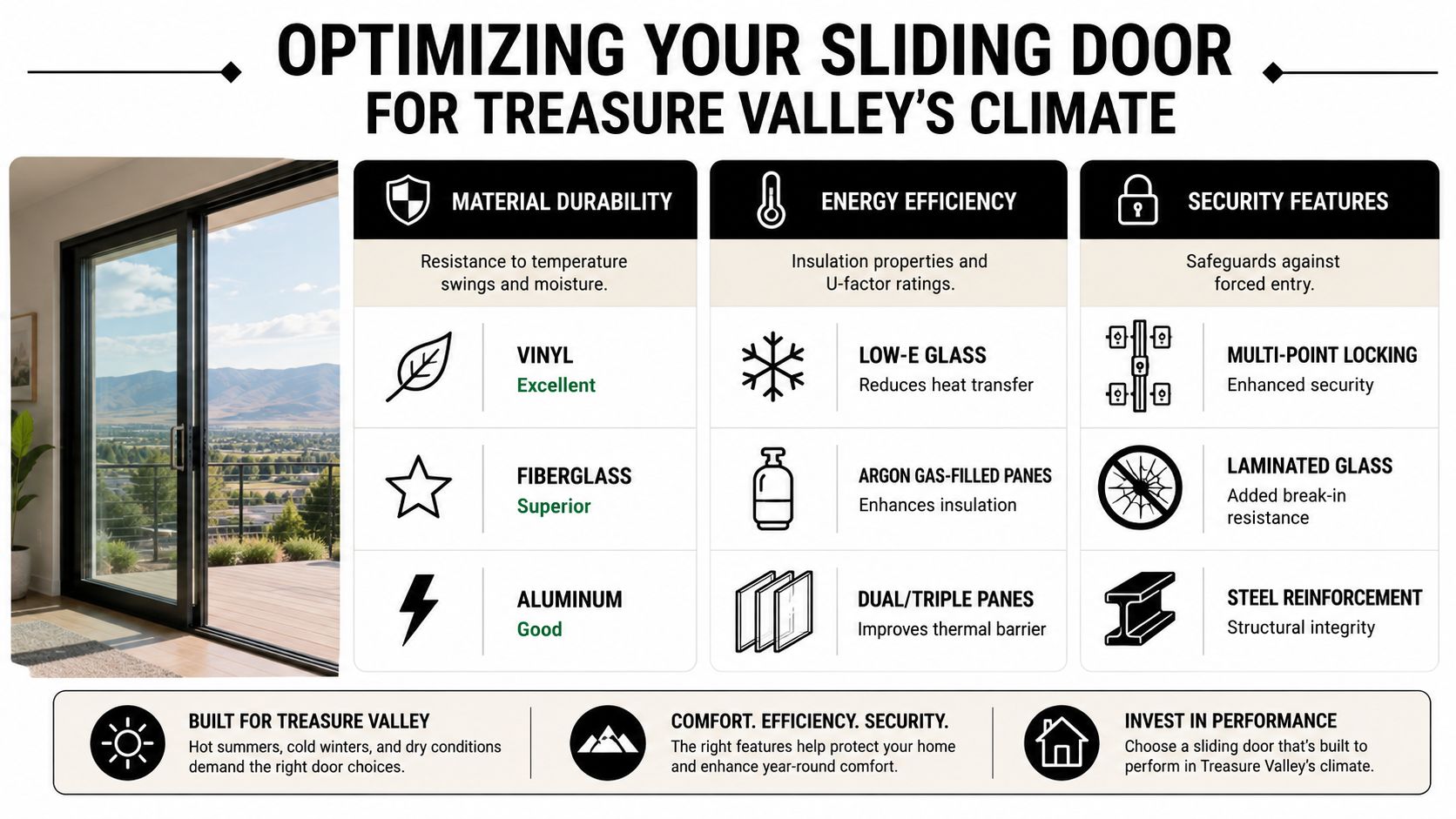
Aluminum can still have a place in some designs, especially when sightlines are a priority, but it's not where I'd start for a homeowner who wants comfort first. Wood looks great, but it demands more vigilance around moisture, finish maintenance, and long-term movement. For most Idaho households, performance wins over romance.
A door that fits the climate also needs the right frame details. Slim narrowline frames preserve the foothill view. Composite-reinforced sashes help control flex. A true sloped sill helps manage drainage instead of letting water sit where it shouldn't.
Glass package matters more than most homeowners think
The glass package is where comfort is won or lost. If you want a door that feels better in January and doesn't cook the room in August, look closely at Low-E coatings, Argon gas fills, and the overall U-factor.
According to this ENERGY STAR 7.0 performance reference for Idaho conditions, the highest energy efficiency rating in a cold climate like Idaho requires a U-factor of 0.20 or lower, and that level is achievable with upgrades such as ClimaTech Low-E coatings and Argon gas fills.
That sounds technical, but its practical effect is simple:
- Lower heat transfer: The room near the door stays more usable through all four seasons.
- Better glass comfort: You don't get that cold-radiating feeling when standing near the panel in winter.
- Less sun punishment: Furnishings and flooring take less abuse from harsh light.
- Improved efficiency: The HVAC system doesn't have to fight a weak opening all day.
A high-performing sliding door should disappear from your attention. No sticking, no draft at your feet, no glaring hot spot by the sofa.
Layout matters too. Some homes really do function better with a hinged patio system, especially where furniture placement or opening width changes how the room works. If you're weighing both options, this guide on sliding door vs. French door choices for your home is a useful comparison.
For most valley homes, though, a quality sliding unit is hard to beat. It protects the view, saves floor space, and handles busy indoor-outdoor traffic better than many homeowners expect, as long as the frame, sill, and glass package are chosen for Idaho rather than for a generic catalog photo.
Budgeting and Planning Your Replacement Project
The right budget starts with a clear understanding of what you're buying. Homeowners get into trouble when they compare a bare-minimum quote to a fully specified replacement and assume the only difference is margin. It usually isn't. Frame quality, glass package, hardware, site conditions, and finish work all move the total.
What drives the total price
There isn't one honest flat price for every project because existing openings vary so much. A straightforward replacement in a sound opening is one kind of job. A replacement that uncovers water damage, out-of-square framing, or trim issues is another.
The main cost drivers are usually:
- Door size and configuration: Larger openings and more glass require more material and heavier-duty components.
- Frame material: Standard vinyl and upgraded fiberglass don't land in the same budget range.
- Glass package: Better thermal performance changes the price, but it also changes daily comfort.
- Hardware and security upgrades: Lock quality matters more on a large glass opening than many people realize.
- Interior and exterior finish work: Trim, touch-up, and condition of the surrounding wall can affect labor.
For broad planning, this cost guide for sliding glass door replacement notes that local Boise repair costs can range from $73 to $595, while national replacement averages are around $2,564, with higher-performance models costing more. It also states that this investment can deliver ROI up to 68% within two years through energy savings and increased home value.
If you want a local starting point for project scope, this page on sliding patio door replacement in Boise gives a good picture of what a full replacement project typically includes.
How to plan the project without surprises
Homeowners usually do best when they approach the project in this order:
- Confirm whether the opening stays the same. A same-size replacement is simpler than resizing.
- Choose performance first, then appearance. Glass package and frame construction affect your daily life more than the hardware finish.
- Ask what trim and threshold work is included. A cheap quote can get expensive when finish details are excluded.
- Talk about payment timing early. Financing can make a better door package more practical than a compromise model you'll regret.
If your installer offers financing through Synchrony or a similar program, that can make it easier to choose the better-performing unit now instead of revisiting the same opening later. A patio door gets used too often, and affects comfort too much, to buy on sticker price alone.
The Professional Measurement and Installation Process
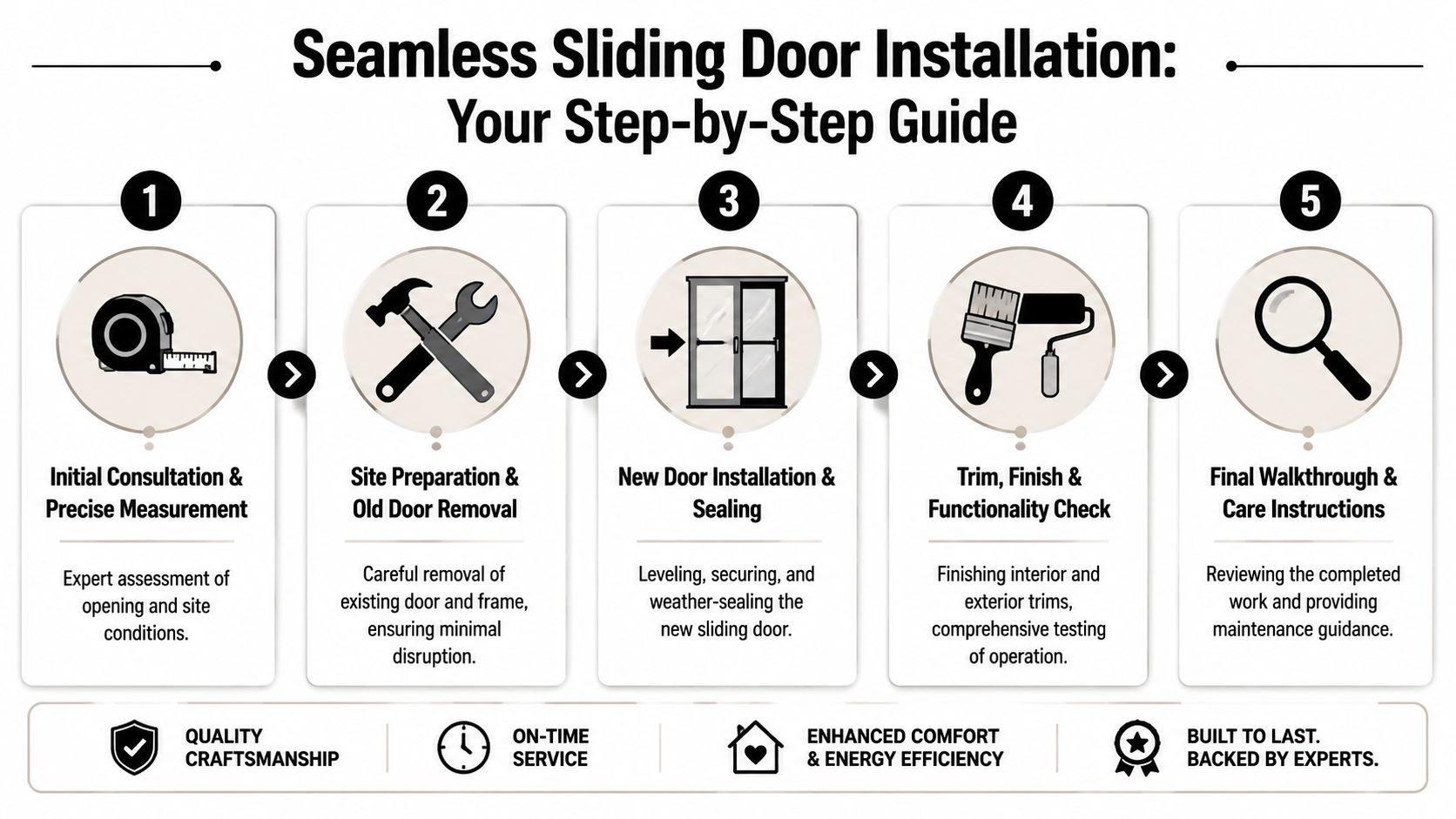
A good installation day looks uneventful to the homeowner. That's the goal. The crew arrives prepared, protects the work area, removes the old unit cleanly, fits the new door without forcing it, seals everything correctly, checks operation, and leaves the site clean. The skill is in all the details you never have to think about afterward.
What a careful installer checks before ordering
The most important work often happens before the new unit is built. Field measurement isn't just width and height. A real installer checks whether the opening is square, whether the sill is level, whether the wall shows signs of previous moisture, and whether the surrounding finish can be preserved or needs replacement.
A lot of DIY plans go sideways when people measure the visible frame instead of the true opening, assume the old threshold tells the whole story, or miss how far the wall has moved over time.
According to a professional installation overview with replacement planning guidance, precision matters because a sliding door has to be aligned, supported, and sealed as a system, not dropped into the hole and foamed until it stops moving.
The best sliding door jobs are boring on day one and still boring ten winters later.
What happens on installation day
A professional crew usually follows a disciplined sequence:
- Protect the interior first: Floors, adjacent trim, and traffic paths need covering before tools come in.
- Remove the old unit carefully: The panel and frame come out without tearing up the surrounding wall if the prep is right.
- Inspect the opening: This is the moment to catch hidden damage, fastener problems, or drainage issues.
- Set and align the new frame: Plumb, level, and square still matter, even if the old house isn't.
- Seal for weather, not just appearance: Air sealing and water management have to work together.
The reason to hire this out is simple. As noted earlier in professional guidance, professional sliding door installations have a success rate over 90% when standardized protocols are followed, while DIY attempts often fail because rough opening dimensions are misjudged or insulation is handled poorly. Those failures show up later as binding panels, leaks, drafts, and lock issues.
One feature I never like to see skipped is proper sill drainage. In Treasure Valley homes, snow, wind-driven rain, irrigation splash, and dust all test the threshold. A true sloped sill helps water move out instead of collecting where rot and staining can start.
A solid installer also checks the panel glide, latch engagement, screen function, and final seal before leaving. If the door doesn't move with one hand when the job is done, it isn't done.
Post-Installation Care and Warranty Protection
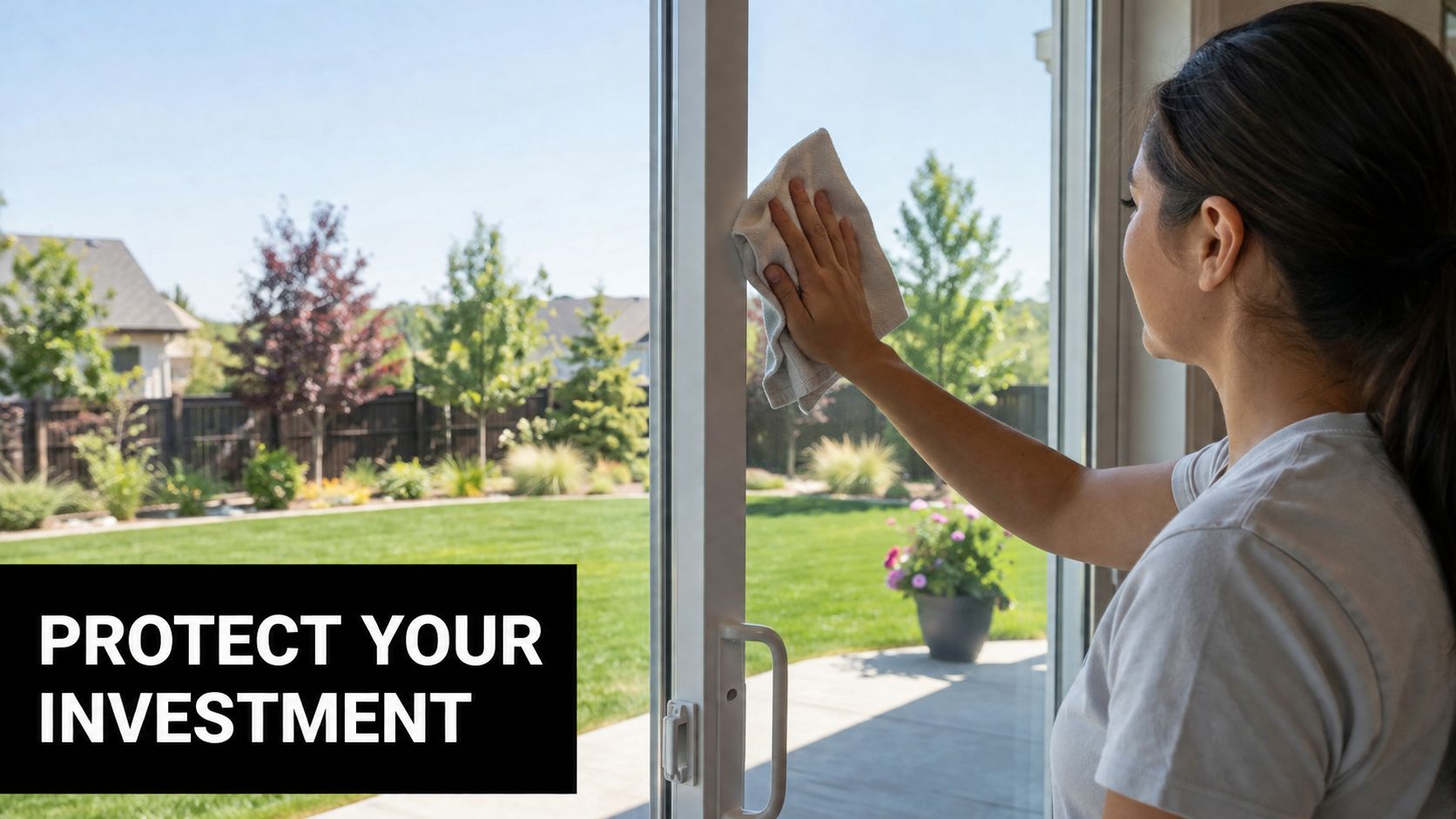
A new patio door doesn't need much maintenance, but the little things matter. Most premature complaints come from neglecting the track, using the wrong cleaner on the glass, or waiting too long to address a small adjustment issue.
Simple maintenance that prevents early problems
Keep the routine basic and consistent:
- Vacuum the track regularly: Grit is the enemy of smooth rollers.
- Wipe the sill and jambs: Dust and pet hair collect fast in busy family homes.
- Clean glass with non-abrasive products: Harsh tools can damage surfaces and leave you with more glare, not less.
- Check the lock engagement occasionally: If it feels different, address it early before it becomes a wear issue.
- Don't ignore drainage paths: If the sill has weep paths, keep them clear.
Most homeowners don't need a complicated maintenance checklist. They need a clean track, clean glass, and the discipline to call about a change in operation while it's still minor.
Why warranty details matter
A strong warranty is more than a brochure line. What matters is whether both product protection and labor protection are clearly defined, and whether the installer will still be reachable if an adjustment or service item comes up later.
Here's what I tell homeowners to verify before they sign:
| Warranty question | Why it matters |
|---|---|
| Is labor covered, or only the door itself? | Installation-related issues don't fix themselves |
| Is glass coverage explained clearly? | Seal failure and clarity matter on large glass units |
| Are hardware and rollers addressed? | Moving parts take the most use |
| What voids coverage? | You should know this before maintenance mistakes happen |
| Who handles service calls? | A local point of contact saves time and frustration |
Worth asking before you buy: If the panel needs adjustment after a season of use, who comes out and what does that service process look like?
That's the difference between buying a door and protecting an investment. A well-installed sliding door should serve reliably for years, but it's still smart to know exactly what backs it up.
Frequently Asked Questions About Door Replacement
How long does sliding door replacement usually take
A standard replacement often takes less time than homeowners expect, especially when the opening size stays the same and the surrounding structure is sound. The variable isn't just labor speed. It's what the crew finds after the old frame comes out. If there's hidden damage, trim complications, or threshold correction needed, the timeline changes for good reasons.
Do I need HOA approval
Sometimes, yes. It depends on whether the replacement changes visible exterior color, grille pattern, frame style, or overall appearance. If your HOA governs exterior finishes, submit product details early. The fastest projects are the ones that clear paperwork before the door arrives.
What's usually covered under a lifetime labor warranty
The key word is usually. Homeowners should ask for plain language, not assumptions. Labor coverage often applies to the workmanship involved in the installation itself, while product warranties address the manufactured components. The important part is knowing who handles service and how issues are documented.
Should I replace windows at the same time
Sometimes that's the smart move, and sometimes it isn't. If the nearby windows are the same age, drafty, fogged, or visually mismatched, bundling them can make sense from both a comfort and appearance standpoint. If the windows are still performing well, there's no need to force a larger project.
What are homeowners choosing now
Modern patio doors are getting more attention because homeowners want larger glass areas, cleaner sightlines, stronger locking systems, and better year-round efficiency. That trend isn't anecdotal. The sliding patio glass door market outlook projects growth from USD 1.7 billion in 2025 to USD 2.5 billion by 2035, a 4.1% CAGR, driven by demand for features such as expansive glass for natural light and secure, low-profile locking systems.
That lines up with what works well in the Treasure Valley. People want the foothill view, better comfort in all four seasons, and a door that doesn't look bulky or dated.
Is sliding door replacement in Treasure Valley worth it if my old door still opens
If the door still opens but leaks air, shows seal failure, struggles to lock, or makes the room uncomfortable, operation alone isn't a good benchmark. A patio door is part of the thermal envelope and part of the security package. If either is underperforming, replacement can still be the better decision.
What should I ask during an estimate
Ask practical questions. Will the installer use custom measurements? How will the sill be flashed and drained? What glass package is included? What trim work is part of the quote? Who handles service after installation? Those answers tell you more than a sales pitch ever will.
If you're weighing sliding door replacement in the Treasure Valley and want the job done with custom measurements, climate-smart glass packages, and meticulous installation, C & C Windows & Doors is the local team to call. They serve homeowners across the valley with free in-home consultations, same-day estimates, financing through Synchrony, and a lifetime limited warranty on products and labor.