

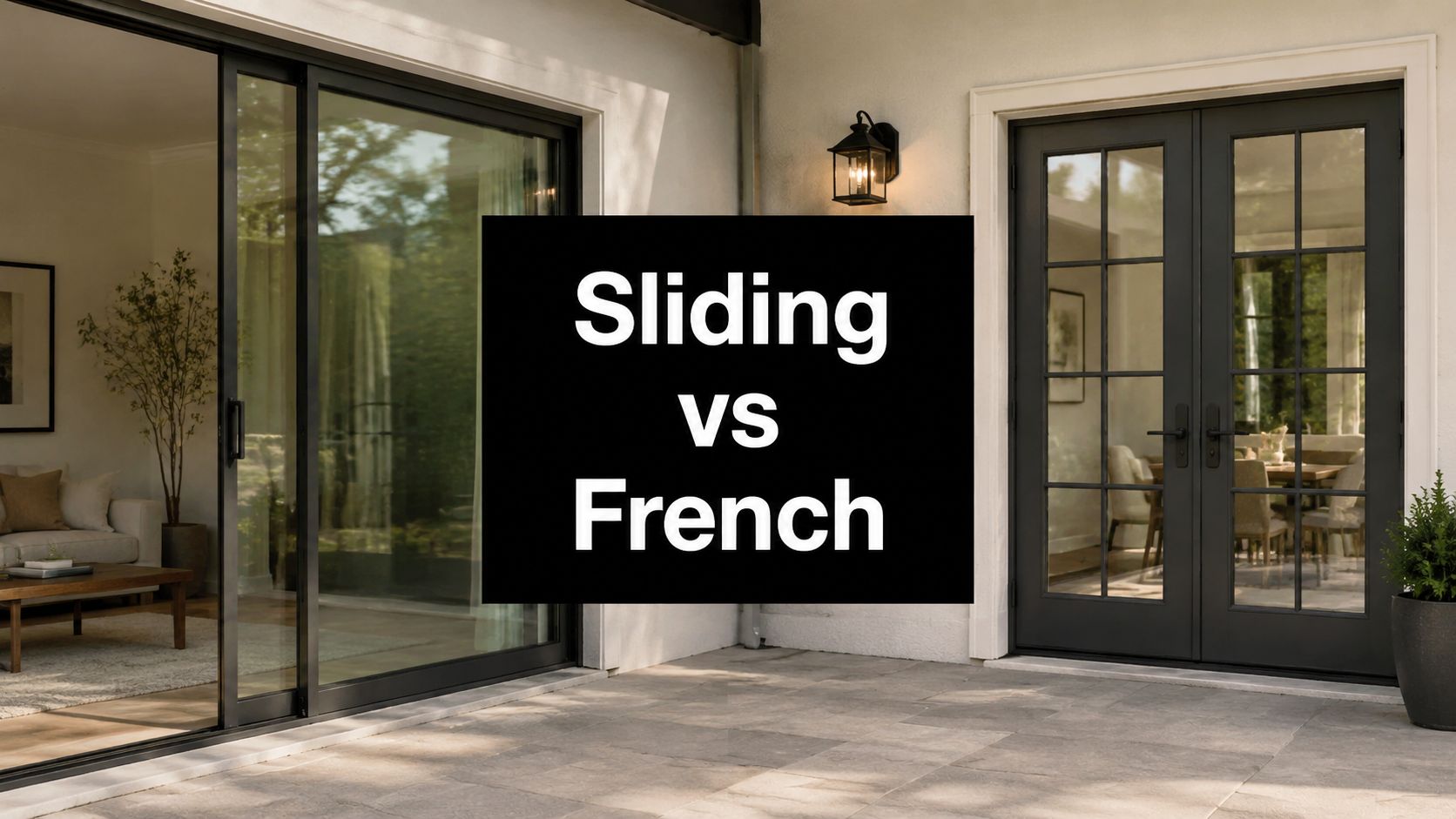
You're probably standing in the exact spot where this decision starts. You look through your current patio door, notice the glare, the draft, the sticky operation, or the way the opening cuts into the room, and you start thinking about what would work better for the way you live.
In the Treasure Valley, that choice isn't just about style. A patio door has to handle hot summer sun, cold winter nights, regular day-to-day traffic, and the way your home connects to a backyard, deck, or covered patio. For some homes, a sliding door is the obvious answer because it saves space and keeps the view open. For others, French doors feel right because they create a more traditional entry and a wider open passage when both panels are in use.
If you've been searching for Sliding door vs French door which is right for your home, the best answer comes from looking at the room, the layout, the climate, and how you use the opening every day.
Table of Contents
- Choosing the Right Patio Door for Your Treasure Valley Lifestyle
- Understanding the Fundamentals Sliding vs French Doors
- How Each Door Impacts Space Flow and Home Layout
- Maximizing Energy Performance for Idaho's Climate
- Comparing Daily Use Security and Maintenance
- Analyzing Cost Aesthetics and Return on Investment
- Your Decision Checklist and Partnering With a Local Expert
Choosing the Right Patio Door for Your Treasure Valley Lifestyle
A lot of homeowners reach this point during a remodel. The kitchen has been updated, the flooring is new, the backyard is finally set up the way they want it, and now the old patio door looks like the weak link. It might still function, but it doesn't fit the room anymore.
That's especially common across Boise, Meridian, Eagle, and the rest of the Treasure Valley, where people want more usable light and a better connection between indoor and outdoor living. A patio door can frame a foothills view, open toward a covered patio, or make a backyard feel like part of the main living space. The right choice changes how the room works every single day.
Early in the decision, it helps to compare the big trade-offs side by side.
| Feature | Sliding Door | French Door |
|---|---|---|
| Space use | No swing path in the room | Needs floor clearance to swing |
| Look | Clean, modern, glass-forward | Classic, architectural, more traditional |
| Access style | One panel typically glides open | Hinged operation, fuller opening feel |
| Best fit | Tight layouts, wide views, patio traffic | Homes with room to spare and a formal look |
| Budget direction | Usually lower installed cost | Usually higher installed cost |
| Everyday feel | Simple, direct, low-profile operation | More dramatic entry and stronger visual statement |
Practical rule: If furniture placement is already tight, start by testing whether you can comfortably give up floor space to a swinging panel. If that answer is no, the shortlist gets much easier.
Treasure Valley homes also deal with strong sun and four-season temperature swings. That means appearance matters, but comfort matters more. The patio door that looks best on paper can become frustrating fast if it creates layout problems, glare issues, or daily operating annoyances.
Understanding the Fundamentals Sliding vs French Doors
At the most basic level, these doors solve the same problem in two very different ways.
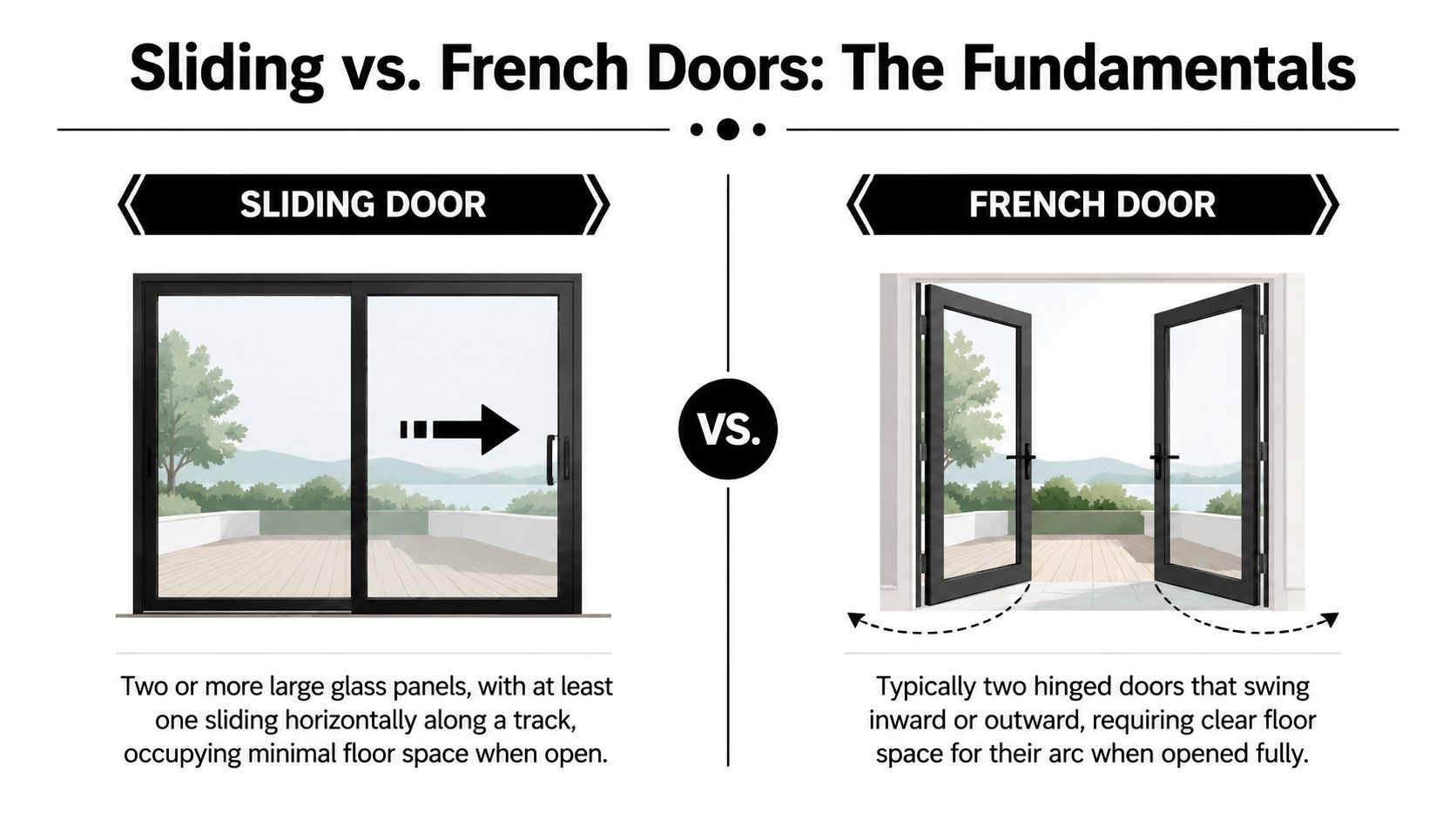
A sliding patio door uses large glass panels, with at least one panel moving horizontally on a track. A French door uses hinged panels that swing inward or outward. That mechanical difference shapes everything else, including appearance, clearance needs, and the way the opening feels in use.
What defines a sliding door
Sliding doors tend to feel visually lighter because so much of what you see is glass. The frame stays relatively quiet, and the opening action is simple. One panel moves, the other typically stays fixed, and the room doesn't have to make space for a door arc.
That's a big reason they've become popular in remodels that aim for a brighter, more open rear elevation. Homeowners who are also comparing overall window and door styles often look at broader design options through a Boise window company before narrowing in on the patio opening itself.
What defines a French door
French doors create a different visual effect. The door itself is more of a design feature. You notice the stiles, rails, hardware, and the fact that the opening is framed by two hinged panels rather than one panel moving behind another.
They usually feel more formal and more traditional. In the right home, that's exactly the point. A French door can make the transition to a patio feel more like an entry than a pass-through.
Sliding doors read as part of the glass wall. French doors read as part of the architecture.
The core differences that matter first
Before getting into climate, maintenance, or cost, most homeowners should answer three simple questions:
- How much glass do you want: Sliding doors usually emphasize view and daylight more strongly.
- How much door movement can the room handle: French doors need a swing path.
- What should the room feel like: Contemporary and sleek, or classic and defined.
Those basics matter because they affect every other decision down the line.
How Each Door Impacts Space Flow and Home Layout
The decision usually becomes clear. Homeowners may start with style, but they usually decide based on how the room functions once the door is installed.
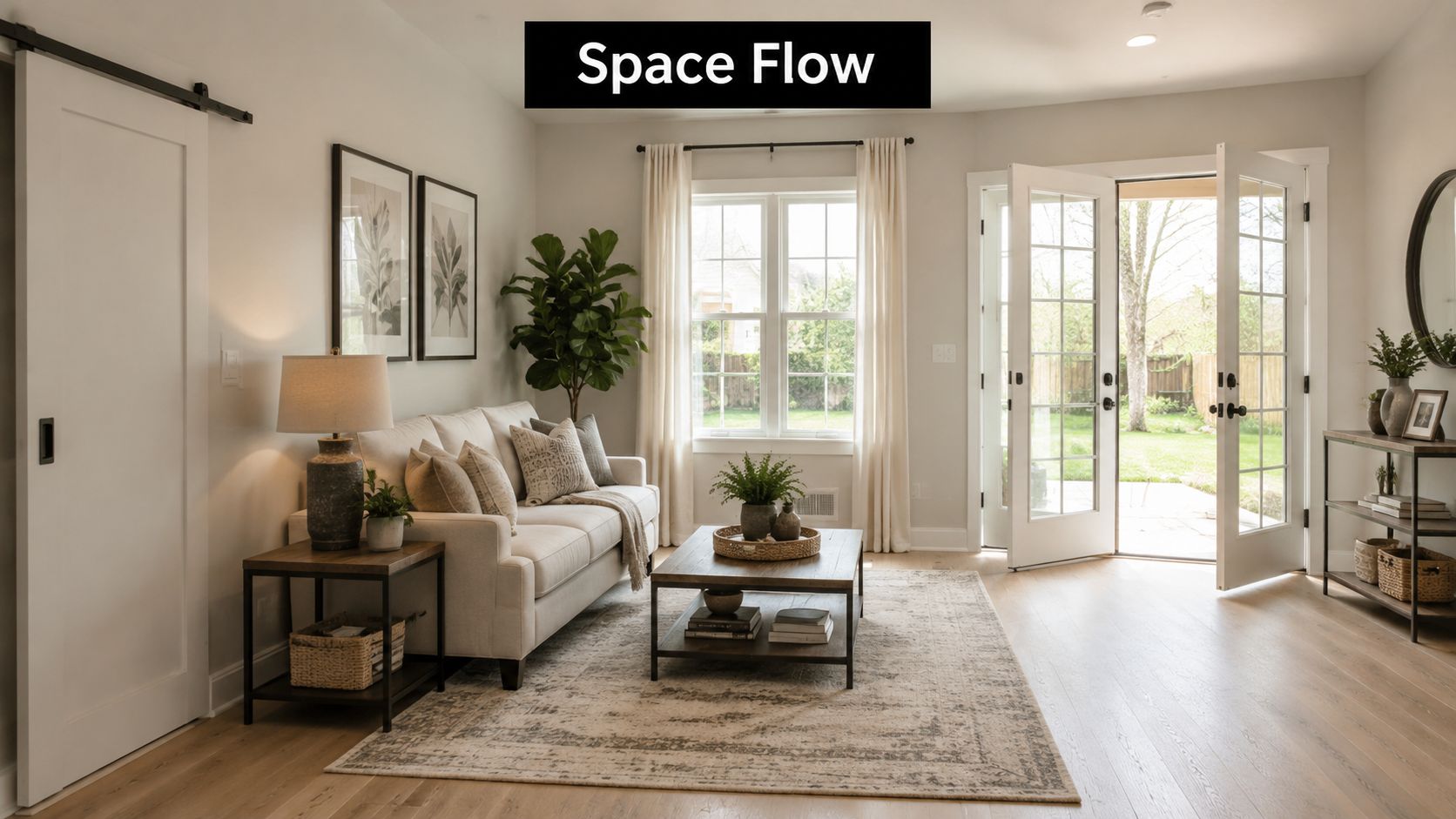
A sliding door is the more space-efficient option because it needs zero swing clearance, while a French door needs clear floor area for the panels to open, as noted in Window World's patio door comparison. That single difference affects furniture placement, traffic flow, and even whether a breakfast table or sectional can stay where it is.
Where sliding doors usually work better
In smaller family rooms, dining areas, and kitchen-adjacent patios, sliding doors tend to create fewer compromises. You can place a chair, sofa, or dining table much closer to the opening without blocking operation. That matters in many Treasure Valley homes where the back of the house carries a lot of daily traffic between the kitchen, patio, grill, and yard.
Sliding systems also handle larger openings. One manufacturer's guidance states French doors are typically used for openings up to 2,400 mm, while sliding doors can accommodate openings up to 13 m wide and use up to 6 panels, compared with the classic 2-panel French-door format, according to Origin's guide to sliding doors vs French doors. If the goal is a broad expanse of glass across the rear of the house, sliding systems make that possible in a way French doors usually don't.
For homeowners exploring local options for this type of project, a focused look at sliding patio door replacement in Boise can help clarify what's practical for an existing opening.
Where French doors make more sense
French doors fit best when the room can afford the swing path. In a larger great room, a dedicated sitting area, or a formal dining space that opens to a patio, the door arc may not interfere with anything important. In those cases, the benefit is the experience of opening the space in a more traditional way.
Some homeowners also like the way French doors turn the patio opening into a design feature rather than a sheet of glass. That works especially well in homes with more classic trim details, divided lites, or a stronger architectural rhythm.
Layout questions worth asking before you choose
Use the room itself as the test.
- Stand where the furniture sits now: If a swing panel would hit a rug edge, table, chair, or traffic lane, don't ignore that.
- Think about daily movement: Kids, pets, groceries, and backyard access all put pressure on a patio door layout.
- Look outside too: A small patio, walkway, or tight deck can make outswing operation awkward, even if the interior has room.
The wrong patio door can make a finished room feel cramped. The right one disappears into the way you live.
Maximizing Energy Performance for Idaho's Climate
A lot of people still assume one style is automatically better for energy efficiency. That isn't how good patio doors work today.
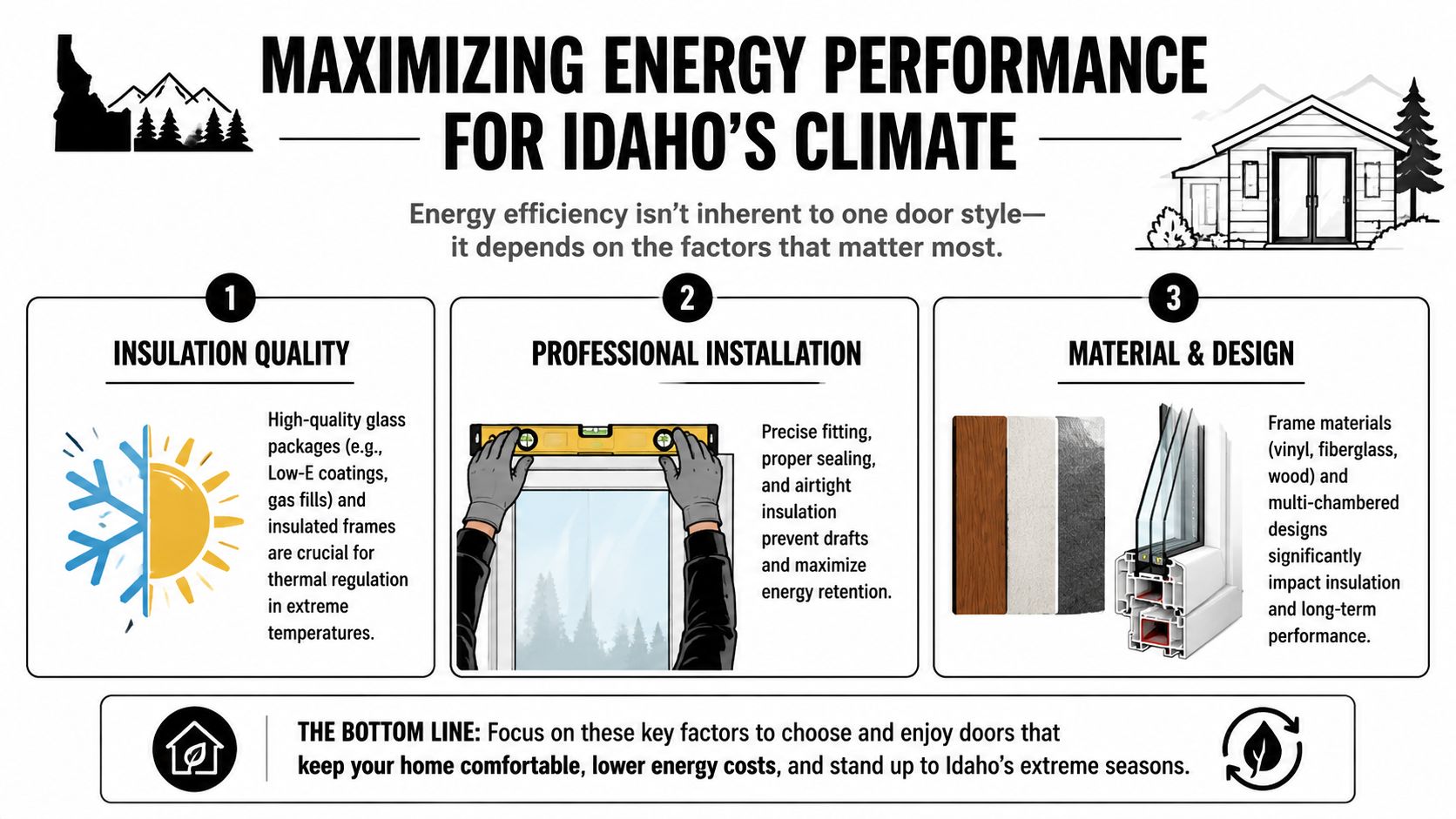
Energy performance depends more on the glazing, frame material, and sealing details than on whether the door is sliding or French. With high-quality weatherstripping and insulating frames, both styles can perform very well for heat loss and noise reduction, according to PGT's look at French doors vs sliding doors.
What matters in a Treasure Valley patio door
In Idaho, summer heat and sun exposure can be just as important as winter cold. A west-facing patio door may deal with intense late-day heat and glare. A north-facing opening may feel easier to manage, but winter comfort still depends on the glass package, the frame, and the quality of the seal.
That's why homeowners should pay close attention to the actual performance package selected for the unit. The frame construction, insulated glass option, and weatherstripping quality do more for comfort than choosing a sliding panel over a hinged one.
A homeowner comparing full replacement options often benefits from reviewing Boise custom windows and doors as part of the same project, since the patio door rarely works in isolation from the rest of the envelope.
Features that usually deserve the closest look
Not every home needs the same setup, but these are the items that deserve real attention in this climate:
- Glass package: Low-E coatings and insulating glass options help manage summer sun and winter temperature transfer.
- Frame design: Better-insulated frames help reduce edge-of-glass discomfort and improve overall feel near the opening.
- Weatherstripping and sealing: Air movement around the perimeter creates comfort complaints long before homeowners think in technical terms.
Comfort is more than utility bills
Homeowners usually notice performance in lived experience first. They feel it when they sit near the door in January. They see it when afternoon sun overheats the room. They hear it when exterior noise comes through more than expected.
A patio door is performing well when you stop thinking about it. No hot spot by the glass. No cold draft at your feet. No room in the house you avoid at certain times of day.
For Treasure Valley homes, the best question isn't “Which style is more efficient?” It's “Which specific door package will keep this room comfortable on this side of this house?”
Comparing Daily Use Security and Maintenance
Once the door is installed, style fades into the background and routine takes over. You open it with an arm full of groceries. Kids run through it to the backyard. The dog noses at the glass. Dust, pollen, and debris build up. That's the true test.
Day-to-day operation
Sliding doors are usually easy to use in a high-traffic area because the motion is direct and contained. You don't need to step back to clear a swing path, and you can often operate the panel with one hand when the track and rollers are in good shape.
French doors create a different experience. The opening feels broader and more open when both panels are engaged, which can be helpful for moving furniture, hosting outside, or if you want the patio to feel less separated from the room. The trade-off is that the swing has to go somewhere, every time.
For households with tighter circulation patterns, sliding operation often feels simpler. In larger homes with a more generous furniture layout, French doors can feel more graceful and less utilitarian.
Security depends on the hardware, not the label
A lot of homeowners still think of sliding doors as the less secure choice because older units built that reputation years ago. Modern patio doors are a different category. Good hardware matters more than the operating style by itself.
Look closely at the locking system, frame strength, alignment, and installation quality. A well-built, properly installed sliding door can be very secure. A well-built French door can be very secure too. Weakness usually comes from low-grade hardware, poor fit, deferred maintenance, or old worn components.
Security problems often start with installation and adjustment, not the idea of a sliding door or a swinging door.
Maintenance habits that match each style
The maintenance profile is different, not necessarily heavier on one side.
- Sliding doors: Tracks need to stay clean. Dust, pet hair, and grit can make a good door feel rough long before anything is broken.
- French doors: Hinges, thresholds, and weatherstripping deserve occasional attention. If alignment drifts, operation can feel stiff or uneven.
- Any material choice: Vinyl and fiberglass tend to ask for less ongoing upkeep than wood, while wood may require more attention to finish and condition over time.
Wind, weather, and everyday wear
In the Treasure Valley, wind exposure matters more than many homeowners expect. A French door that's opened casually on a breezy day can swing harder than intended if it isn't controlled. A sliding door avoids that particular issue because the panel stays on its track.
That doesn't make one universally better. It means the right answer depends on your site, your habits, and how much routine maintenance you're realistically willing to do.
Analyzing Cost Aesthetics and Return on Investment
For many homeowners, the decision often involves preference and budget.
Typical installed price ranges reported in Pittsburgh home-improvement guidance are $5,000–$8,000 for sliding glass doors and $8,000–$15,000 for French doors, with French patio doors typically costing more because of materials, hardware, and installation complexity, according to Energy Swing Windows' comparison of French vs sliding glass doors. That doesn't mean every project lands neatly in those ranges, but it does show the direction of the cost difference.
Why the price gap exists
French doors generally involve more frame and hardware complexity. Hinged operation, paired panels, and the details required to keep the system aligned all contribute to the higher installed cost. Sliding doors use a track-based mechanism that is often simpler in concept, even though the glass units themselves can be substantial.
For homeowners trying to control project spending, sliding doors are usually the more budget-friendly direction. That's often the practical choice when the goal is to replace an aging patio door without expanding the scope of the remodel.
Style value matters too
Cost isn't the whole story because the visual result is very different.
A sliding door usually fits best in homes that lean modern, transitional, or clean-lined. It emphasizes glass, natural light, and a more minimal look. In many remodeled Treasure Valley homes, that aligns well with open-plan living spaces and backyard-facing rooms.
French doors bring a more classic expression. They often feel right in traditional homes, farmhouse-inspired updates, or spaces where the patio opening should read as a formal architectural element rather than a broad glass panel.
Thinking about return in real terms
Return on investment doesn't come from the door style alone. It comes from choosing the door that best fits the home, the floor plan, and the buyer expectations for that property.
A mismatched upgrade can look expensive without adding much practical value. A well-chosen patio door can improve daily function, visual appeal, and comfort all at once. That combination usually ages better than chasing a trend.
Your Decision Checklist and Partnering With a Local Expert
By the time most homeowners compare layout, comfort, operation, and cost, the answer is usually narrower than it seemed at the start.
Choose a sliding door if
A sliding door is usually the better fit if your room is tight, your furniture needs to stay close to the opening, or you want the cleanest possible connection to the backyard view. It's also the stronger choice when the project calls for a wider, glass-heavy opening and a simpler day-to-day traffic pattern.
If your home has a busy kitchen-to-patio route, frequent backyard use, or a modern remodel direction, sliding doors often solve more problems than they create.
Choose a French door if
French doors usually make more sense when you have the floor space to support the swing and you want the patio opening to feel more formal. They also work well when a broader open passage matters more than maximizing glass.
For homeowners who care most about traditional character, visible hardware, and the feeling of opening both panels for gatherings or airflow, French doors can be the right answer.
What to confirm before you sign off
Use this short checklist before making the final call:
- Room clearance: Can the room comfortably handle a swinging panel?
- View priority: Do you want more glass or more architectural presence?
- Climate package: Are you choosing the right glass, frame, and sealing details for your home's exposure?
- Daily habits: Which operation style will feel easiest for your household?
- Budget range: Are you paying for a feature you'll use?
The best patio door isn't the one that wins a showroom comparison. It's the one that fits your room, your climate, and your routine without asking you to work around it.
A patio door replacement is one of those projects where product choice and installation quality have to work together. Even a strong door won't perform the way it should if the opening isn't measured correctly, the fit isn't precise, or the final sealing work is rushed.
If you're ready to sort out the right option for your home, C & C Windows & Doors can help you compare sliding and French patio doors with a local, climate-aware perspective. Their Treasure Valley team provides in-home consultations, custom measurements, meticulous installation, and energy-efficient door options designed for Idaho homes, so you can make the choice with confidence.