
Don't Sign a Contract Until You've Asked These Questions
Choosing to replace your home's windows is a major investment in your property's value, energy efficiency, and daily comfort. If you're sitting at the kitchen table with estimates, product brochures, and a sales pitch still ringing in your ears, you're in the exact spot where smart homeowners slow down and start asking better questions.
In the Treasure Valley, that matters even more. Boise, Meridian, Eagle, Nampa, Caldwell, Kuna, Garden City, and Star all deal with a mix of hot summers, cold winters, freeze-thaw cycles, high altitude, and spring snowmelt that can expose weak installation work fast. A window that looks good on day one can become a draft, leak, or service headache if the contractor cut corners on measuring, sealing, or warranty support.
The difference between a smooth project and an expensive frustration usually comes down to who installs the window, not just which window you buy. A strong contractor brings product knowledge, installation discipline, clear communication, and long-term accountability. The questions below will help you vet that partner properly, compare bids more intelligently, and avoid the common gaps that homeowners only discover after the job is done.
Table of Contents
- 1. Are You Factory-Trained and Licensed for My Region?
- 2. What Is Your Installation Process and Timeline?
- 3. What Warranty Coverage Do You Offer on Products and Labor?
- 4. What Window Materials and Energy-Efficiency Options Do You Recommend?
- 5. Can You Provide References and Examples of Your Previous Work?
- 6. How Do You Handle Custom Measurements and Ensure Proper Fit?
- 7. What Financing Options and Pricing Transparency Do You Provide?
- 8. How Do You Handle Problem-Solving and Communication During and After Installation?
- 8-Point Comparison: Questions for Window Contractors
- Your Partner for a Perfect Window Installation
1. Are You Factory-Trained and Licensed for My Region?
A Boise homeowner hires the cheapest bid in October. By February, the sash sticks, cold air leaks at the corners, and snowmelt has found a path behind the trim. That usually starts with one problem. The installer did not know the product, the climate, or the local requirements.
Ask this first because it filters out weak contractors fast. In the Treasure Valley, window installation has to hold up to freeze-thaw cycles, dry summer heat, high-altitude sun exposure, wind, and spring runoff. A contractor who works here regularly should know how those conditions affect flashing, sealants, frame movement, and long-term operation.
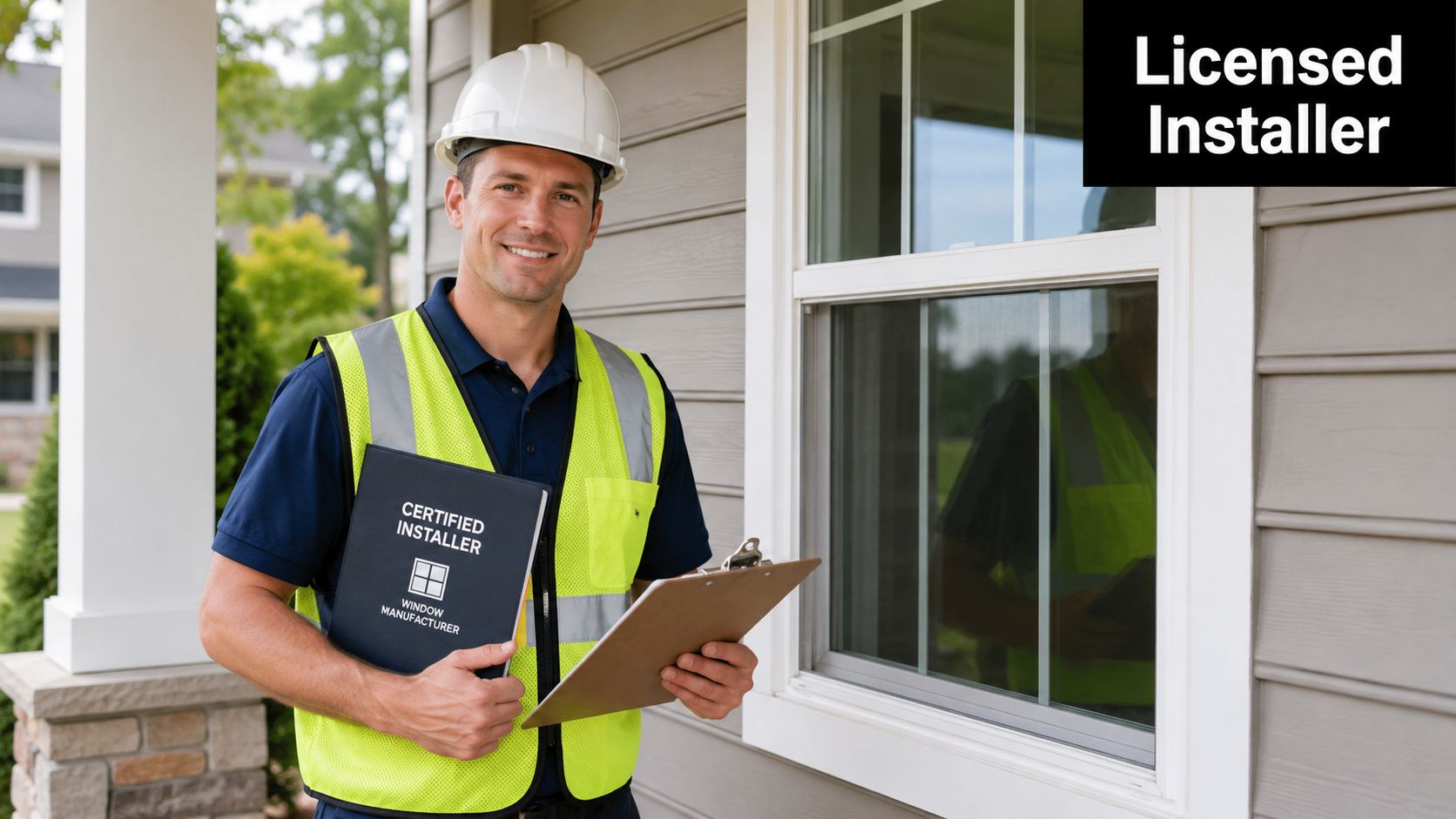
Factory training matters because manufacturers set exact installation standards for their window systems. If the crew skips those details, you risk air leaks, water intrusion, and denied warranty claims. Ask a direct question: "Are your installers factory-trained on the exact brand and series you're quoting for my home in the Treasure Valley?" If they dodge, move on.
Licensing and insurance matter just as much. Before you sign anything, ask for current proof of liability coverage and workers' compensation. Then verify it. The U.S. Small Business Administration advises homeowners to confirm a contractor's license, insurance, and business history before hiring. You are not being difficult. You are protecting your house and your wallet.
A strong answer should include four things:
- Brand-specific training: The crew is trained on the exact window product being installed, not just "experienced with windows."
- Local licensing and insurance: They can send current documentation before asking for a deposit.
- Treasure Valley job history: They install in Boise, Meridian, Eagle, Nampa, and nearby areas often enough to know local conditions and expectations.
- A stable business record: They can clearly explain how long the current company has operated under the same name and who handles service after the job.
Do not accept vague claims like "our guys have been doing this forever." Ask who trained them, who supervises the work, and whether the company uses employees or rotating subcontractors. If they offer same-day estimates, that is fine. Fast quoting is useful. Fast quoting is not proof of skill.
This is also the right moment to ask whether they recommend windows that meet current performance standards for this climate, including options aligned with ENERGY STAR 7.0 expectations for your elevation and exposure. Product performance gets covered in more detail later. Here, you are checking whether the contractor can connect the right product to the right installation method.
If you want to hear how a disciplined company explains the work from measurement through final walkthrough, review what to expect during a professional window installation step by step.
Practical rule: If a contractor will not show credentials before asking for money, end the conversation.
2. What Is Your Installation Process and Timeline?
Good contractors answer this question in a calm, detailed way. Weak contractors stay vague.
You should hear a full sequence: final measurements, product ordering, prep, window removal, opening inspection, installation, insulation, exterior sealing, interior trim work, cleanup, and final walkthrough. If they can't explain the order of work clearly, they probably don't run a disciplined installation process. That's a problem in the Treasure Valley, where weather changes quickly and exposed openings need to be protected properly.
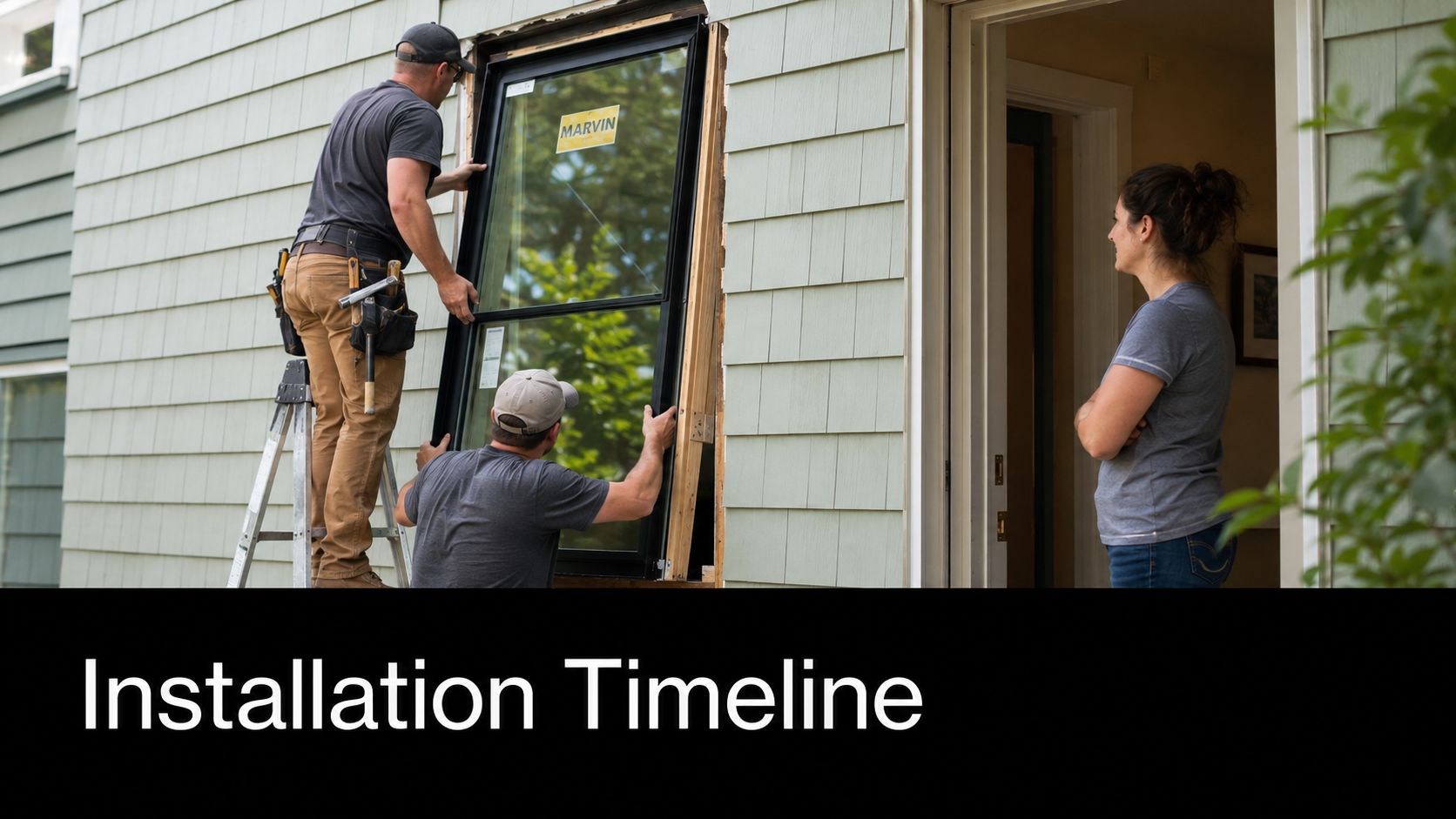
A strong local contractor should also explain who will be in your home each day, whether the crew stays consistent, and how they protect floors, landscaping, and furniture. If you want a detailed look at a professional install sequence, review what to expect during a window installation step by step.
What a clear answer should include
In Idaho, timeline questions aren't just about convenience. They reveal whether the company plans for weather, site conditions, and proper drying or sealing conditions.
For example, a good contractor might explain that if exterior work runs late, they'll secure the opening with temporary coverings and return to complete trim and finish details safely. They should also tell you how they handle hidden surprises like rot, damaged framing, or old openings that aren't square.
Use these prompts during the estimate:
- Ask for written timing: Get a start date, projected completion date, and a clear statement of what could delay the job.
- Ask about weather plans: Find out how they reschedule or protect open areas during rain, wind, or freezing conditions.
- Ask who's supervising: You need one accountable lead on site, not a rotating cast of workers.
- Ask about cleanup standards: Debris-free installation isn't a bonus. It should be standard.
A professional contractor doesn't just tell you how fast they work. They tell you how they protect your home while they work.
3. What Warranty Coverage Do You Offer on Products and Labor?
A Boise homeowner can buy expensive replacement windows, make it through the first winter, then spot condensation between panes or feel cold air at the sill after a freeze-thaw swing. At that point, the only question that matters is simple. Who pays to fix it?
Ask every contractor to separate the warranty into two written parts. One covers the window itself. The other covers the installation work. If they blur those together, treat that as a warning sign. Product warranties often run longer than labor warranties, and the terms can be very different, as explained by the U.S. Department of Energy's homeowner guidance on window selection and performance.
In the Treasure Valley, warranty language matters more than it does in milder climates. High altitude sun, hard seasonal temperature swings, snowmelt, and repeated expansion and contraction put stress on glass seals, caulk lines, and moving hardware. A strong warranty should tell you exactly what happens if an insulated glass unit fails, a sash binds, or water intrusion traces back to poor installation instead of a factory defect.
Ask them to define coverage in plain English
Do not settle for "lifetime limited" by itself. Make them explain what "limited" means. Ask whether labor coverage includes return trips, adjustments, re-caulking, hardware replacement, trim correction, and reinstalling a unit if the original fit or flashing work was wrong.
Ask these questions during the estimate:
- What does the product warranty cover? Glass seal failure, frame defects, hardware, screens, and finish should all be addressed specifically.
- What does the labor warranty cover? You want workmanship spelled out, not implied.
- Who handles service? Find out whether you call the contractor directly or deal with the manufacturer.
- Is the warranty transferable? That matters if you sell within a few years.
- Will I get the full warranty in writing before I sign? Verbal promises do not protect you.
A good local contractor will answer quickly and show you the document on the spot. Same-day estimates are useful, but only if the paperwork is just as clear as the sales pitch.
If you are comparing product lines, ask how warranty terms change by material and hardware package. Vinyl, wood, and composite windows often carry different exclusions, especially for finish, glass breakage, and coastal or high-UV exposure. This comparison of vinyl vs. wood windows for Idaho homes can help you spot where those differences show up before you commit.
My recommendation is simple. Favor contractors who offer a lifetime warranty on workmanship, put every exclusion in writing, and can explain how service claims are handled locally. In Idaho, a warranty is only as good as the crew and company standing behind it.
4. What Window Materials and Energy-Efficiency Options Do You Recommend?
A Boise homeowner can buy good-looking windows and still end up with cold drafts in January, glare in August, and water problems during spring snowmelt. The fix starts with the contractor's recommendation. If they pitch the same frame and glass package for every house, keep shopping.
In the Treasure Valley, window selection needs to match real local conditions. Freeze-thaw cycles punish weak seals. High altitude and strong sun increase solar heat gain and UV exposure. Heavy snowmelt tests sill design, drainage, and installation details. A solid contractor should explain why one room needs better solar control, why another benefits from stronger insulation, and why your elevation, orientation, and existing wall condition affect the final package.
Material choice matters. Vinyl is often the practical choice for Idaho because it handles temperature swings with less maintenance and lower cost. Wood can look excellent in the right home, but it demands more upkeep and needs to be matched carefully to exposure and moisture risk. If you are weighing those tradeoffs, review this guide on vinyl vs. wood windows for Idaho homes.
Ask for the exact performance numbers in writing. That means NFRC labels for the specific window and glass package being quoted, not a brochure and not a verbal promise.
The two ratings that matter most are U-factor and Solar Heat Gain Coefficient. U-factor measures how well the window resists heat loss. Lower is better. SHGC measures how much solar heat the glass lets in. In the Treasure Valley, many homes do best with a lower U-factor for winter comfort and a controlled SHGC on west- and south-facing sides to cut summer heat load. If the contractor talks about ENERGY STAR 7.0, ask them to show how the quoted unit lines up with current performance standards using the ENERGY STAR residential windows, doors, and skylights criteria.
Good recommendations usually include Low-E glass, argon gas, and, in tougher exposures, triple-pane or upgraded spacer systems. Composite reinforcement and better weatherstripping also matter, especially in windy locations and older homes where comfort complaints often come from air leakage as much as glass performance.
Use these questions during the estimate:
- What frame material do you recommend for my house, and why? The answer should reflect sun exposure, maintenance expectations, and budget.
- What are the NFRC U-factor and SHGC for this exact unit? Ask to see the label.
- Does this package meet ENERGY STAR 7.0 for our region? Get a direct yes or no.
- What is the air infiltration rating? A serious contractor should know it or be able to get it fast.
- How are you addressing snowmelt and drainage at the sill? Proper water management matters in Idaho.
- Would you change the glass package by elevation or window orientation? Better contractors often do.
My recommendation is simple. Choose the contractor who gives specific numbers, ties the product choice to your house in the Treasure Valley, and explains performance in plain English. Same-day estimates are fine, but the best contractors back them up with exact specs, clear options, and a recommendation that fits Idaho weather instead of a generic sales script.
5. Can You Provide References and Examples of Your Previous Work?
A Boise-area window job can look great on day one and still fail after a few Idaho winters. Freeze-thaw cycles, strong summer sun, and snowmelt around the sill expose weak installation habits fast. Ask for proof that the contractor has done this work successfully on homes in the Treasure Valley, not just a polished gallery of generic before-and-after shots.
You want evidence tied to houses like yours. A contractor who mainly shows brand-new subdivisions may not be the right fit for an older bench home in Boise, a drafty ranch in Meridian, or a custom home in Eagle with larger openings and tougher sun exposure. Ask to see projects with similar age, style, trim details, and replacement scope.
A good portfolio should show more than pretty photos. It should show workmanship.
What to ask for
Request examples that help you verify both skill and staying power. The best contractors can show local work, explain what made the job tricky, and connect you with past customers who will readily answer your questions. You can also confirm the company's licensing and complaint history through the Idaho Division of Occupational and Professional Licenses.
Use this filter:
- Ask for local projects: Boise, Meridian, Eagle, Nampa, and Caldwell jobs tell you more than out-of-area installs.
- Ask for homes like yours: Match the age, exterior material, window style, and project size.
- Ask for recent jobs and older jobs: Recent work shows current crew quality. Older work shows whether the installation holds up.
- Ask for close-up photos: Look for trim lines, capping, caulk quality, interior finish work, and sightlines.
- Ask what happened after install: Did the company respond quickly to small service items or adjustment calls?
- Ask references specific questions: Was the crew on time? Was the home protected? Did the windows operate smoothly through the first winter and summer?
Reviews matter, but depth matters more. A long record of detailed local feedback is far more useful than a short burst of five-star ratings. If a contractor offers same-day estimates and a lifetime warranty, their references should confirm that the service after the sale matches the promise made at the kitchen table.
My recommendation is simple. Hire the contractor who can show Treasure Valley work, name the neighborhoods, explain the installation challenges, and put you in touch with homeowners whose windows have already been through Idaho weather. That is the kind of proof that separates a serious local contractor from a good sales presentation.
C & C Windows & Doors serves homeowners across the Treasure Valley and can point to local installations, verified testimonials, and project examples that show how premium windows look and perform in Idaho conditions.
6. How Do You Handle Custom Measurements and Ensure Proper Fit?
A window can have great glass, great hardware, and a great warranty. If it's measured wrong, none of that saves the job.
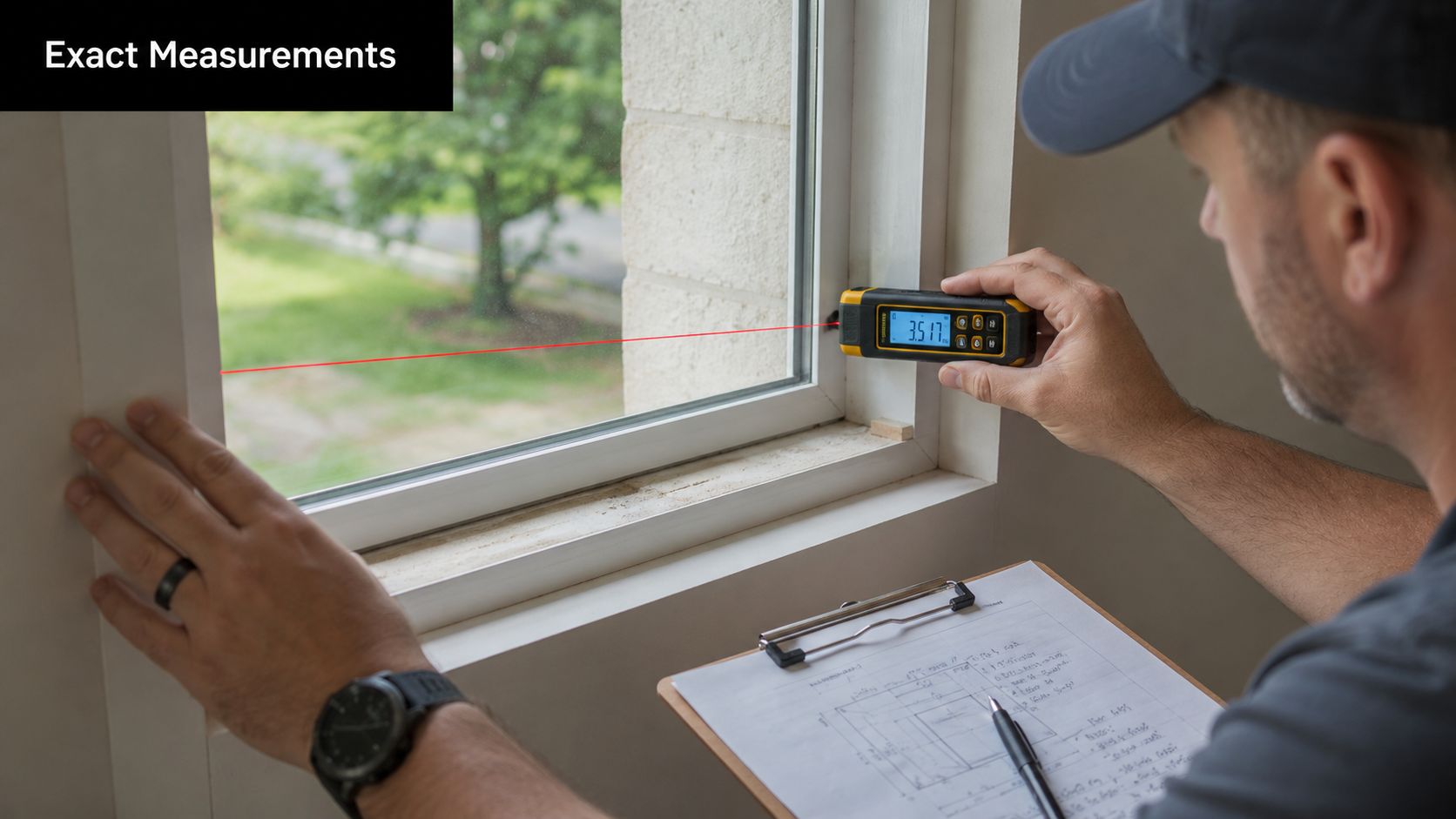
This question matters even more in older Boise homes and remodel projects where openings may be out of square, framing may have shifted, and previous replacement work may have left behind hidden problems. The contractor should explain how they measure width, height, squareness, sill condition, and surrounding frame integrity before ordering anything.
What good measuring looks like
Ask whether they measure each opening individually and whether they recheck before final order submission. In real homes, window openings are rarely identical even when they look identical from the street.
A careful contractor might discover that one bedroom opening is slightly racked, or that a kitchen window has moisture damage under the stool area. That's not bad news. That's exactly what you want them to find before the product arrives.
Here are the right prompts:
- Ask for in-home measurement: Never rely on rough numbers from old plans or a phone estimate.
- Ask how they handle out-of-square openings: You want to hear about fit, shimming, leveling, and sealing, not "we'll make it work."
- Ask when they inspect framing condition: Rot, water damage, and settling should be identified before installation day whenever possible.
- Ask how findings are documented: Photos and written notes reduce confusion later.
Measure each opening as if it's unique, because in most existing homes, it is.
C & C Windows & Doors provides free in-home consultations and custom measurements for each opening, which is exactly the standard Treasure Valley homeowners should expect.
7. What Financing Options and Pricing Transparency Do You Provide?
You sit down for a same-day estimate in Boise, hear a monthly payment that sounds manageable, and still have no clear idea what you are buying. That is a bad quote.
A contractor should give you a written estimate that shows exactly which window line, glass package, hardware, labor scope, and cleanup costs are included. If the proposal is just one lump sum, you cannot compare bids, spot padded pricing, or know whether the windows are built for Treasure Valley conditions like freeze-thaw swings, high summer sun, and snowmelt exposure around sills and trim.
For homeowners who want payment flexibility, C & C Windows & Doors offers financing through Synchrony. Review their window financing options in Boise and the Treasure Valley and then focus on the bigger issue. The financing should be easy to understand, and the quote should be just as clear.
What your written estimate should spell out
A solid estimate lists each window separately, along with the product series, frame material, glass package, installation method, and warranty terms. It should also show disposal, interior or exterior trim work, capping, permit responsibility if needed, and what happens if hidden wood rot or water damage is found after removal.
Ask the contractor to tie the price to performance. In this market, that means asking whether the proposed window meets ENERGY STAR 7.0 standards for your climate zone and whether the quoted glass package is intended for Idaho's cold winters and strong summer sun. Price without performance details is guesswork.
Use these questions in every appointment:
- Ask for an itemized quote: You want separate lines for product, labor, materials, disposal, and upgrades.
- Ask what can trigger added charges: Hidden damage, trim replacement, code-related corrections, and specialty glass should be discussed before work starts.
- Ask for financing terms in writing: Look at interest rate, promotional period, minimum payment, and what happens if the balance is not paid by the deadline.
- Ask how each line item connects to a specific window: Every opening should match a defined product and performance package, not a vague allowance.
Clear pricing protects you twice. It keeps the project on budget, and it tells you whether the contractor is selling a real solution or just selling a payment.
8. How Do You Handle Problem-Solving and Communication During and After Installation?
A Boise homeowner calls in January because a brand-new window feels cold at the sill after the first hard freeze. In March, snowmelt exposes a trim gap that was hidden all winter. The right contractor does not dodge that call, blame the house, or send you into a voicemail loop. They answer, inspect the issue, and fix it with a clear service process.
That matters more in the Treasure Valley than many homeowners realize. Freeze-thaw cycles, strong sun at altitude, wind, and seasonal moisture swings expose weak installation work fast. A contractor can sell a good window and still leave you with callback problems if communication and service are sloppy.
Start with accountability. Ask whether the installers are employees or subcontractors. That affects who controls training, who returns for service, and who stands behind the work years later. If you want one company to own the result from measurement to final adjustment, say so.
You also need a clear chain of communication before installation day. Get the name of the person who handles updates, service scheduling, and warranty follow-up. If a problem shows up after completion, you should know exactly who to call and how quickly they respond.
Ask direct questions:
- Who is my single point of contact? One named person should manage scheduling, job updates, punch-list items, and service calls.
- How do you handle hidden problems once the old window is out? The contractor should stop work, show you the issue, price the fix in writing, and get approval before continuing.
- What is your callback process after installation? Ask how they handle drafts, sash adjustments, interior trim concerns, and water-related issues after the crew leaves.
- Will the same crew finish the job and handle adjustments? Continuity improves workmanship and makes service calls easier.
- What air infiltration rating does this window carry? Ask for the product performance data and compare options. Lower air leakage matters in Idaho winters, especially in exposed locations.
Top-tier local companies usually have service habits you can spot early. They offer same-day or next-day estimates, put change orders in writing, answer calls promptly, and explain whether labor coverage is backed by a lifetime warranty or a shorter service period. Those business practices tell you how they will treat you after the final payment.
Look for a contractor who treats post-installation service as part of the job, not as a favor.
If a company is hard to reach before you sign, expect a frustrating service experience after installation.
8-Point Comparison: Questions for Window Contractors
| Question | 🔄 Implementation complexity | ⚡ Resource requirements | ⭐ Expected outcomes | 📊 Key advantages | 💡 Ideal use cases |
|---|---|---|---|---|---|
| Are You Factory-Trained and Licensed for My Region? | Low–Moderate: verify certifications and licenses | Documentation: licenses, manufacturer certs, insurance | High-quality installation; warranty preservation | Reduces installation errors; ensures code compliance | When warranty, insurance and regional climate expertise matter |
| What Is Your Installation Process and Timeline? | Moderate–High: multi-step coordination and inspections | Crew time, site prep, scheduling, cleanup resources | Predictable timeline; thorough, debris-free installation | Clear expectations; fewer surprises; consistent workmanship | Whole-home projects or when schedule certainty is required |
| What Warranty Coverage Do You Offer on Products and Labor? | Low–Moderate: review and register warranty terms | Paperwork, warranty registration, possible maintenance | Long-term protection; lower future repair costs | Transferable coverage; peace of mind; defect protection | High-investment windows or resale-focused homeowners |
| What Window Materials and Energy‑Efficiency Options Do You Recommend? | High: evaluate trade-offs for performance and aesthetics | Higher upfront cost for premium materials, longer lead times | Improved energy savings, comfort, and noise reduction | Lower energy bills; eligibility for rebates; durability | Energy-conscious homes or harsh/noisy climates |
| Can You Provide References and Examples of Your Previous Work? | Low: collect and verify recent references and portfolio | Time to contact refs, review photos and case studies | Real-world evidence of workmanship and reliability | Neighborhood-relevant proof; confidence in contractor | Vetting a new contractor or confirming long-term performance |
| How Do You Handle Custom Measurements and Ensure Proper Fit? | Moderate: precise measuring and verification procedures | Laser tools, in‑home visits, photographic documentation | Accurate fit, maintained energy ratings, fewer callbacks | Reduces errors; protects warranty; smoother operation | Older/out-of-square homes and custom window installations |
| What Financing Options and Pricing Transparency Do You Provide? | Low–Moderate: prepare itemized estimates and financing terms | Detailed estimates, finance partner setup, rebate info | Budget clarity; improved affordability for premium options | Flexible payments; transparent costs; rebate guidance | Homeowners needing payment plans or comparing bids |
| How Do You Handle Problem‑Solving and Communication During and After Installation? | Moderate–High: established protocols and documentation | Dedicated contact, documented change orders, follow-up visits | Faster issue resolution; accountability; higher satisfaction | Reduced escalation; documented service history; warranty support | Projects with possible surprises or owners valuing service continuity |
Your Partner for a Perfect Window Installation
Once you know what questions to ask a window contractor, the estimate process gets much simpler. You stop reacting to sales language and start evaluating proof. Credentials, installation process, warranty separation, written performance data, real project history, precise measuring, transparent pricing, and accountable communication all tell you whether a contractor deserves your trust.
That's especially important in the Treasure Valley. Idaho's climate isn't forgiving. Freeze-thaw cycles, bright sun, altitude, and spring moisture put real stress on both windows and the installation around them. A contractor who understands those conditions should be able to explain exactly how they measure openings, manage drainage, select the right glass package, and support the work long after installation day.
The best companies won't get defensive when you ask detailed questions. They'll welcome them. They should be ready to show licenses and insurance, explain whether their crews are factory-trained, provide NFRC ratings in writing, and spell out the difference between product and labor coverage without you having to drag the answer out of them. They should also be able to point to real homes in Boise, Meridian, Eagle, and nearby communities where their work is already standing up to local conditions.
That's where C & C Windows & Doors stands apart for Treasure Valley homeowners. As a local company, we provide factory-trained installation, custom measurements, same-day estimates, and meticulous, debris-free workmanship. Our window systems are engineered for Idaho homes, with features like composite-reinforced sashes, true sloped sills for drainage, secure low-profile locking, ClimaTech Low-E coatings, Argon gas fills, and optional triple-pane glass designed to support ENERGY STAR 7.0 performance.
We also believe homeowners deserve clear protection, not vague promises. That's why we back our work with a lifetime limited warranty on products and labor and keep the process straightforward from consultation through final walkthrough. Whether you're replacing drafty bedroom windows, upgrading a full home before listing, or improving comfort and curb appeal with premium patio doors, our team is ready to help you make a confident decision.
If you're comparing contractors right now, use the questions in this guide during every appointment. The right partner will answer them clearly, document the details, and make you feel more confident, not more pressured.
Ready to upgrade your home with a trusted local team? C & C Windows & Doors offers free in-home consultations, custom measurements, premium energy-efficient windows and patio doors, and expert installation built for Treasure Valley homes. Reach out today to get a same-day estimate and clear answers before you sign anything.