You're probably reading this because your windows are telling on themselves. You feel a cold draft near the sofa in January. One room overheats every summer afternoon. Condensation sits between panes that should be sealed tight. Or maybe you're getting the house ready to sell and those tired frames are dragging down the whole exterior.
In Boise, old windows aren't just an eyesore. They affect comfort, utility bills, noise control, and resale. The right replacement fixes all four. The wrong one gives you a fresh-looking problem that still leaks air, still struggles in wind, and still leaves you wondering why you spent the money.
If you're searching for the best window company in Boise, Idaho, stop looking at glossy brochures first. Start with one question. Does the company understand what Boise windows have to survive, and can they prove the product and installation are built for that reality?
Table of Contents
- Is It Time to Replace Your Boise Windows
- Why Your Windows Must Handle the Treasure Valley Climate
- Decoding Window Quality Energy Ratings and Materials
- The Difference Between Installation and Craftsmanship
- Spotlight C & C Windows & Doors as Boise's Premier Choice
- Your Checklist for a Smart Window Consultation
- The C & C Process From Consultation to Completion
Is It Time to Replace Your Boise Windows
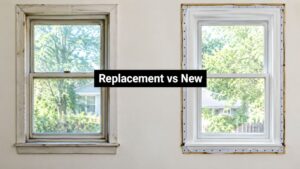
You notice it on a cold morning first. One bedroom feels drafty, the thermostat keeps running, and the window by the bed looks fine until you stand next to it. Then August hits, and the west-facing room turns into an oven by dinner. That is how failing windows show up in Boise. Not as one dramatic break, but as comfort problems that keep getting more expensive.
A window does not need to be shattered to be worn out. If it leaks air, collects moisture between panes, sticks when you open it, or lets one room run hotter or colder than the rest of the house, it is no longer doing its job. Waiting because it still opens and closes is how homeowners waste money for years.
Boise homes are full of windows that are old enough to have tired seals, worn hardware, and frames that have been through years of sun, wind, and winter swings. You do not need a market statistic to know the pattern. Walk through any established neighborhood in the Valley and you will see it. Original builder-grade windows often look acceptable long after their performance is gone.
Practical rule: Drafts, fogged glass, and rooms that never hold temperature are replacement signs, not cosmetic annoyances.
If you want a quick way to confirm what you are seeing, review these signs your windows need replacing in Idaho before you start calling for estimates.
What replacement really means
In Boise, replacing windows is not a trim update or a style project. It is a home performance decision. The right replacement cuts drafts, steadies room temperatures, reduces strain on your HVAC system, and fixes the parts of your house that never felt comfortable in the first place.
That is also where homeowners make expensive mistakes. They shop by glass package or price tag alone, then hire an installer who treats every opening the same. A good window has to match the problem you are solving. If your back elevation takes hard afternoon sun, the fix is different than a north-facing bedroom that gets hit by winter wind. Companies like C & C Windows & Doors stand out because they look at the house, the exposure, and the weak points before they recommend a product.
What to check first
Before you compare brands, colors, or upgrades, look for the failure that is already happening in your house:
- Air leakage: You feel cold or moving air near the sash, stool, or trim during winter and windy days.
- Seal failure: Haze, moisture, or a milky look shows up between the panes.
- Uneven comfort: One room heats up fast in summer or stays cold no matter what the thermostat says.
- Frame or hardware wear: The sash drags, locks stop lining up, or the window takes effort to open and close.
Those are the signs that matter. Start there.
Why Your Windows Must Handle the Treasure Valley Climate
Generic window advice falls apart in Boise because the climate isn't generic. The Treasure Valley asks a lot from a window. It has to handle winter temperature swings, summer sun, and wind that tests every weak seal and underbuilt lock.
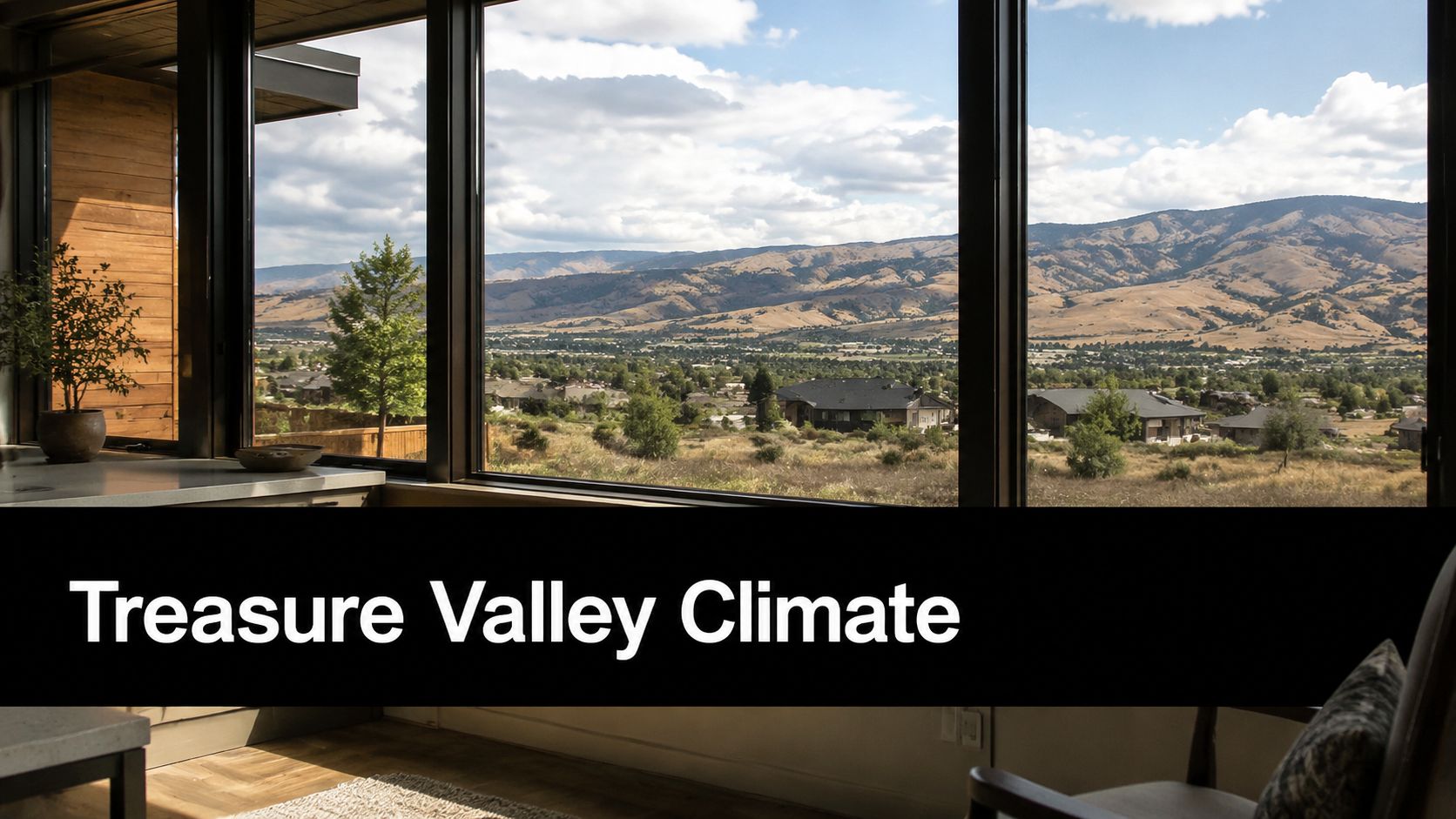
Most window marketing in Boise talks about triple-pane glass and Low-E coatings. That's fine as far as it goes, but it often skips the part that matters most to local homeowners. Boise sees 20 to 35°F winter temperature swings, and the National Weather Service data cited in local market analysis shows 12+ days annually with wind speeds over 25 mph. That same analysis points out that many companies don't explain how those conditions wear on frames, seals, sash components, and locks over time. Standard vinyl frames may crack, and low-profile locks may not handle thermal stress well in this climate, as discussed in this Boise climate window performance review.
What Boise weather does to a weak window
Temperature swing is hard on materials. Frames expand and contract. Seals get stressed. Hardware moves slightly out of alignment. You might not see that damage on day one, but you'll feel it when the room gets drafty and the sash doesn't close as tight as it used to.
Wind creates a different problem. It finds every shortcut in manufacturing and installation. If the weatherstripping is mediocre or the lock doesn't pull the sash in firmly, outside air gets in. Once that starts, your expensive new window can still feel cheap.
For Boise homeowners, the right questions are practical:
- Can the frame stay stable through repeated temperature changes?
- Does the sash pull in tightly enough to resist wind-driven air leakage?
- Is the drainage design built to move moisture out instead of trapping it?
A pretty showroom sample doesn't tell you how a window will behave after years of Idaho winters and summer sun.
Why one size fits all doesn't work here
A lot of homeowners buy windows the same way they buy appliances. They compare a short list of features and assume performance is basically equal. It isn't.
A Boise-ready window needs the right glass package, but it also needs frame strength, stable sash construction, and hardware that keeps pressure where it belongs. If you want a good technical breakdown of what energy-efficient windows should do in Idaho conditions, read this Idaho energy efficient windows guide for 2026.
Decoding Window Quality Energy Ratings and Materials
You sit down for a window quote in Boise and the salesperson starts firing off terms like U-Factor, SHGC, Low-E, argon, and triple-pane. If they never connect those specs to cold January mornings, west-facing summer heat, or Treasure Valley wind, they are wasting your time.
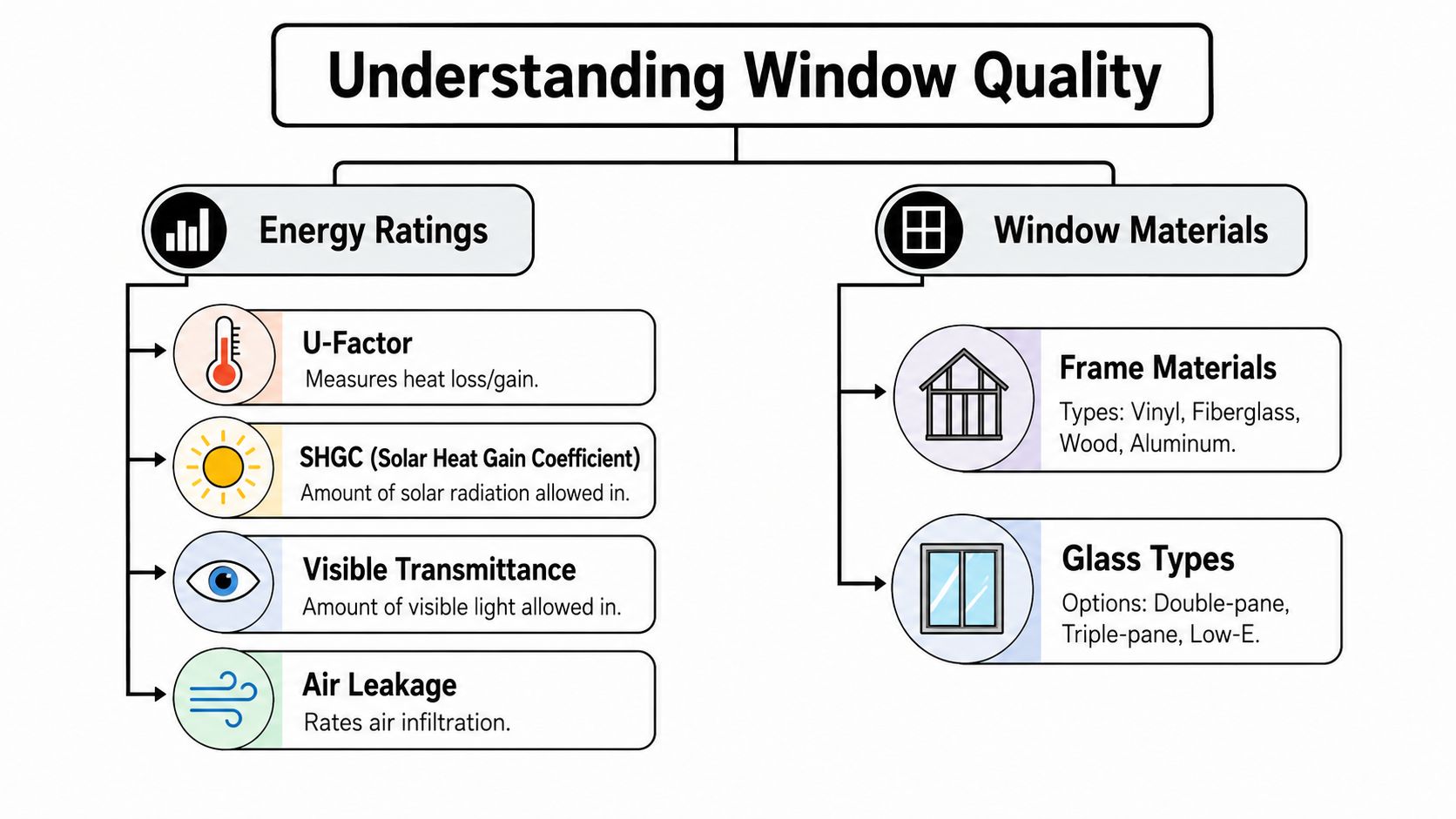
Start with the ratings that affect comfort in Boise
U-Factor measures insulation performance for the whole window. Lower numbers hold interior heat better. In Boise, that matters during winter cold snaps and overnight temperature drops, especially in older homes where rooms near the glass already run chilly.
SHGC measures how much solar heat passes through the glass. Lower numbers block more unwanted heat from the sun. That matters on homes with strong south or west exposure, where summer afternoon sun can overheat a room long before the thermostat catches up.
ENERGY STAR's current criteria set climate-zone performance targets for windows, including U-Factor limits by region. You can review the current requirements in the ENERGY STAR residential windows, doors, and skylights specification. Manufacturers also have to maintain qualifying test data and certification standards, as outlined in FGIA's ENERGY STAR 7.0 compliance update.
What those specs solve on a real Boise house
A low U-Factor helps with one problem. Rooms that feel cold even when the furnace is running.
A controlled SHGC helps with another. Rooms that bake in July because the glass is letting in too much solar gain.
Low-E coatings help manage both by reflecting heat where you want it. In winter, that means keeping more indoor heat inside. In summer, it means cutting solar load so the room stays more stable. Argon gas between panes improves insulation further, but it should be treated as part of the full glass package, not a magic upgrade by itself. If you want a straight answer on that specific feature, read whether argon gas windows are worth it in Idaho.
Materials matter as much as the glass package
A good glass package cannot carry a weak window.
That is where a lot of Boise homeowners get burned. They hear “triple-pane” and assume the whole unit is high quality. Then the frame moves, the sash loses alignment, or the lock does not pull everything together tightly enough to resist wind and temperature cycling.
Here's the practical breakdown:
| Window component | What to look for in Boise | Why it matters |
|---|---|---|
| Frame | Stable, reinforced construction | Reduces movement during repeated hot and cold cycles |
| Sash | Strong build with tight tolerances | Helps the unit stay aligned and sealed over time |
| Glass package | Low-E, argon, double-pane or triple-pane matched to the home | Improves insulation and controls solar gain |
| Hardware | Tight locking system with solid operation | Helps keep the sash pulled in against weatherstripping during wind |
C & C Windows & Doors tends to get this part right because the discussion goes past brochure features and into how the full unit will perform in Idaho conditions.
Ask better questions. How low is the U-Factor? What SHGC fits this side of the house? How stable is the frame? How does the lock help control air leakage in wind?
The best window for Boise is the one whose ratings and materials solve the specific problems your house deals with every season.
The Difference Between Installation and Craftsmanship
A good window installed badly is still a bad result. I've seen expensive units perform like bargain-bin replacements because somebody rushed measurements, packed gaps carelessly, or treated air sealing like an afterthought.
Installation is the act of putting the window in the wall. Craftsmanship is making sure it performs once it's there.
What separates real installers from order takers
A serious crew starts with exact measurements before the order is placed. Not rough numbers. Not “close enough.” Replacement windows have to fit the actual opening, not the idea of the opening.
Then comes prep. A professional team checks the condition of the opening, looks for signs of moisture trouble, and plans for insulation and sealing around the new frame. That part never shows up in a glamour photo, but it's where comfort is won or lost.
Here's what good workmanship usually includes:
- Precise measuring: The unit is ordered to the opening, not forced to fit on install day.
- Careful shimming and leveling: The sash operates correctly and locks cleanly.
- Air sealing around the frame: Drafts don't get a free path around an otherwise efficient unit.
- Clean finish work: Trim looks intentional, not patched together.
Why subcontractor roulette causes problems
A lot of frustration starts when the person selling the project isn't the person installing it. Homeowners think they bought expertise, then a different crew shows up with different standards.
That's where callbacks come from. Stiff operation. Gaps at trim. Missed insulation. Sloppy cleanup. The homeowner ends up acting as the quality control manager on a project they hired out to avoid exactly that.
Ask one blunt question during any estimate: “Who exactly is installing my windows, and how are they trained?”
If the answer gets vague, keep looking.
Spotlight C & C Windows & Doors as Boise's Premier Choice
A Boise homeowner usually figures out the difference between a sales outfit and a real window company on the first hot August afternoon or the first hard winter draft. The windows looked good on install day. Six months later, one room bakes in the sun, another feels cold near the glass, and the locks take extra force when the wind picks up. That is what happens when a company sells a catalog instead of solving Treasure Valley conditions.
C & C Windows & Doors stands out because the product choices line up with the problems Boise homes deal with every year. They focus on replacement windows and patio doors, use factory-trained installers, take custom measurements, and offer features that matter in the field. Composite-reinforced sashes help the unit stay stable through freeze-thaw cycles and summer heat. Low-profile locking systems improve closure and air tightness when valley wind puts pressure on the sash. True sloped sills help move water out before it sits where it should not.
The glass package matters for Boise too. Low-E glass helps cut summer solar gain. Argon-filled units help slow winter heat loss. Triple-pane options make sense for homeowners who want a quieter house, steadier indoor temperatures, and better performance in exposed areas. Those are not brochure features. They are direct answers to west-facing sun, cold snaps, and long shoulder seasons where cheap windows start showing their weaknesses.
A company also earns trust by covering the practical parts homeowners care about. Same-day estimates help keep the project moving. Financing gives some flexibility if the job needs to happen now instead of next year. A lifetime limited warranty on product and labor matters because window problems often show up after the crew is gone and the final check has cleared.
If this were my house, I would want straight answers on five points:
- How the frame is built to handle Boise temperature swings
- How the lock and sash design help with air sealing in windy conditions
- What glass package is being quoted for my specific sun exposure
- Who is doing the installation work
- What the labor warranty covers if something goes wrong later
The Bottom Line
C & C is a strong example of what to look for in Boise. The right company does not throw around generic energy claims. It explains why a certain frame, lock, sill, and glass package make sense for your side of town, your sun exposure, and your weather exposure. That is how you choose windows that hold up, stay comfortable, and protect the money you are putting into the house.
Your Checklist for a Smart Window Consultation
A bad window consultation in Boise usually starts the same way. The rep talks fast, throws out a price range, points to a sample corner cutaway, and never explains how the window will handle west sun, cold snaps, or a windy lot near open farmland. That is how homeowners end up comparing numbers instead of comparing what they are buying.
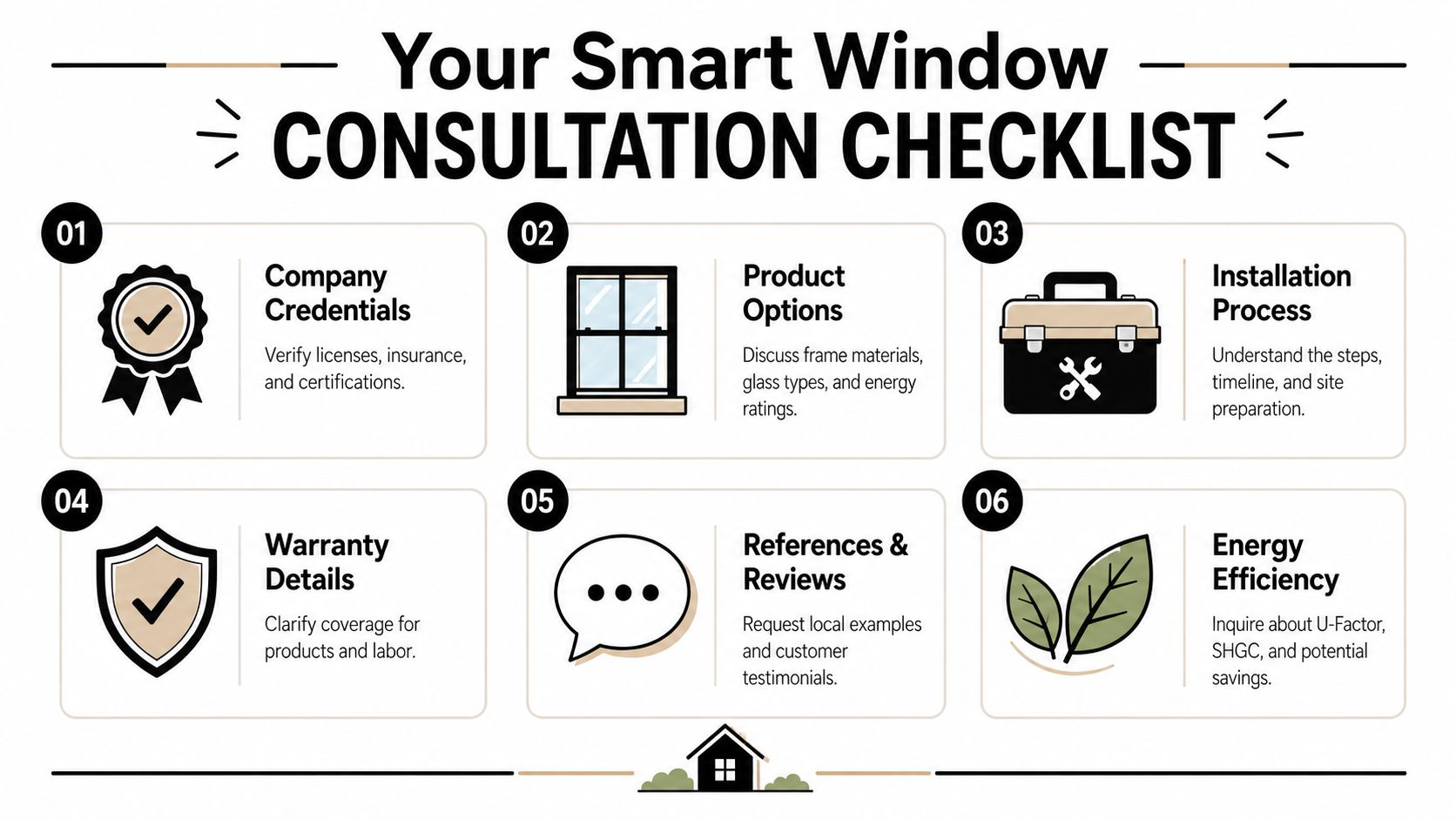
Your job during the meeting is simple. Slow it down, get specifics, and make the company prove the quote fits your house.
The questions that save you money
Use this checklist during every estimate.
- Ask for a line-item quote. Get labor, window units, trim, disposal, permit costs, and any interior or exterior repair work broken out clearly.
- Ask what is excluded. Good companies spell out what could change the price. Bad ones leave room for surprise charges after demo starts.
- Ask who handles debris removal and cleanup. Old windows, broken trim, dust, and haul-off should be addressed in writing.
- Ask what happens if rot, damaged sheathing, or failing trim is found. Boise homes with older wood-clad openings often hide trouble until the old unit comes out.
- Ask who will do the work. You need a straight answer on employees versus subcontractors, and who is accountable if something is installed wrong.
The questions that protect comfort and performance
Homeowners either make a smart long-term buy or pay for a pretty frame that still feels drafty in January.
- Ask which glass package is quoted for your exposure. South and west-facing rooms in the Treasure Valley take a beating from afternoon sun. The right glass package helps control heat gain where it matters.
- Ask for the exact U-Factor and SHGC on the quoted unit. Do not settle for "energy efficient." Get the actual numbers for the exact window being sold.
- Ask how the frame and sash are built. "Vinyl" is not a real answer. You want to know how the unit holds shape through Boise temperature swings and how tightly it closes when the wind picks up.
- Ask how the installer will air seal the opening. A good glass package cannot fix sloppy foam work, gaps, or poor exterior sealing.
- Ask for the labor warranty and product warranty in writing. Those are two different protections, and you want both defined before you sign.
One more thing. Ask the rep to explain why this specific window is right for your house, not just why the brand is popular. If they cannot connect the recommendation to your sun exposure, street noise, winter comfort, or wind exposure, keep shopping.
What a trustworthy consultation feels like
A solid consultation is clear, specific, and a little boring. That is a good sign. You should leave knowing what product is being quoted, what installation method is being used, what could change the price, and who fixes a problem later.
That is one reason C & C Windows & Doors stands out in this market. A company that knows Boise well should be able to tie every recommendation back to a local problem and explain the fix in plain English.
If the meeting leaves you with a glossy brochure, a vague number, and pressure to sign today, walk away.
The C & C Process From Consultation to Completion
A window project should feel organized from the first visit to the final walkthrough. If the process is chaotic at the estimate stage, it usually gets worse once money changes hands.
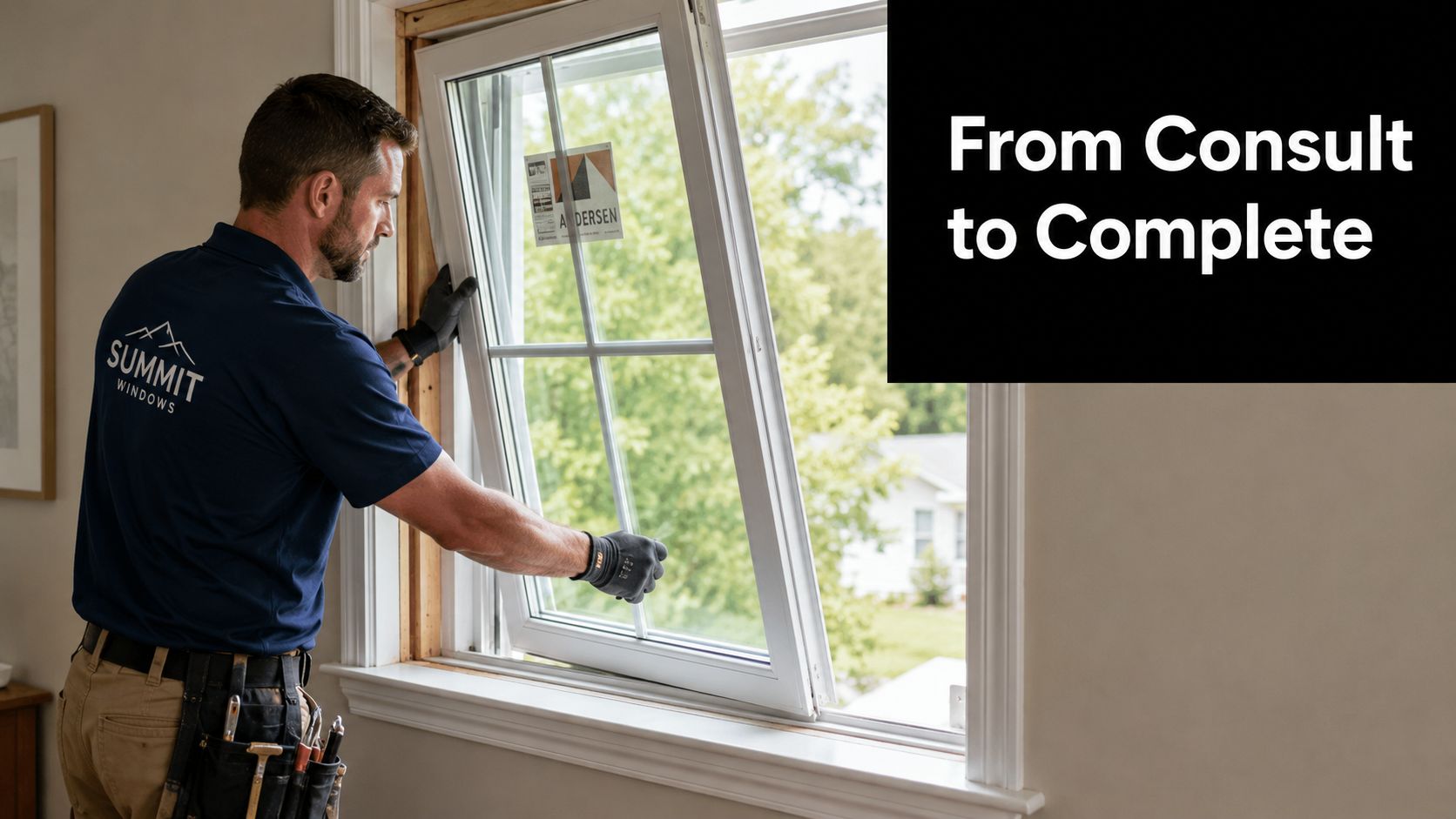
The process that makes sense is simple. Start with an in-home consultation, review product options that fit the house, take custom measurements, and get a clear written estimate. After that, the installation team should protect the work area, remove the old units carefully, install and seal the new windows correctly, clean up thoroughly, and finish with a walkthrough so you can inspect operation, fit, and finish.
What the homeowner should confirm before signing
For Boise and the Northern climate zone, ENERGY STAR 7.0 raised the bar. Qualifying windows must meet a U-Factor of 0.22 or lower for windows and 0.26 or lower for patio doors, and Northern zone windows now also require a minimum SHGC of 0.17, according to Andersen's summary of the ENERGY STAR 7.0 Northern criteria. Those are the numbers worth confirming on the exact package being proposed.
Financing can also matter if you're upgrading multiple openings at once. A good company explains those options clearly and doesn't use financing to distract from product quality or installation standards.
The right next step is a consultation that gives you exact specifications, exact scope, and exact pricing. If you want that from a local team that works in the Treasure Valley every day, contact C & C Windows & Doors and ask for an in-home estimate. You'll get a clearer answer than you will from another round of online searching.