
If you're in Boise, Meridian, Eagle, or anywhere in the Treasure Valley, you probably know the feeling. January hits, you sit near the window with a cup of coffee, and the room feels colder even though the thermostat says otherwise. Then July rolls around, the west side of the house turns into an oven by late afternoon, and you start wondering whether your windows are working against you.
That's usually when homeowners start Googling Argon gas windows are they worth it in Idaho. Then the confusion starts. One page says argon is a must. Another says it's marketing. A third talks about energy savings without explaining what matters in Idaho's mix of cold winters, hot summers, and long-term seal wear.
Here's the straight answer. Yes, argon gas windows are usually worth it in Idaho, but only when they're part of a solid window package with Low-E glass, good frames, and careful installation. If you're buying a weak window and hoping argon alone will save the day, don't bother. If you're already replacing old glass and want a practical upgrade that improves comfort now and still makes sense years from now, argon is a smart move.
Table of Contents
- Answering the Argon Window Question for Idaho Homeowners
- What Exactly Are Argon Gas Filled Windows
- The Real Benefits for a Four Season Climate
- Calculating the Cost and Payback Period in Idaho
- Argon Gas vs Other Window Insulation Options
- Long Term Value and Seal Durability
- Your Decision Checklist for Argon Windows
- Frequently Asked Questions About Argon Gas Windows
Answering the Argon Window Question for Idaho Homeowners
A lot of Treasure Valley homeowners ask the wrong version of the question. They ask, “Is argon worth it?” The better question is, “Is argon worth it in my house, with my sun exposure, my old windows, and my budget?”
That matters because Idaho isn't one-note. Boise and the surrounding valley deal with winter heat loss and summer solar gain. North-facing bedrooms can feel chilly for months. West-facing living rooms can get hammered by afternoon sun. The right answer for one side of the house may not be the same for the other.
Bottom line: In Idaho, argon is usually an upgrade you make to improve the whole window system, not a magic feature you buy by itself.
I'm opinionated about this because I've seen the same mistake over and over. Homeowners get sold on a buzzword instead of the full performance package. Then they're disappointed when the room still feels drafty because the installation was sloppy, the frame wasn't strong, or the glass package wasn't tuned for mixed weather.
Here's a practical perspective:
- If your current windows are old and drafty, argon paired with a quality replacement package will usually feel worth it fast.
- If you're already buying new double-pane or triple-pane windows, skipping argon to save a little upfront usually doesn't make much sense.
- If the rest of the window is weak, argon won't rescue the purchase.
For Idaho homeowners, this is mostly an incremental performance decision, not a dramatic transformation. But incremental matters. Better comfort by the glass, less condensation risk, and steadier indoor temperatures are things you notice every single day.
What Exactly Are Argon Gas Filled Windows
Argon gas filled windows are insulated glass units with argon sealed between the panes instead of regular air. The point is simple. Argon is denser than air, so heat moves through that gap more slowly.
That sealed space is where the upgrade happens. In a Boise winter, the inside pane stays warmer than it would with plain air between the glass. In a hot Treasure Valley summer, the window resists outside heat a little better too. The gain is not dramatic by itself, but over 10 to 20 years it adds up if the seal holds.
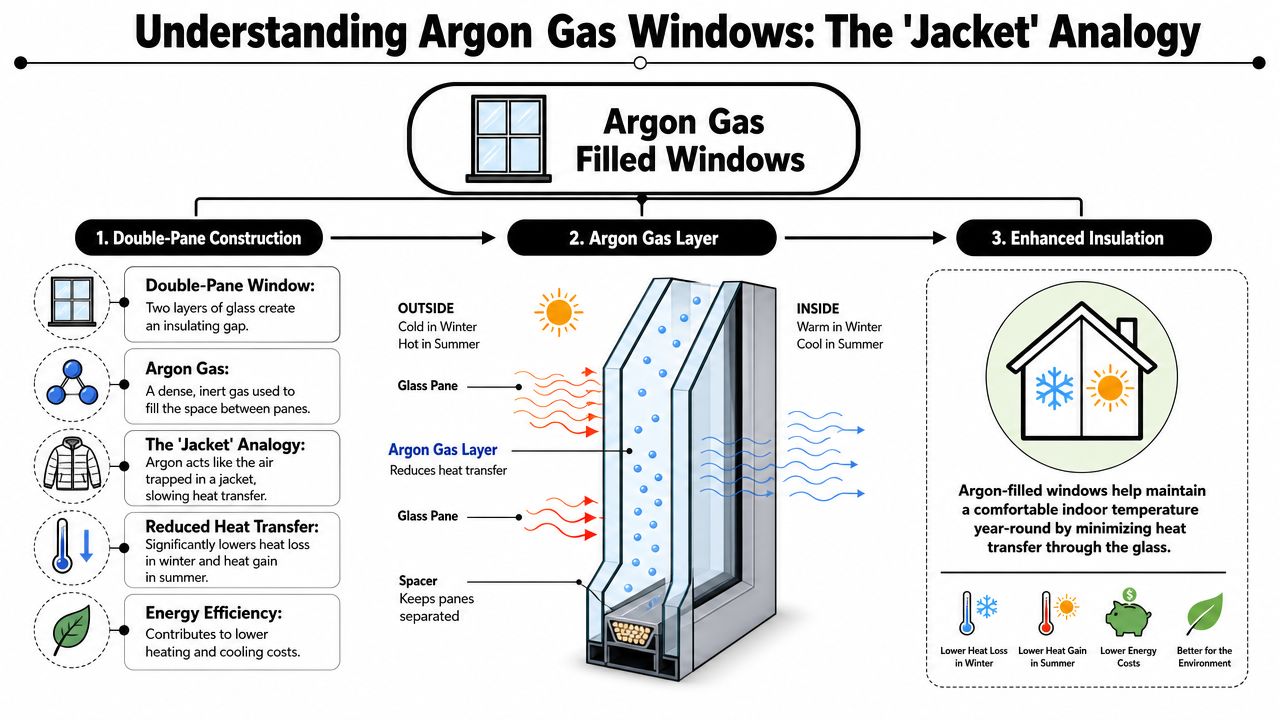
Here is the part homeowners should understand before they buy. Argon is not a separate product you can judge on its own. It is one part of the insulated glass unit, along with pane spacing, spacer quality, seal quality, and Low-E coatings. If you want the full picture on how those pieces work together in this climate, this guide to energy-efficient windows in Idaho is worth reading.
Idaho's long-term question is not “Does argon help on day one?” It does. The better question is whether it still helps after years of freeze-thaw cycles, summer sun, and normal gas loss inside the unit. That is the right way to evaluate argon in this market. You are buying a window for the next couple decades, not for the sales appointment.
A few plain facts matter here:
- Argon works inside sealed double-pane and triple-pane glass. If the seal fails, the benefit drops.
- Argon is inert and non-toxic. It is common in modern replacement windows, not some fragile specialty add-on.
- Argon supports performance. It does not rescue a weak frame, a poor spacer system, or sloppy installation.
- Argon is usually the sensible baseline in Idaho. If you are already paying for new insulated glass, skipping it to save a little upfront is usually the wrong place to cut.
Homeowners around Boise often describe cold glass as a draft. Sometimes the frame really is leaking air. Sometimes the bigger problem is the glass surface getting cold enough to make the whole area feel uncomfortable. Argon helps address that specific issue by improving the glass unit itself.
My advice is simple. Treat argon as part of a better window package, and judge it on long-term seal durability, not marketing language. In Idaho, that is how you tell a smart upgrade from a forgettable one.
The Real Benefits for a Four Season Climate
Winter comfort matters more than people think
In Idaho, the strongest argument for argon usually isn't the utility bill. It's comfort.
Argon gas works with Low-E coatings to lower a window's U-factor by reducing conductive heat transfer. That combination lowers energy use and improves comfort by minimizing interior cold spots and drafts near the glass, according to this explanation of argon and Low-E performance.
That's why homeowners notice the biggest difference in the rooms where they spend time close to the window. Kitchen nooks. Home offices. Living rooms with big picture windows. Bedrooms with the bed near the glass.
If your house has that “cold wall” feeling every winter, argon then earns its keep.
Summer performance is about the full glass package
Boise summers are no joke. But many people misunderstand this aspect. Argon helps with thermal performance, yes, but summer comfort is not just an argon story. The whole glass package matters, especially the coating choice and how the window handles solar gain.
That's why I tell homeowners not to shop by argon label alone. On south and west exposures, the wrong glass package can still let in too much heat even if the unit has argon. On the flip side, a strong Low-E package paired with argon tends to make a lot more sense in a mixed climate home.
Here's what Idaho homeowners usually feel from a well-built package:
- More even room temperatures instead of hot and cold zones
- Less chilly glass in winter near seating areas
- Reduced draft complaints that were really surface-temperature problems
- Lower condensation risk on cold days
Noise reduction is a bonus, not the main reason
One source notes that gas-filled multiple-pane windows are also popular for soundproofing. That's real, but I wouldn't make argon your main noise strategy. If road noise is your biggest issue, the glass build, pane configuration, and overall unit design matter just as much or more.
Still, for homes near busier streets in Boise, Meridian, or Garden City, argon-filled multi-pane windows can be part of a quieter interior. Consider that a side benefit rather than the lead feature.
If you want one sentence on value, here it is. In Idaho's four-season climate, argon is worth it because it improves how the room feels, not just how the window tests on paper.
Calculating the Cost and Payback Period in Idaho
What argon usually costs
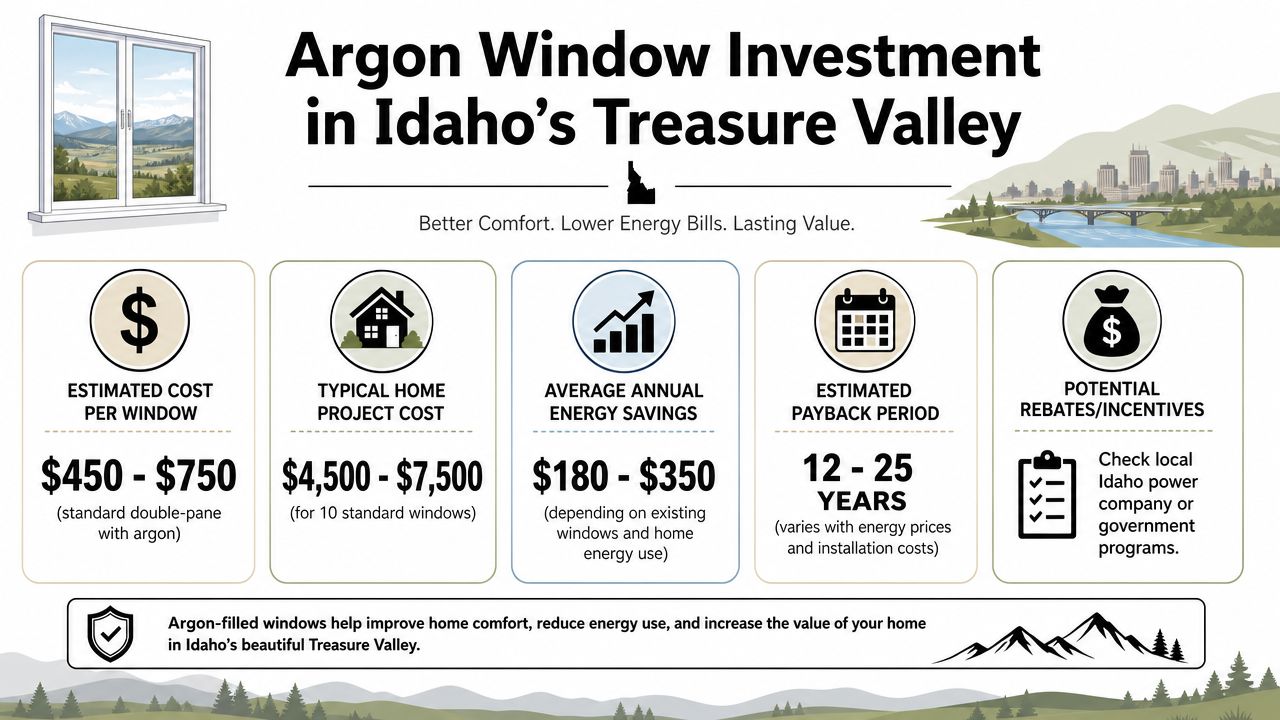
In most Idaho replacement jobs, argon is a small line item, not the budget buster. The bigger money decision is the full window package, the frame, glass setup, and installation quality. If you are already spending for new windows, argon usually belongs in the conversation because the added cost is modest compared with the total project.
That is why I tell Treasure Valley homeowners to stop isolating the gas fill like it is a separate product. It is part of a better insulated glass unit. Judge it that way.
If you want a clearer sense of the full project budget, this guide to window replacement cost in Boise, Idaho gives useful local pricing context.
What determines payback
The internet loves tidy payback formulas. In practice, houses don't behave that neatly.
In Boise, Meridian, Nampa, and the rest of the Treasure Valley, payback depends on what you are replacing and how long you plan to keep the house. Argon helps most when it is paired with a good Low-E package and installed in a home that deals with both January cold snaps and long, hot summer afternoons. That is the Idaho reality.
Here is what moves the numbers:
- Your existing windows. Old single-pane glass or failed double-pane units give you the biggest jump in comfort and efficiency.
- Sun exposure. West and south facing rooms usually make the upgrade easier to justify because those rooms take the worst summer heat.
- Window quality. A cheap unit can waste the benefit of argon if the frame and seals are weak.
- Installation quality. Gaps, poor shimming, and sloppy air sealing can erase part of what you paid for.
- Ownership timeline. The longer you stay, the stronger the case. This article is about a 20-year decision, not a one-year utility bill.
That last point matters more than many homeowners realize. Argon does not stay at its original level forever. Over a decade or more, some gas loss is normal in insulated glass units. In Idaho, freeze-thaw cycles and big temperature swings put extra pressure on seals over time. So the smart question is not whether argon helps on day one. It does. The smarter question is whether the window is built well enough that the unit still performs respectably ten or fifteen years from now.
My advice on the money question
If you demand a dramatic standalone payback from argon by itself, you are asking the wrong question.
For most Idaho homes, argon is worth buying inside a well-built double-pane or triple-pane window with the right Low-E coating. It improves winter comfort, helps control summer heat, and makes more sense over a long ownership period than it does on a quick spreadsheet.
My recommendation is simple. Skip argon only if the bid forces you into a weak overall window package. If the window itself is solid, take the argon upgrade and focus hard on seal quality and installation. That is what holds up best through twenty Treasure Valley summers and winters.
Argon Gas vs Other Window Insulation Options
Quick comparison table
Idaho homeowners usually end up choosing between three real options: plain air-filled glass, argon-filled glass, or a premium package with krypton or triple-pane construction. The right pick depends on how long you plan to stay, how uncomfortable your house feels now, and whether you want value at year two or year twenty.
| Fill Type | Performance | Cost | Best For |
|---|---|---|---|
| Air fill | Basic insulated performance | Lower upfront cost | Tight budgets, rental properties, modest upgrades from old glass |
| Argon fill | Better thermal performance than air in sealed multi-pane units with Low-E | Moderate added cost | Most Idaho replacement projects |
| Krypton or triple-pane premium systems | Higher insulating performance | Higher upfront cost | Harsh exposures, problem rooms, long-term owners chasing top comfort |
Where each option makes sense
Air-filled windows are the budget choice. They beat old single-pane glass, but they are hard to recommend for a full replacement project in the Treasure Valley unless budget is tight. Boise winters expose weak glass fast, and summer sun on west-facing rooms does the same.
Argon-filled windows are the smart default for most Idaho homes. You get a noticeable bump in comfort and efficiency without jumping to the highest-priced package. That matters in a place with cold snaps, long heating seasons, and hot, dry stretches in July and August.
Krypton or triple-pane options are for specific situations, not every house. If you have big glass facing wind, a room over the garage that never stays comfortable, or you plan to stay in the home for decades, premium glass can earn its keep. If your home is fairly typical for Boise, Meridian, Nampa, or Eagle, argon in a solid double-pane Low-E window is usually the better value.
The long view matters here. Air fill starts cheaper, but it gives you less margin in winter comfort and summer heat control from day one. Premium systems can perform better, but the extra cost does not always pay you back in a standard Idaho home. Argon sits in the middle, and that middle is where most homeowners should be.
My recommendation is straightforward:
- Choose air fill for a strict budget job or a lower-priority space.
- Choose argon for most whole-home replacement projects in Idaho.
- Choose krypton or triple-pane for problem areas, louder streets, large openings, or a house you expect to keep for a long time.
Here is the mistake I see all the time. Homeowners compare glass upgrades in isolation and ignore the insulated glass unit itself. Over ten to twenty Idaho winters, weak seals can erase part of the advantage of any gas fill. If you want to screen out bad options early, learn the warning signs of window seal failure in Boise.
C & C Windows & Doors is one local example of a company offering Low-E glass, argon-filled units, and optional triple-pane configurations for Idaho homes. That is the type of package I would compare, regardless of who you hire. The right question is not which buzzword sounds best. The right question is which full window system will still be performing well after years of Treasure Valley heat, cold, and freeze-thaw stress.
Long Term Value and Seal Durability
The twenty year question
You install new windows in Boise, live through ten summers over 95 degrees and ten winters with hard overnight freezes, and then the real question shows up. Is the argon still helping, or did you pay for a feature that faded out halfway through ownership?
That is the right way to judge argon in Idaho. Day-one efficiency matters, but the 20-year view matters more.
A well-built insulated glass unit can hold most of its argon for a long time. Hanson's discussion of argon gas retention points out that properly manufactured units can still retain a large share of the gas years later. That is the good news. The bad news is simple. Retention depends on build quality, not the sales pitch.
Argon does not fail first. Cheap seals do.
Where long-term value is won or lost
In the Treasure Valley, freeze-thaw stress exposes weak glass units faster than mild climates do. Materials expand in summer heat, contract in winter cold, and repeat that cycle year after year. If the insulated glass unit was built well, argon keeps doing its job. If the seal was mediocre from the start, gas loss chips away at the benefit over time and comfort drops with it.
That is why I tell homeowners to stop obsessing over the fill gas alone and start asking better questions about the glass unit itself. Spacer quality matters. Factory quality control matters. Frame stability matters. Installation matters too, because a twisted or poorly supported frame can put extra stress on the sealed unit.
If you want to know what failure looks like before it gets expensive, read this guide on signs of window seal failure in Boise.
Here is what I would watch for before signing a contract:
- Fogging or haze between panes. That usually means the seal has already failed.
- Vague answers about spacers or glass construction. Good manufacturers can explain what is inside the unit.
- Thin, flimsy frames. They can let the whole assembly move more than it should through Idaho temperature swings.
- Installers who talk only about glass upgrades. A sloppy install shortens the life of a good unit.
My advice is blunt. Argon is worth paying for in Idaho only if the window is built to keep it there.
For a homeowner staying put long term, that is the definitive value test. Over twenty years, a solid argon-filled unit can keep delivering better comfort and steadier performance. A bargain window with weak seals can turn argon into a short-lived talking point.
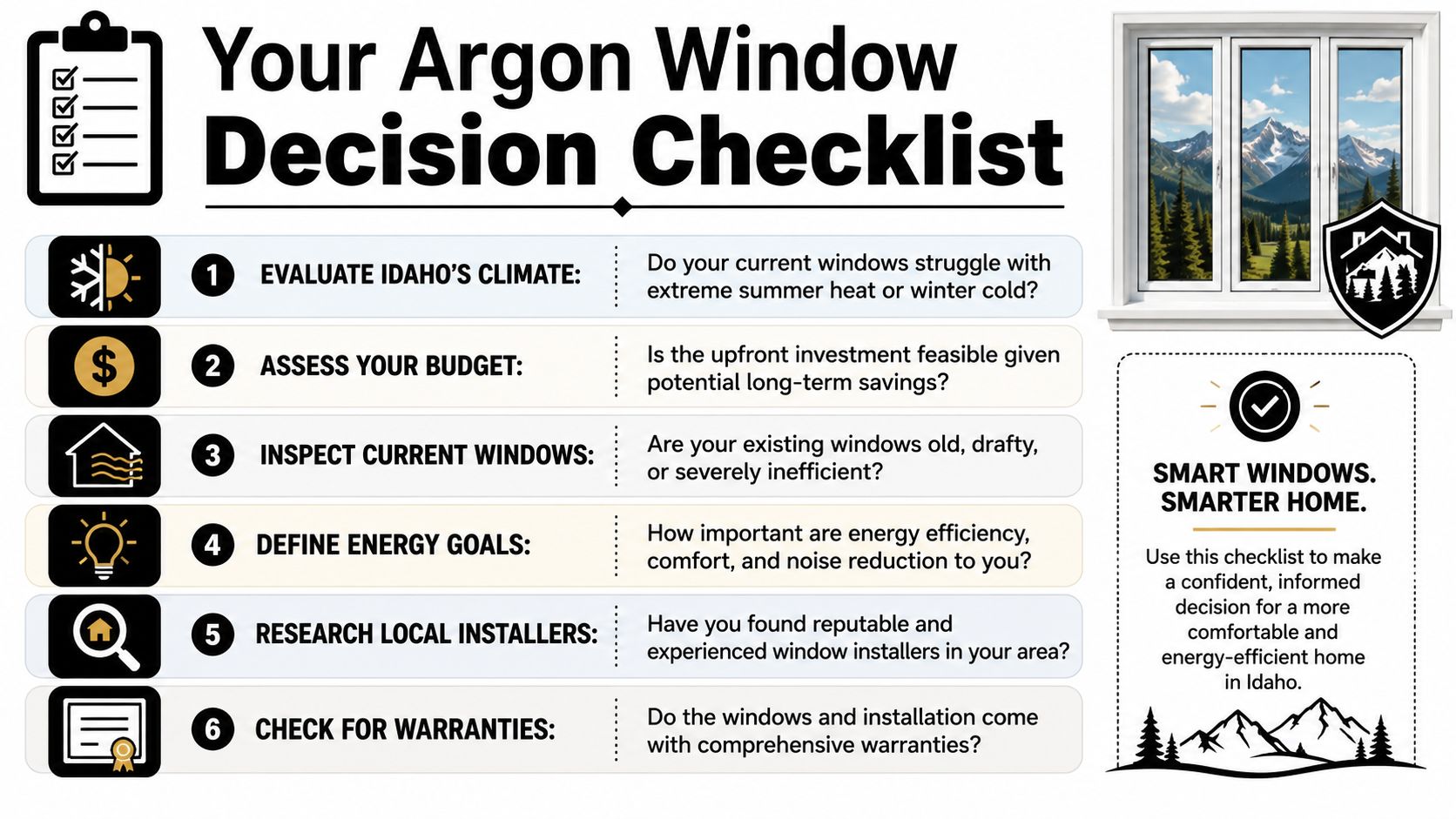
Your Decision Checklist for Argon Windows
A Boise homeowner usually asks this question after living through both January cold snaps and August heat baking the west side of the house. That is the right time to decide. Argon is worth it for many Idaho homes, but only when the full window package will still be performing well ten or twenty years from now.
When I'd say yes
I recommend argon when you are replacing windows for the long haul and want better comfort, not just a nicer spec sheet.
Choose argon if these sound like your situation:
- Your rooms feel chilly near the glass in winter and too warm in summer afternoons.
- You plan to stay in the home for years, so the added insulation has time to pay you back in comfort and lower energy waste.
- Your house deals with real seasonal swings, which is normal across Boise, Meridian, Eagle, Nampa, and the rest of the Treasure Valley.
- You are buying a quality Low-E window package and want the insulating glass unit to perform better from day one and still make sense after years of Idaho freeze-thaw cycles.
- You care about the next 20 years, not just the first heating season.
When I'd say skip it
Skip argon if the rest of the window is mediocre. That is my honest answer.
I would pass in these cases:
- The salesperson cannot explain the glass package in plain English.
- The bid focuses on argon but gets vague about frame quality, spacer system, or warranty.
- The installer seems rushed or sloppy, especially on older openings where fit and support matter.
- You are trying to solve drafts caused by bad installation, worn weatherstripping, or wall air leaks.
- You are choosing the cheapest unit available, where long-term gas retention is more likely to become the weak point.
The big mistake is treating argon like the deciding feature by itself. In Idaho, a cheap window with argon can lose its edge long before a better-built unit does.
What to ask before you sign
Ask questions that tell you how this window will age, not just how it performs in the showroom.
- What Low-E coating is included, and is it the right one for this home's sun exposure?
- What spacer system is used in the insulated glass unit?
- How long is the glass seal warranty, and what does it cover?
- How will this window handle west-facing rooms that get hammered by summer sun?
- What is the installation method for this opening, and who is responsible if comfort problems show up later?
- If some argon loss happens over time, will this window still be a solid performer in year 10 and year 20?
That last question matters more than homeowners think.
My recommendation is straightforward. For most Idaho homeowners replacing aging windows, argon is worth the upcharge in a well-built Low-E double-pane unit. Move to triple-pane in the coldest rooms, the noisiest spots, or the parts of the house where you plan to stay put for decades. If the manufacturer, glass unit, and installer do not inspire confidence, keep your money and choose a better window instead.
Frequently Asked Questions About Argon Gas Windows
Is argon gas safe in windows
Yes. Argon is an inert gas used inside sealed insulated glass units. It isn't there to create a health risk. It's there to slow heat transfer between panes.
Can argon gas leak out over time
Yes, some gradual loss over time is part of the long-term conversation. The bigger issue is whether the insulated glass unit is well made and whether the seal stays intact for years.
Are argon windows worth it in Boise specifically
Usually, yes. Boise's mix of cold winters and hot summers makes the added insulating value useful, especially when the window also has the right Low-E coating for the home's exposure.
Does argon matter if the window already has Low-E glass
Yes, but as an add-on to the full system. Low-E does one important job. Argon does another. They work better together than separately.
Will argon fix a drafty old house by itself
No. If air is leaking around the frame or the installation is poor, argon inside the glass won't solve that. You need the full window and installation to be right.
Should I choose argon or triple-pane
That depends on the room, the budget, and how far you want to push performance. For many Treasure Valley homes, argon in a strong double-pane Low-E unit is the practical choice. Triple-pane can make sense for select rooms or for homeowners planning long-term ownership.
If you want a straight answer on whether argon makes sense for your specific home, C & C Windows & Doors offers in-home consultations for Treasure Valley homeowners who want practical guidance on replacement window options, glass packages, and installation quality. Bring the hard questions. That's the right way to buy windows in Idaho.