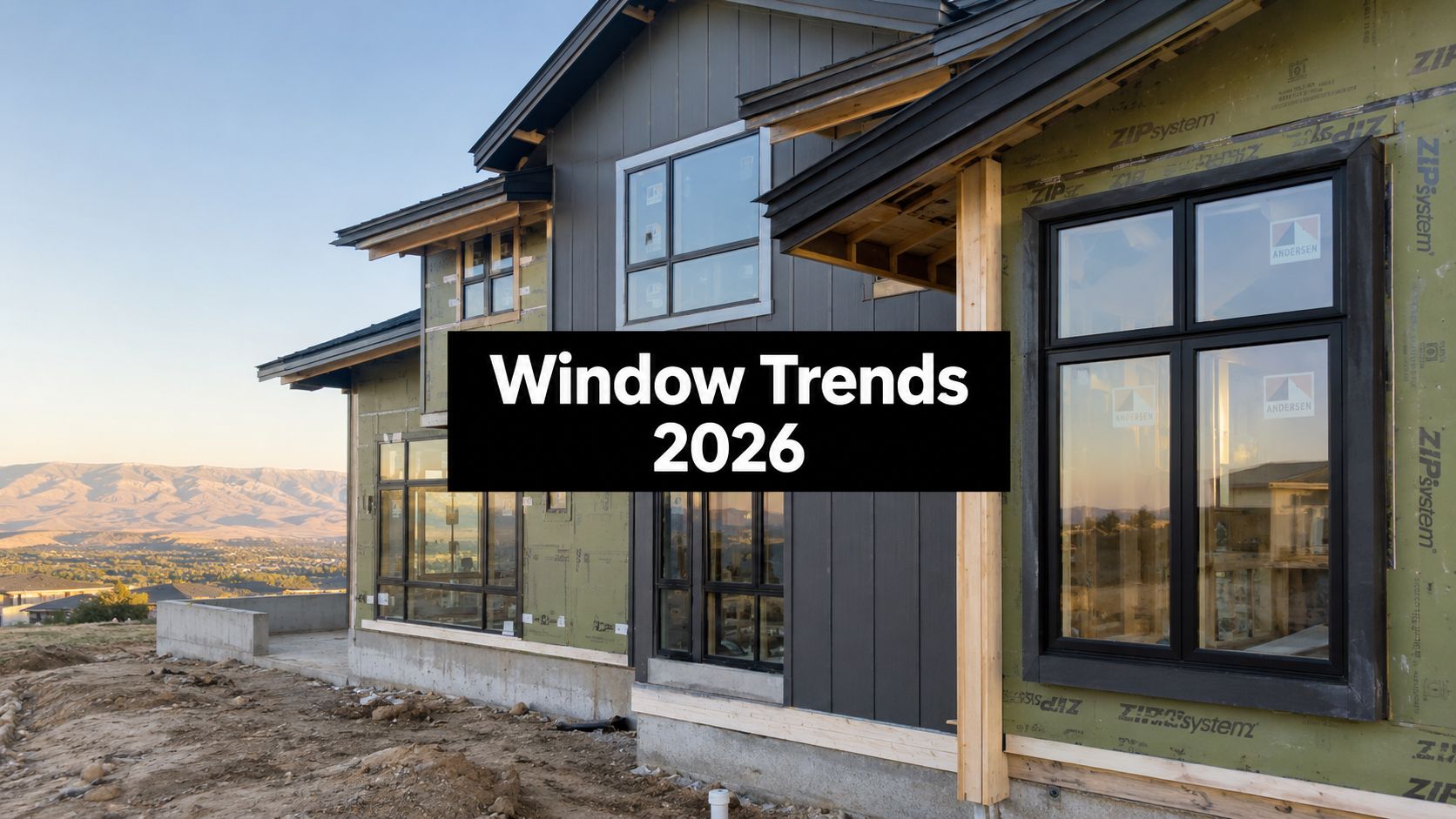
Building for the Future: Your 2026 Window Guide for the Treasure Valley
Large glass packages are taking a bigger share of new construction, and that trend is easy to see on jobs across Boise, Meridian, and Eagle. Buyers want more daylight, wider views, and cleaner sightlines. Builders want the same look without creating comfort problems, warranty issues, or budget overruns.
That is where Treasure Valley projects separate themselves from trend-driven specs pulled from national design pieces. Our climate puts real stress on window systems. Freeze-thaw cycles test seals and installation details. High summer UV beats up finishes and raises solar heat gain on the wrong elevations. Winter cold, dry air, and shoulder-season temperature swings expose weak frame materials and underbuilt glass packages fast.
Style still matters. Performance matters first.
The best new construction window choices for 2026 are the ones that fit both the house and the site. A black interior frame might look right in a modern Eagle build and be the wrong call on a full west exposure without the right glass. A budget vinyl package may pencil out at bid time, then cost the homeowner in comfort, expansion issues, and shorter service life. In this market, good window selection is part design decision and part climate-control strategy.
The trends below are worth watching because they hold up in local builds. They also show where careful product selection and installation from experienced Treasure Valley teams such as C&C Windows & Doors can protect long-term value, not just curb appeal.
Table of Contents
- 1. Ultra-Narrow Frame Technology for Modern Aesthetics
- 2. Triple-Pane Glass with Advanced Low-E Coatings for Extreme Climate Performance
- 3. Seamless Indoor-Outdoor Living with Bifold and Sliding Patio Door Integration
- 4. Smart Window Technology and Motorized Control Systems for Home Automation Integration
- 5. Composite and Fiberglass Frame Materials for Superior Durability in Idaho's Climate
- 6. Architectural Statement Windows for Design Distinction
- 7. Low-Maintenance Exterior Finishes with Hybrid Materials and Factory-Applied Coatings
- 7-Point Comparison: Treasure Valley New-Construction Window Trends 2026
- Making the Right Choice for Your Treasure Valley New Build
1. Ultra-Narrow Frame Technology for Modern Aesthetics
More glass is driving a large share of new-construction window requests in the Treasure Valley, but slim frames only perform well when the opening, frame material, and install quality are matched to local conditions. Boise sun exposure, winter freeze-thaw cycles, and wide day-to-night temperature swings put narrow-profile units under more stress than the showroom sample suggests.
Slim sightlines fit the homes buyers are asking for in Meridian, downtown Boise, and Eagle. They clean up the exterior lines, pull more daylight into the plan, and make foothill, pasture, and golf course views feel bigger. In the right location, that visual gain is real.
Why slim frames are everywhere
The best use case is straightforward. Put ultra-narrow frames where the glass is doing premium work. That usually means a great room with a view, a stair landing that needs daylight, or a rear elevation that opens the house to the yard.
The trade-off is tolerance. Narrow frames give installers and framers less room to hide an out-of-square rough opening, a crowned sill, or a rushed flashing detail. I see this on new builds more than homeowners expect. A unit can look sharp on delivery and still lose that clean, tight appearance once seasonal movement starts showing up around the perimeter.
That is why product selection matters as much as style.
A few choices separate a good-looking install from a callback:
- Use narrow-frame units with reinforcement where spans get large. Fiberglass or composite-reinforced profiles usually hold alignment better than lighter vinyl options on big fixed or mulled assemblies.
- Be selective about placement. South and west exposures in Boise, Meridian, and Eagle take a lot of UV and heat. Reserve the slimmest profiles for openings where the view or daylight payoff justifies the tighter performance margin.
- Coordinate the glass package early. Narrow sightlines and larger glass area change comfort at the wall. Builders comparing options should review triple-pane windows for Idaho winters before locking in oversized units.
- Get field measurements before finish details stack up. Once siding returns, interior trim decisions, and drywall tolerances start narrowing the opening, your best-looking option may no longer be your best-fitting one.
For Treasure Valley projects, I usually recommend narrow frames on fixed picture windows, transoms, and carefully sized casements, then getting more conservative on punishing exposures or oversized combinations. C&C Windows & Doors handles a lot of these calls locally, and early jobsite review often prevents the common mistake of chasing the thinnest profile in every room, even where Idaho weather and framing realities call for a little more structure.
2. Triple-Pane Glass with Advanced Low-E Coatings for Extreme Climate Performance
A lot of 2026 window marketing celebrates bigger glass. That part is easy. The harder question is whether that larger glass area is built for Idaho weather.
This is one of the biggest gaps I see in new construction conversations. Broad design content highlights bigger windows and more natural light, but it rarely gets into the climate-specific performance details Treasure Valley buyers need. The local design trend discussion from CBH Homes points to the gap clearly. Many buyers still don't realize that stylish large-window packages may need triple-pane glass and ClimaTech Low-E coatings to make sense for Idaho's seasonal extremes.
Where triple-pane actually earns its keep
Triple-pane isn't automatically the right answer for every opening. It shines where heat loss, sound control, or comfort at the glass line matter most. North and northwest exposures, large fixed glass in open great rooms, and homes near I-84 or busy commercial corridors are strong candidates.
For south-facing glass, triple-pane can still work very well, but only when the Low-E selection supports passive solar goals instead of fighting them. That's where many window packages get overgeneralized. In Idaho, orientation matters.
If you're weighing whether the upgrade makes sense, the best approach is a location-specific review of the house plan, elevation, and glazing layout. C&C has a useful page on triple-pane windows for Idaho winters that helps frame the decision around actual local conditions.
Larger windows are only a win if the room stays comfortable in January and August.
A few situations usually justify the premium:
- Cold-side exposures: Bedrooms, stairwells, and bonus rooms on the north side benefit most from the extra insulation.
- Noise-sensitive locations: Triple-pane can make a noticeable difference near traffic, schools, or retail corridors.
- Large fixed units: Big picture windows are harder to get right with entry-level glass packages.
- High-expectation homes: If the build is positioned as luxury or long-term ownership, triple-pane fits the brief better than a minimum-spec package.
3. Seamless Indoor-Outdoor Living with Bifold and Sliding Patio Door Integration
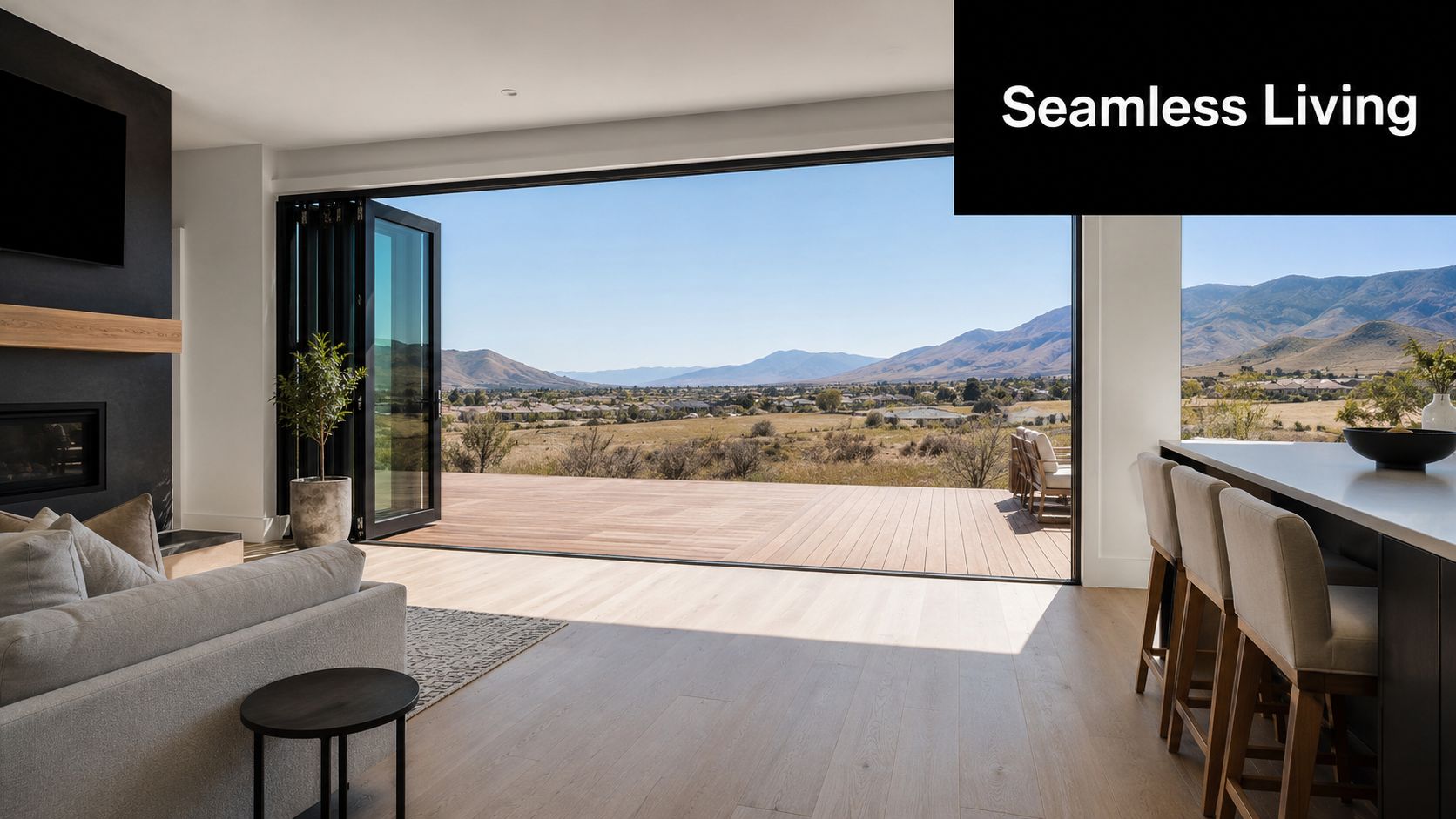
The biggest openings in a new home often aren't windows anymore. They're patio door systems that act like movable walls. In the Treasure Valley, that makes sense. Buyers want decks, covered patios, backyard kitchens, and great rooms that feel connected to all of it.
This trend is strong because it solves both lifestyle and design goals at once. A wide sliding door can preserve wall space and simplify operation. A bifold system creates a bigger opening and a stronger wow factor. The wrong choice usually comes down to overbuilding the opening without thinking through threshold height, drainage, daily use, or furniture layout.
What works in Treasure Valley builds
In Meridian and Eagle, wide-panel sliders often make more practical sense for everyday family use. They're simpler, fast to operate, and easier to live with when kids, pets, and frequent traffic are involved. Bifolds are excellent in showcase spaces, especially where the patio functions like a second living room.
Drainage is the detail that gets overlooked most often. Idaho spring runoff, irrigation overspray, and winter moisture all test low-threshold openings. If the sill design, slope, and flashing sequence are weak, the door becomes a service call waiting to happen.
C&C's page on sliding patio door replacement in Boise reflects the kind of hardware and sill details that matter locally, especially secure low-profile locking and proper drainage management.
What tends to work best:
- Plan the opening early: Structural support should be resolved before framing is finalized.
- Use performance glass, not builder-grade glass: Large patio openings need the same solar-control thinking as large windows.
- Respect threshold details: Low-profile is good, but only if the sill still sheds water correctly.
- Leave room for shades or screens: Most west-facing openings need solar management in summer.
4. Smart Window Technology and Motorized Control Systems for Home Automation Integration
Not every smart feature in new construction is worth the money. This category can be, if it's used where sun exposure and comfort vary through the day.
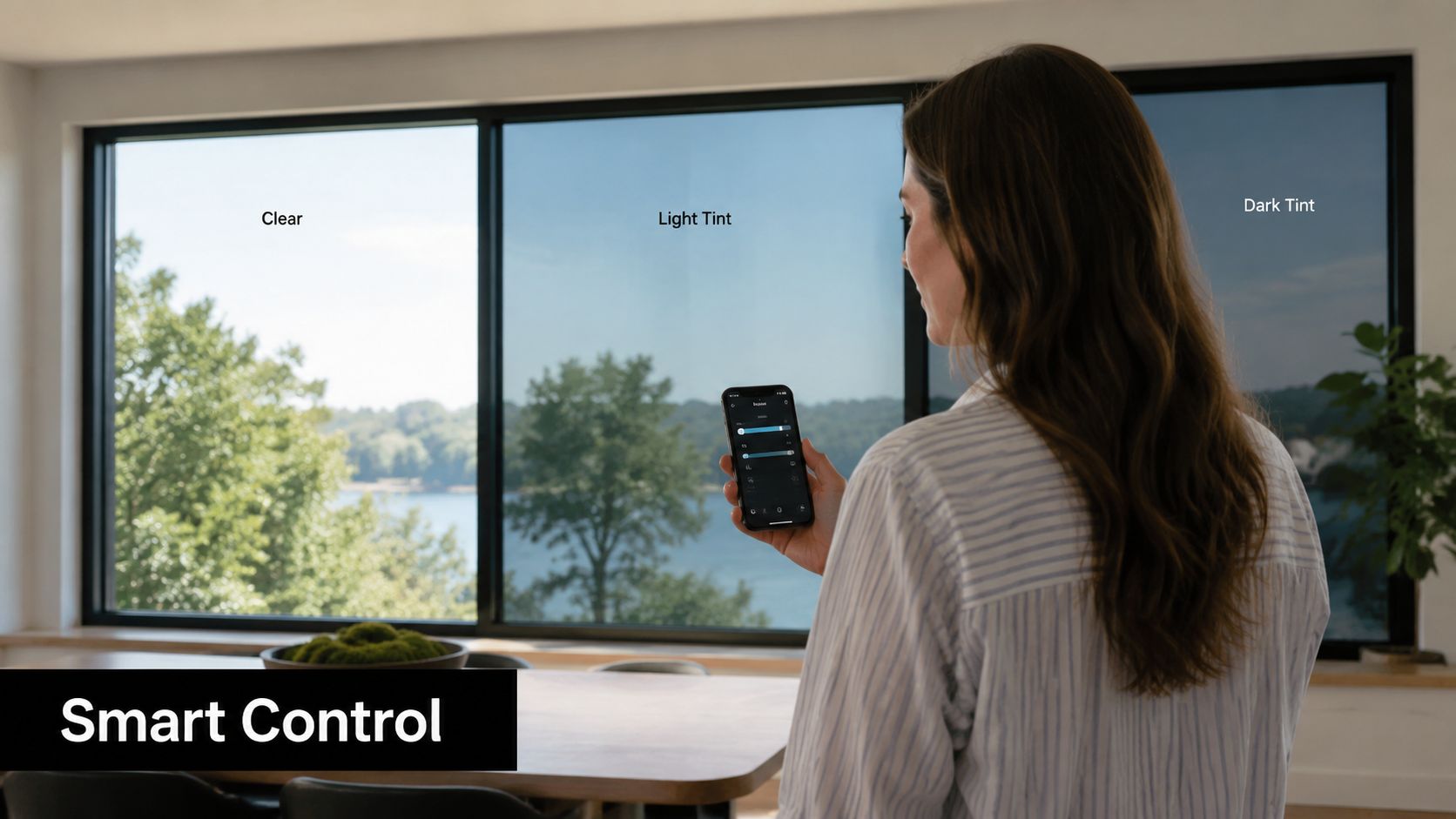
Smart window technology is showing up most often in larger south-facing glass walls, two-story great rooms, and homes with integrated lighting, HVAC, and shade control. Some systems use motorized operators. Others focus on motorized shades or dynamic tinting. The practical question isn't whether the app looks good. It's whether automation solves a real comfort problem.
Best use cases for automation
The strongest application is solar management in spaces that get blasted by afternoon or shoulder-season sun. In Eagle and Boise foothills homes with large view glass, automated control can reduce the need for owners to constantly chase comfort with blinds and thermostats.
It also helps in hard-to-reach openings. Clerestory windows, tall foyer glass, and stairwell casements are all easier to use when they're integrated into a control system from the start. Manual overrides still matter. So does backup planning if power goes out.
The broader market direction supports this move toward performance plus convenience. In 2026, homeowners are prioritizing energy performance, natural light, and long-term value, with larger picture windows, expanded glass panels, slimmer low-profile frames, and clean sightlines leading the conversation, according to Joyce Factory Direct's overview of 2026 window trends.
Automation makes sense when it controls glare, heat, privacy, or ventilation. It doesn't make sense when it's added just because the house is labeled smart.
Good planning usually includes:
- Wire during framing: Low-voltage prep is cleaner and cheaper before drywall.
- Focus on the problem openings first: Start with south and west glass, not every window in the house.
- Keep manual control available: Homeowners and future service techs will thank you.
- Coordinate trades: The window installer, electrician, and automation integrator need the same plan.
5. Composite and Fiberglass Frame Materials for Superior Durability in Idaho's Climate
Material choice gets less attention than glass, but it drives a lot of long-term satisfaction. In the Treasure Valley, the frame has to deal with hot sun, winter contraction, freeze-thaw stress, and plenty of dust and dryness.
That's why composite and fiberglass are getting more attention in better new builds. They usually hold shape better than lower-end alternatives, and they pair well with larger openings and slimmer profiles. If the design calls for narrow sightlines and big glass, the frame material has to carry that load without making the unit feel fragile.
Material choice matters more than most buyers think
Fiberglass is a strong option for homeowners who want a cleaner, more architectural look with less seasonal movement. Composite can be a great fit where you want rigidity plus a more substantial frame feel. Both work well in south-facing elevations where UV exposure is relentless.
The trade-off is upfront cost. These aren't the cheapest packages on the bid sheet. But they often make more sense in custom homes, foothills projects, and any build meant to hold its value over time rather than hit a spec target.
For homeowners comparing frame categories, C&C's guide on vinyl vs. wood windows for Idaho is a useful starting point because it gets into local performance considerations instead of treating every material as interchangeable.
A few practical calls I'd make in this market:
- Use fiberglass or composite on harsh exposures: South and west elevations take the most abuse.
- Pair premium frames with premium glass: Strong frames deserve a glass package that matches their performance.
- Ask about finish stability: Color retention matters as much as structural stability in high UV.
- Match material to house style: Contemporary homes often lean fiberglass. Transitional and farmhouse styles can work well with composite.
6. Architectural Statement Windows for Design Distinction
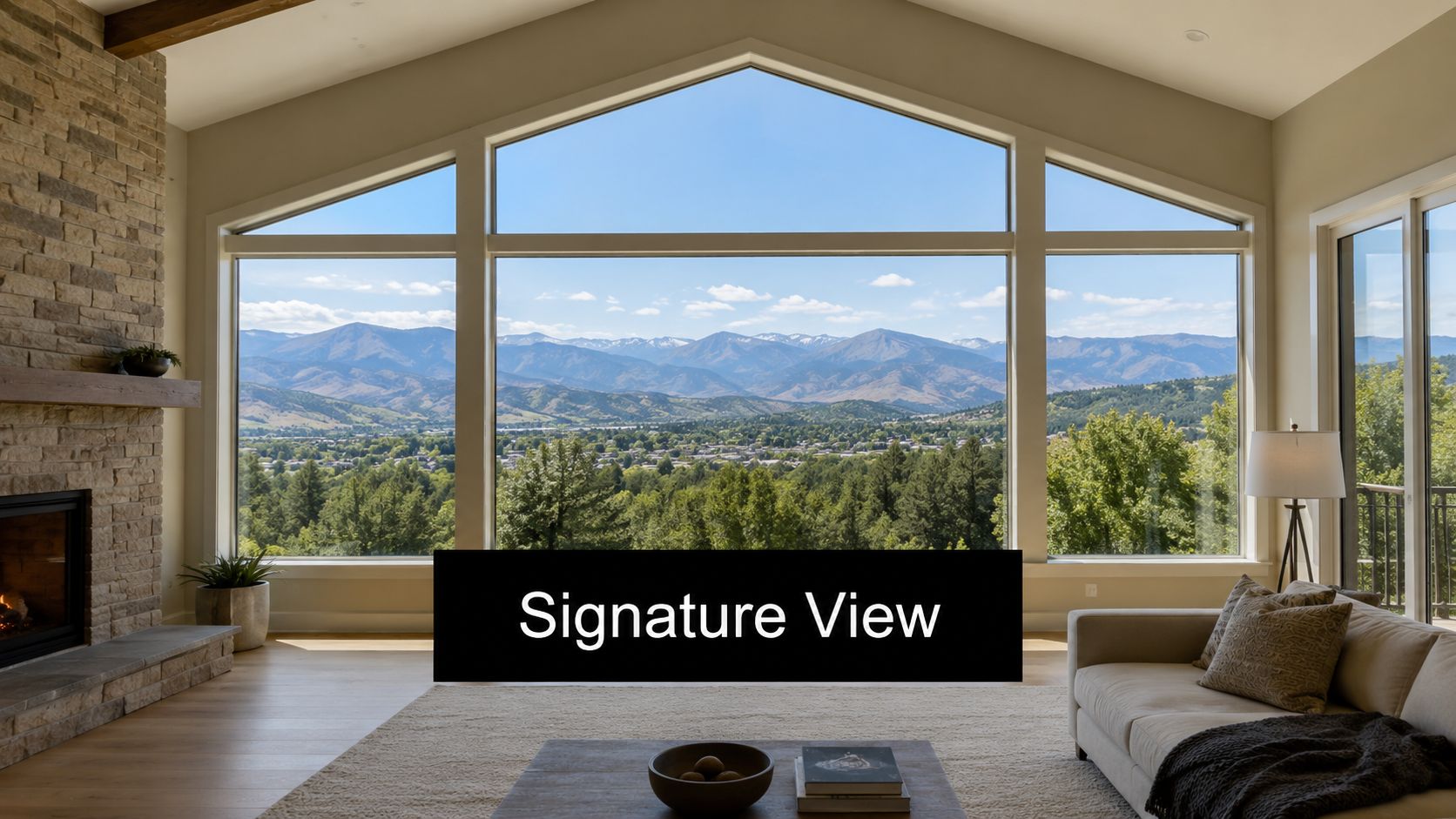
Some windows are there to light a room. Others define the room. Picture windows, bay windows, radius units, and custom geometric shapes are doing more of that work in 2026 new construction across the Treasure Valley.
This trend fits the local market because the region has so many lots that deserve framing. Foothill ridgelines, open agricultural edges, water features, and mountain views all reward thoughtful glass placement. One well-positioned statement window can do more for a floor plan than several average windows scattered around the same wall.
Make the view work for the house
The common mistake is sizing a statement window around exterior appearance alone. From inside the house, that can place the sill too high, break the furniture layout, or miss the actual sightline people care about. Good statement windows are designed from the primary seating position, not from the curb.
In Boise contemporary homes, triangular or peak windows can reinforce rooflines and cathedral ceilings beautifully. In Meridian, bay windows still work well in breakfast nooks and front-facing reading spaces when they're proportioned correctly. In Eagle luxury homes, large picture units are often the right answer because they keep the frame quiet and let the view carry the room.
The best statement window doesn't ask for attention. It directs your eye exactly where the lot is worth looking.
When planning one, keep these points in mind:
- Identify the main view first: Great room, kitchen, and primary suite usually deserve first priority.
- Avoid adding shapes just for novelty: Custom geometry should support the architecture.
- Ventilation still matters: Pair fixed focal windows with operable units nearby.
- Coordinate structure early: Large or unusual openings need engineering attention before framing day.
7. Low-Maintenance Exterior Finishes with Hybrid Materials and Factory-Applied Coatings
A beautiful window finish that degrades quickly in Idaho sun isn't beautiful for long. That's why low-maintenance exteriors are becoming a serious buying criterion, not just a nice extra.
Hybrid material packages and factory-applied coatings have a real advantage in the Treasure Valley. They reduce repaint cycles, resist UV wear better than field-applied finishes, and keep the exterior cleaner-looking through hot summers and sharp seasonal transitions. This matters even more on south and west elevations, where finish failure shows up first.
Where low-maintenance finishes pay off
Boise foothills homes are a strong example. Intense sun, exposed elevations, and reflective winter conditions can punish traditional exterior finishes. Eagle and Meridian homes with dark window colors also benefit from better factory coatings because dark finishes tend to reveal fading and chalking sooner when the material underneath isn't stable.
The best approach is to think about maintenance at specification time, not after move-in. If the homeowner wants a wood-look exterior without the upkeep burden, hybrid fiberglass or composite systems with factory-applied finishes are usually the smarter call.
Choices that tend to age better here include:
- Factory-applied protective coatings: These usually outperform site-applied paint for consistency and adhesion.
- Fiberglass or composite exteriors: They give coatings a more stable base in changing weather.
- Neutral or architectural finish colors: Bronze, black, and natural wood-look tones stay relevant longer than trend colors.
- Annual cleaning expectations: Low-maintenance still means cleaning glass, tracks, and exterior surfaces occasionally.
This trend doesn't get the same attention as huge glass walls or slim frames, but it saves headaches. A finish that still looks sharp years later protects curb appeal and keeps a new build feeling new.
7-Point Comparison: Treasure Valley New-Construction Window Trends 2026
| Item | 🔄 Implementation Complexity | ⚡ Resource Requirements | 📊 Expected Outcomes | 💡 Ideal Use Cases | ⭐ Key Advantages |
|---|---|---|---|---|---|
| Ultra-Narrow Frame Technology for Modern Aesthetics | Moderate–High, precise installation and tight tolerances required | Premium composite-reinforced frames; custom fabrication; factory-trained installers | +20% visible glass area; modern clean lines; maintained thermal performance when paired with Low-E/Argon | New construction framing premium views (Boise foothills, Eagle); large picture windows | Maximizes views/light; upscale curb appeal; seamless indoor‑outdoor feel |
| Triple-Pane Glass with Advanced Low-E Coatings | Moderate, professional glazing and proper sealing required | Heavier glass units, Argon/Krypton fills, advanced Low‑E coatings; reinforced frames | Significant energy savings (≈30–40% heating reduction vs double-pane); superior sound dampening; condensation control | North/east/west exposures; homes near highways or high heating loads | Top-tier thermal & acoustic performance; ENERGY STAR eligibility; rebate potential |
| Seamless Indoor-Outdoor Living with Bifold & Sliding Doors | High, structural modifications, thresholds, and drainage detail critical | Large systems, reinforced openings, specialized hardware and installers | Vast unobstructed openings (8–16+ ft); increased perceived living area; improved ventilation | South/southwest entertainment zones, large lots (Meridian, Eagle) | Panoramic openings; high marketing appeal; flexible ventilation and flow |
| Smart Window Technology & Motorized Controls | High, electrical integration, programming, and coordination with automation | Electrochromic glass or motors, sensors, controllers, wiring, backup power options | Automated solar control; HVAC load reduction (≈15–25%); remote monitoring and security features | Tech-forward or net‑zero homes; south-facing glazing and hard-to-reach windows | Dynamic solar management; convenience and data-driven optimization |
| Composite & Fiberglass Frame Materials | Moderate, standard professional installation but heavier support needed | Higher-material cost; reinforced frames; possible structural support for larger units | Long lifespan (40–50 yrs), minimal dimensional change in freeze‑thaw cycles; improved thermal stability | High-altitude sites, intense-UV exposures, south-facing façades | Durable, stable, low long-term maintenance; excellent thermal performance |
| Architectural Statement Windows (Picture, Bay, Custom) | High, custom fabrication, complex framing and weatherproofing | Custom glass, structural engineering, premium glass packages (triple‑pane/Low‑E) | Strong visual impact; increased natural light; perceived value uplift (≈3–8%) | Homes with premium views or signature architectural designs | Signature focal points for marketing; frames best vistas without compromising performance |
| Low-Maintenance Exterior Finishes: Hybrid & Factory Coatings | Low–Moderate, specify at order; less field work required | Hybrid/exterior claddings, factory-applied ceramic/acrylic coatings; small premium cost | Reduced upkeep (annual cleaning only); extended color/finish life (10+ years) | Busy homeowners, retirees, rental properties; south/west exposures | Preserves appearance in high-UV conditions; lowers lifetime maintenance costs |
Making the Right Choice for Your Treasure Valley New Build
Selecting windows for a new build in Boise, Meridian, Eagle, or the surrounding Treasure Valley is one of those decisions that affects daily life more than most buyers expect. You see the style immediately, but you feel the performance over time. Temperature near the glass, afternoon glare, outside noise, cleaning demands, and long-term durability all come back to the package you chose during construction.
The strongest new construction window trends Treasure Valley 2026 homeowners should follow have one thing in common. They blend design with local performance. Ultra-narrow frames look excellent when the frame material and install quality support them. Triple-pane glass earns its keep when the home has harsh exposures, large openings, or noise concerns. Bifold and sliding patio door systems are fantastic when the sill, drainage, and layout are planned early. Smart controls help when they solve real comfort problems, not when they're added as a gimmick.
The same goes for frame materials and finishes. Composite and fiberglass often make more sense in Idaho than people realize, especially on demanding elevations. Factory-applied finishes and hybrid exteriors can save a lot of maintenance frustration later. Statement windows can absolutely enhance a home, but only when they frame the right view and don't ignore comfort or orientation.
If I had to narrow it down to one practical rule, it would be this. Don't choose windows as isolated products. Choose a system. Frame material, glass package, orientation, opening style, sill design, and installation quality all work together. Miss one piece and the trend doesn't deliver the result you expected.
That's where a local installer matters. C&C Windows & Doors brings Treasure Valley-specific knowledge to the parts of the job that national trend articles usually skip. They understand how Idaho sun affects coatings, how freeze-thaw conditions expose weak installs, and how slim-frame modern designs still need airtight seals and dependable drainage. With factory-trained expertise and 13 years of experience, they help builders and homeowners turn good-looking plans into windows that perform for decades.
For homeowners and builders who want windows that match Treasure Valley design trends without sacrificing Idaho-ready performance, C & C Windows & Doors is the local team to call. They provide free in-home consultations, custom measurements, and factory-trained installation for energy-efficient windows and patio doors built for Boise, Meridian, Eagle, and surrounding communities.