
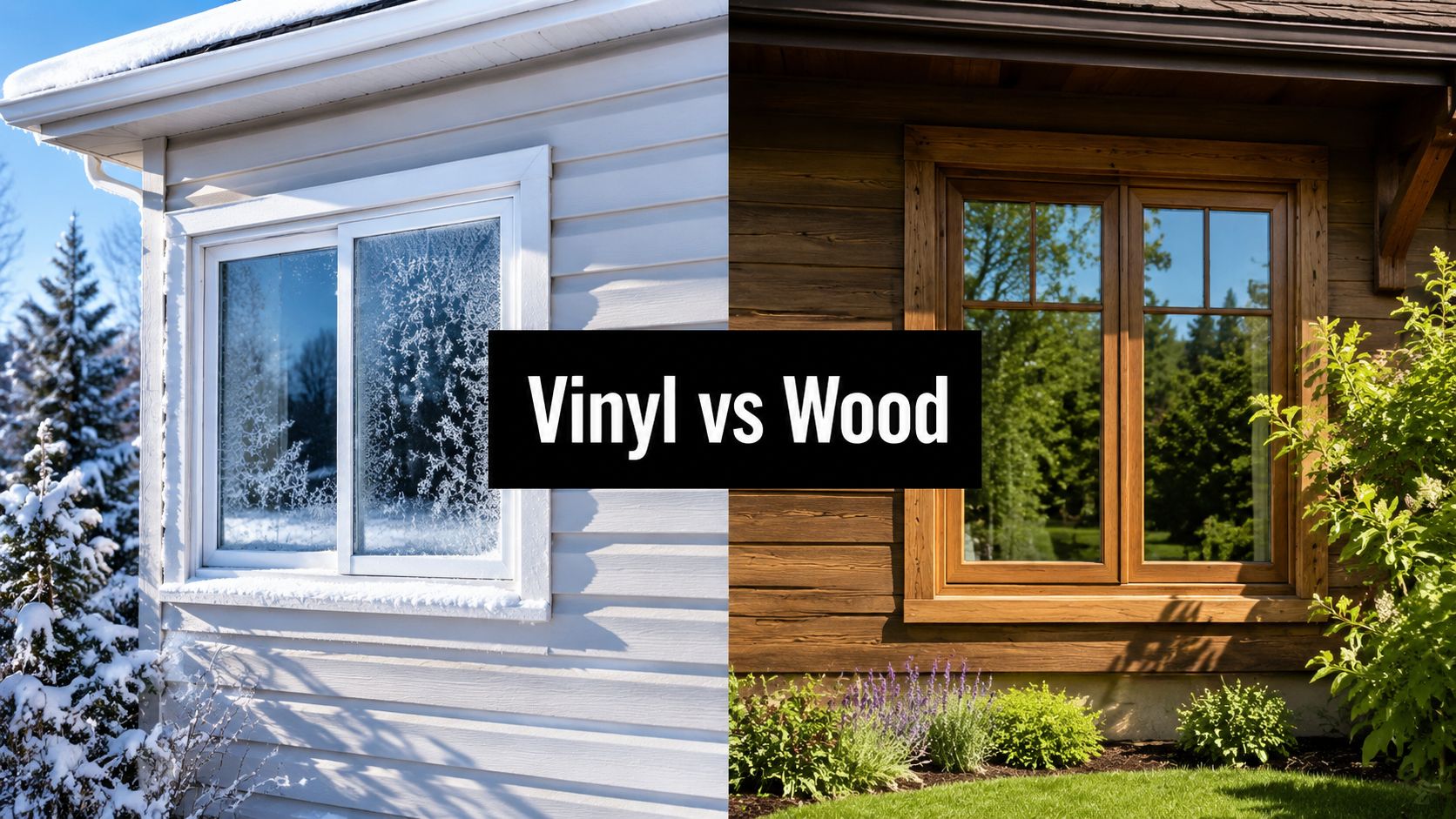
You feel this decision the first cold morning after a hard Idaho freeze. You walk past the living room window in Boise or Meridian and catch that ribbon of cold air on your arm. Then July shows up, the sun pounds the glass all afternoon, and the same window turns that room into a heat trap. At that point, “vinyl vs wood” stops being a design debate. It becomes a comfort, maintenance, and money decision.
My advice is simple. For most Treasure Valley homes, high-performance vinyl is the smarter long-term buy. Wood still has a place in a small number of homes, mostly where historic character or a very specific architectural look matters more than upkeep and budget. But if your goal is lower hassle, strong efficiency, and better value in Idaho's climate, vinyl usually wins.
Table of Contents
- Choosing Windows for Idaho's Unique Climate
- The Idaho Climate Challenge for Home Windows
- Energy Performance in Idaho's Four Seasons
- Durability and Maintenance in the Face of Extremes
- Cost ROI and Resale Value in the Treasure Valley
- Beyond the Frame Aesthetics Noise and Installation
- The Verdict The Best Window for Your Idaho Home
Choosing Windows for Idaho's Unique Climate
A homeowner in Eagle might care most about keeping winter drafts out of a big front room. Someone in Kuna might be staring at faded trim and peeling paint. A family in Nampa may just want to stop fighting upstairs heat in summer and cold spots in January. Different neighborhoods, same basic problem. Idaho puts real stress on windows.
That's why generic national advice misses the point. A window that works fine in a mild climate can become a headache here. You need something that handles cold snaps, sharp temperature swings, strong sun, and the day-to-day reality of a home that's being heated and cooled hard for much of the year.
Here's the fast comparison most homeowners need early:
| Factor | Vinyl windows | Wood windows | My Idaho take |
|---|---|---|---|
| Upfront cost | Lower | Higher | Vinyl usually makes more sense for replacement projects |
| Maintenance | Low | Ongoing sealing, painting, upkeep | Vinyl is the practical winner |
| Weather resistance | Strong against moisture and routine wear | More vulnerable to moisture-related deterioration and finish issues | Vinyl fits Idaho better |
| Energy performance | Strong when the tested package is right | Can also perform well | Compare the full NFRC package, not just the material |
| Aesthetics | Cleaner and more versatile than many people expect | Traditional, warm appearance | Wood is mostly a style choice |
| Best fit | Most homes in Boise and the Treasure Valley | Historic or very design-specific homes | Vinyl is my default recommendation |
Bottom line: If you want the best balance of comfort, cost control, and low upkeep in Idaho, start with vinyl and only move to wood if you have a very specific architectural reason.
The Idaho Climate Challenge for Home Windows
Idaho is rough on window materials. Not in a vague “four seasons” way. In a very specific way that exposes weak frames, weak sealants, and poor installation fast.

Why national advice falls short here
A lot of online advice treats all cold climates as basically the same. Idaho isn't the same as a damp coastal market or a temperate southern market. Treasure Valley homes deal with hard winter cold, bright sun, and repeated temperature movement that keeps testing the edges of the window system.
That movement matters. Idaho averages 140 annual days below freezing, combined with daytime highs above 30°F in winter, and that causes wood frames to expand and contract 3x faster than vinyl. A National Institute of Building Sciences study found wood windows in these cold-climate conditions lose energy efficiency 22% faster than vinyl over 5 years due to accelerated sealant failure. Those are the kinds of details homeowners need when asking which window material holds up here.
What Idaho weather does to window materials
Wood and vinyl don't react the same way when the weather keeps cycling. Wood is beautiful, but it's a reactive material. It moves more. It depends more heavily on finish condition and ongoing protection. When sealants start to fail, drafts and moisture problems usually follow.
Vinyl takes a different path. It doesn't need paint or protective sealing, and quality vinyl doesn't rot or warp in the way wood can. That's a major advantage in a place where windows get hammered through winter and baked in summer.
A practical way to think about Idaho window performance:
- Freeze-thaw stress: Repeated cold-to-warmer winter swings expose weak joints and aging sealant.
- Moisture exposure: Even small moisture issues can create long-term trouble for wood frames.
- Strong sun: South- and west-facing windows take a beating, especially in rooms with long afternoon exposure.
- Daily temperature movement: Materials that move less tend to hold their seal more consistently.
If a window can't stay stable through winter swings, it won't matter how good it looked in the showroom.
Energy Performance in Idaho's Four Seasons
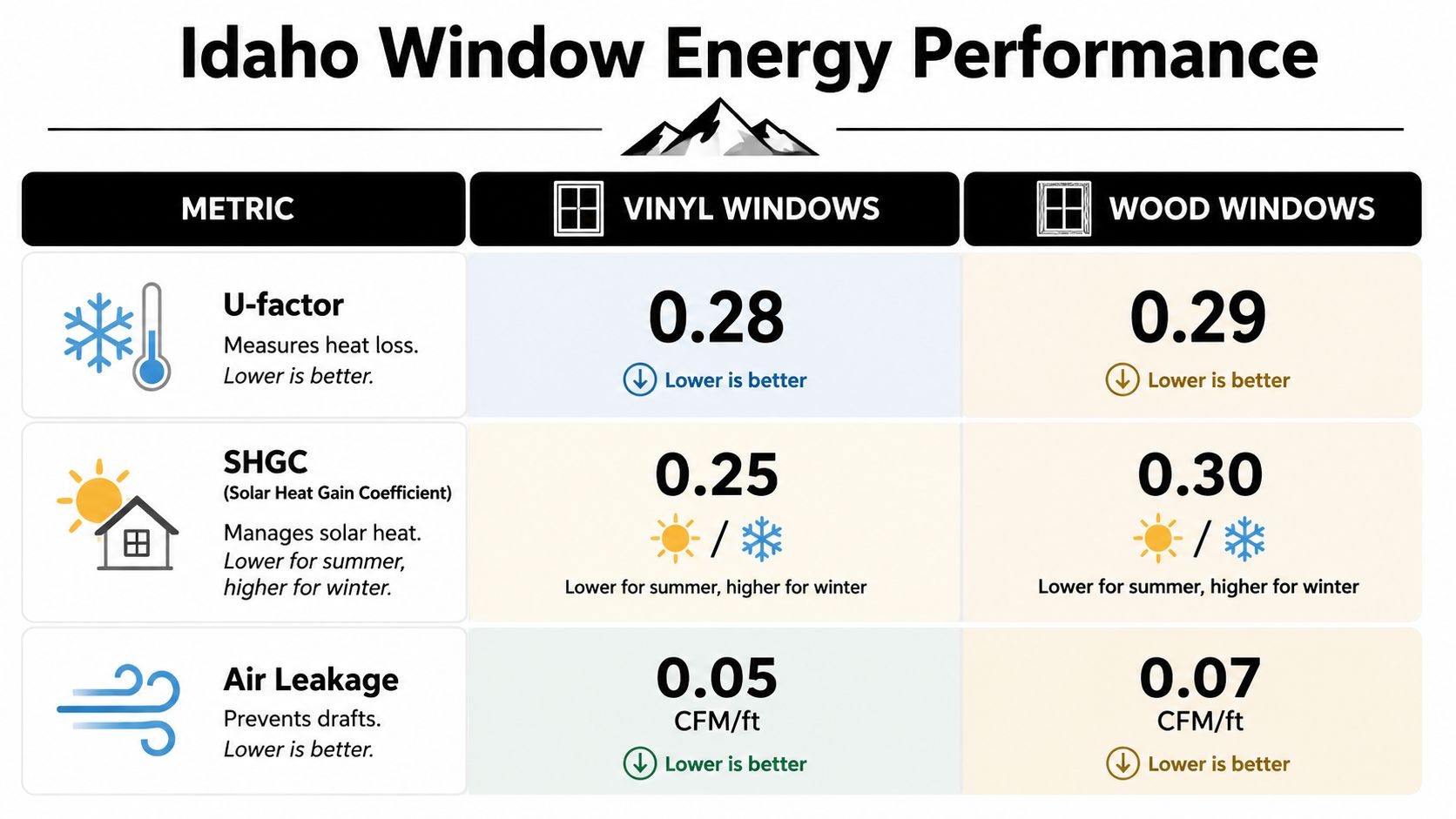
Energy performance is where many homeowners get tripped up. They hear that wood is a “natural insulator” and stop there. That's incomplete. In Idaho, the material alone doesn't decide the winner. The full tested window package does.
What to compare instead of marketing claims
When you're shopping windows, focus on three things.
- U-factor: This measures heat loss. Lower is better for Idaho winters.
- Solar heat gain control: This matters in summer, especially on homes with strong western exposure.
- Air leakage: Draft control often changes comfort faster than homeowners expect.
The key data point is this: premium vinyl frames often achieve U-factors in the 0.20–0.35 range, while premium wood is often around 0.25–0.30, according to this vinyl vs wood thermal comparison. That overlap tells you something important. You can't assume wood is warmer or vinyl is colder just because of the frame material.
Why frame design matters in winter
In real Idaho replacement jobs, I lean vinyl because the best vinyl systems are built around multi-chamber frame designs that reduce conductive heat flow and help with condensation control. That matters on cold mornings when interior humidity meets a cold glass edge and a weaker frame struggles.
Wood can still perform well. But once both products are built as premium systems, the deciding factor becomes the tested package, not the old myth that one frame material automatically dominates the other.
Here's how I'd simplify it for a Treasure Valley homeowner:
| Energy question | What matters most |
|---|---|
| Winter heat loss | A low tested U-factor |
| Summer overheating | The glass package and solar control |
| Draft complaints | Air sealing and installation quality |
| Condensation risk | Frame design plus overall thermal performance |
If you want a deeper look at what to compare, this guide on energy-efficient windows in Idaho breaks down the features that usually matter most in local replacements.
Practical rule: Don't buy a window based on “vinyl” or “wood” alone. Buy the tested package that controls heat loss, air leakage, and condensation in Idaho conditions.
Durability and Maintenance in the Face of Extremes
This is the section where wood usually loses the argument for everyday homeowners. Not because wood is bad, but because it asks more from you year after year.
Wood asks more from the homeowner
Wood windows need attention. They typically require regular sealing or painting, and one comparison notes that wood window maintenance can run $150–$400 every few years, while vinyl needs far less ongoing care, according to this vinyl vs wood maintenance comparison. The same comparison says vinyl windows generally run $300–$800 per window, while wood often runs $800–$1,500.
That cost gap is only part of the story. The main issue is effort. If you stay on top of wood finishes and sealants, wood can stay attractive for a long time. If you don't, Idaho weather exposes the neglect quickly.
A few realities homeowners underestimate:
- Paint cycles aren't optional: Once finishes break down, moisture protection drops with them.
- Small cracks become bigger problems: A minor finish issue can turn into a bigger repair if it's ignored.
- Exposure matters: South- and west-facing sides usually show wear earlier.
Vinyl fits the way most people actually live
Vinyl works well for people who don't want windows to become a recurring project. It doesn't rot or warp and doesn't need protective sealing. That's not just convenient. It protects the long-term performance of the window because fewer maintenance failures mean fewer chances for air leaks and moisture trouble to develop.
If you're comparing replacement options from a durability standpoint, the answer for most Idaho homes is straightforward. Choose the material that asks less from you while keeping its seal and shape more consistently over time.
For a broader look at service life and what shortens it, this article on how long replacement windows last in Idaho is worth reading before you decide.
Most homeowners don't replace windows because they want a maintenance hobby. They replace them because they want the problem gone.
Cost ROI and Resale Value in the Treasure Valley
Sticker price matters. So does everything that comes after it.
The upfront price gap is real
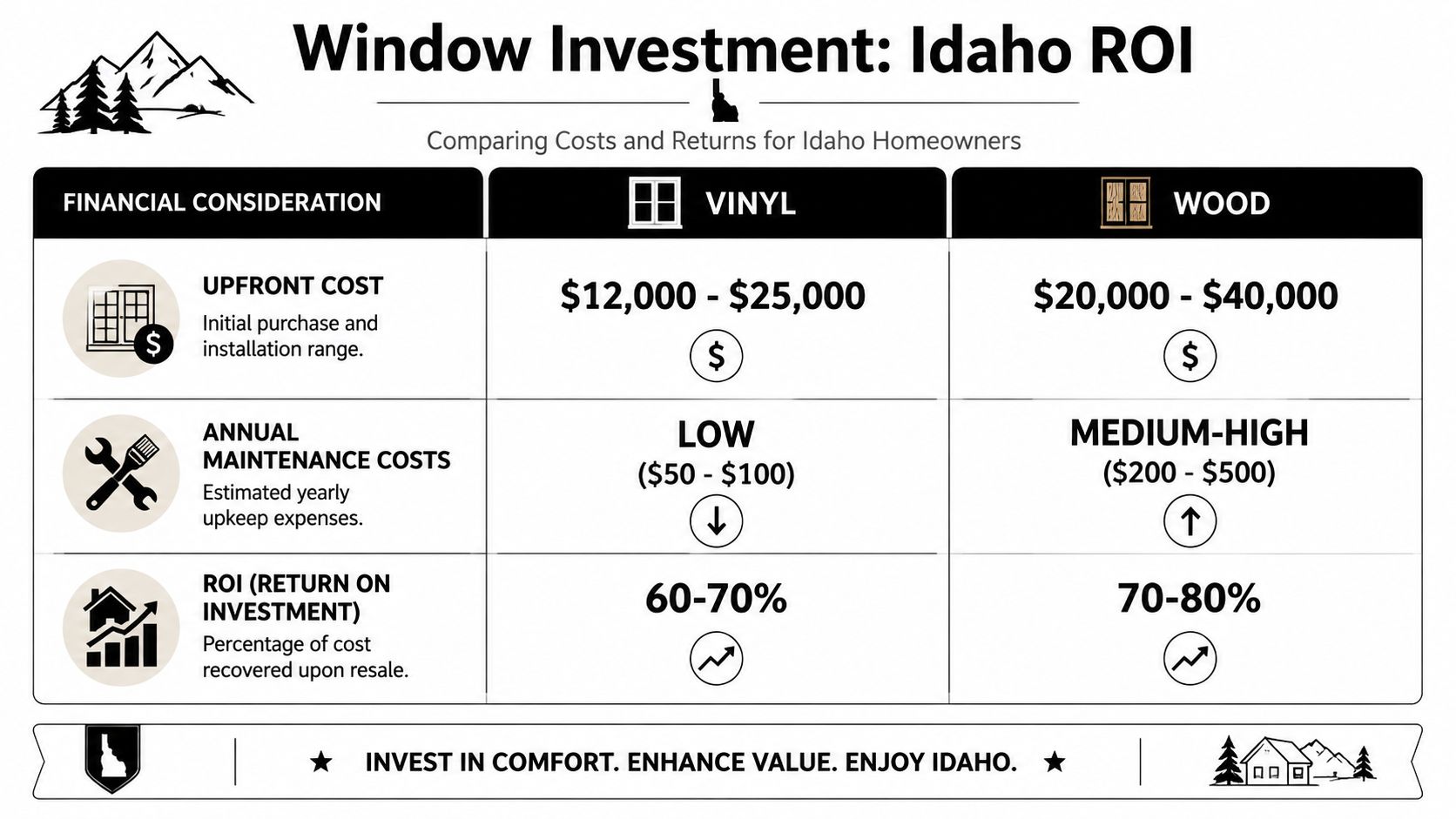
If you're asking which material makes more financial sense, vinyl starts with a major advantage. One comparison says vinyl windows generally cost 2–3 times less than wood windows with similar performance, and that same source reports a 68.6% return on investment for vinyl replacement windows in one replacement-window value comparison, according to this vinyl vs wood ROI discussion.
That's why I recommend homeowners stop looking only at showroom appearance. If one option costs dramatically less upfront, demands less maintenance, and still carries strong resale value, it deserves to be the default choice unless your home has a special design requirement.
What buyers actually value
Treasure Valley buyers care about appearance, but they also care about practicality. They notice clean sightlines, easy operation, and the feeling of a house that doesn't leak air around every frame. They like the idea of lower upkeep. They like not inheriting paint and sealant chores.
Wood can still help the right house. On a historically sensitive property or a premium custom remodel where interior wood character is the top priority, wood may justify its price. But for the average Boise, Meridian, Eagle, Nampa, Caldwell, or Kuna replacement project, vinyl gives homeowners a stronger overall value story.
Here's the decision framework I use with neighbors and clients:
- If budget matters a lot, choose vinyl first.
- If low maintenance matters a lot, choose vinyl again.
- If resale matters, vinyl remains strong because buyers like efficient, low-hassle upgrades.
- If your house has a true architectural need for wood, then pay for wood knowingly, not because of outdated assumptions.
If you're weighing replacement cost against resale impact, this article on window replacement ROI and home value gives a useful homeowner-level view of the tradeoff.
Beyond the Frame Aesthetics Noise and Installation
Stand in a Boise living room in late January, with cold air pressing against the glass and traffic noise carrying through the wall, and window choices stop feeling theoretical. You notice what the frame looks like, how quiet the room feels, and whether the installer did the job right the first time.
Wood still appeals to homeowners who want a stained interior or a traditional look. That preference is real. But many Treasure Valley homeowners are working with outdated ideas about vinyl.
Modern vinyl doesn't look like old vinyl
High-performance vinyl has improved a lot. Better products use narrower frames, cleaner profiles, and color options that fit updated ranch homes, newer builds, and custom remodels without the thick, cheap look people remember from older units.
That matters in Idaho because replacement windows need to do more than look good from the curb. They need to handle strong sun, winter cold, and year after year of expansion and contraction without turning your house into a maintenance project.
Noise is part of the equation too. In growing parts of Boise, Meridian, Nampa, and Eagle, a good glass package and a tight install can cut down outside noise in a way homeowners notice right away. The frame matters, but the full window system matters more.
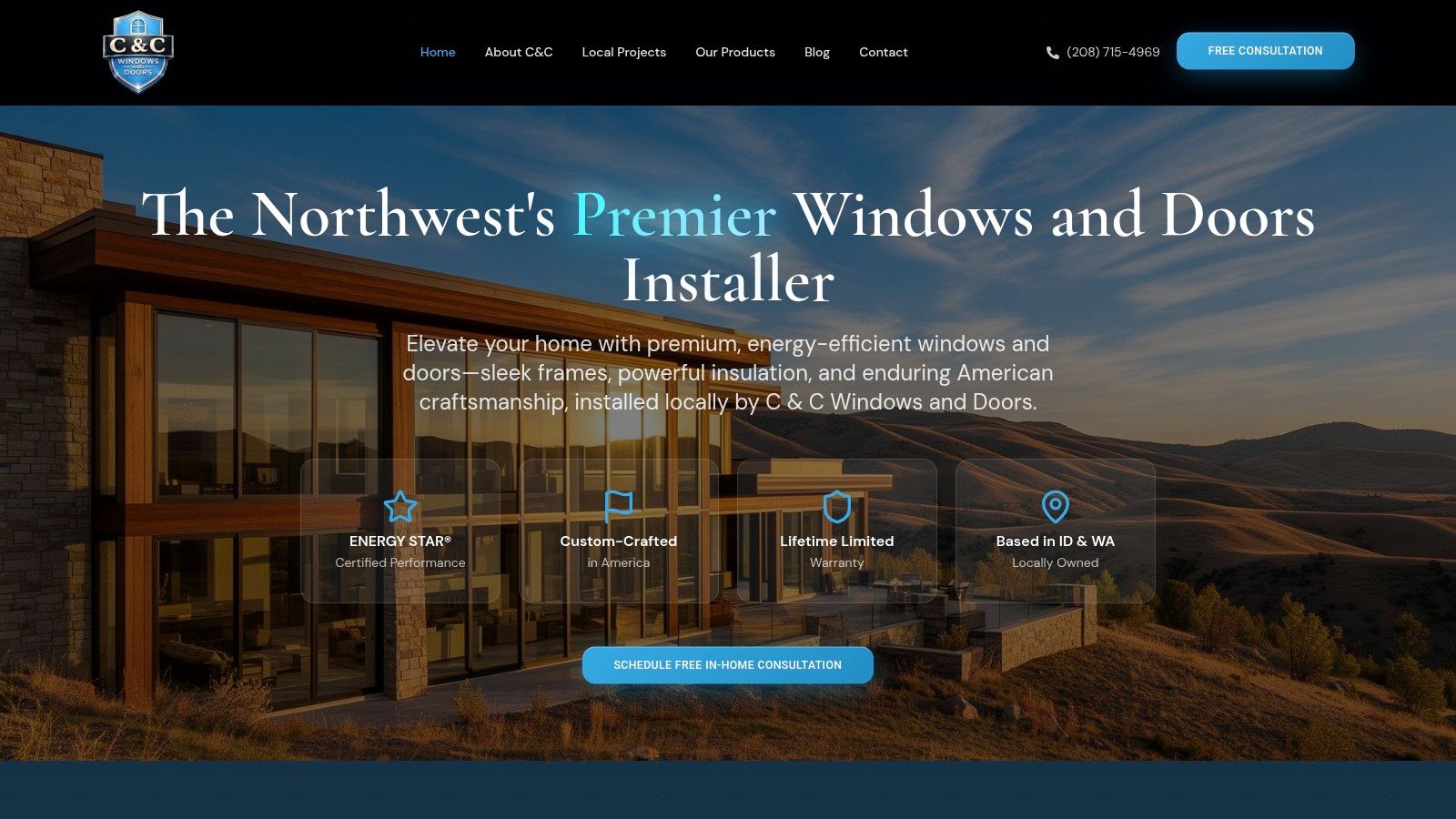
Here's a real-world view of the style direction many homeowners are after:
Installation decides whether the window performs
Plenty of homeowners make costly mistakes.
A premium window with sloppy installation can leak air, collect moisture, and operate poorly from the first season on. A properly installed vinyl window, squared, shimmed, flashed, sealed, and finished correctly, delivers the comfort and efficiency you paid for.
Idaho's climate makes installation mistakes show up fast. Hot summer sun, cold snaps, and freeze-thaw cycles expose weak sealing and rushed finish work much sooner than mild climates do. That is one reason high-performance vinyl makes so much sense here. It gives homeowners a durable frame, and good installation lets that frame do its job.
If you want the straight answer, here it is: vinyl is the better material for most Idaho homes, and installation quality determines whether you feel that advantage every day.
The Verdict The Best Window for Your Idaho Home
For most Idaho homeowners, the answer is clear. Choose high-performance vinyl.
It usually costs less upfront. It asks for less maintenance. It handles Idaho's climate better in the long run. And when you compare real replacement priorities like comfort, durability, upkeep, and resale, vinyl wins more categories that matter to everyday homeowners.
Wood still has a place. If you own a historic home, need an exact architectural match, or care more about traditional wood aesthetics than cost and maintenance, wood can be the right choice. But that's the exception, not the rule.
If a neighbor asked me for the shortest honest answer, I'd say this: for the average Treasure Valley replacement project, vinyl is the better long-term investment for comfort, value, and energy bills. Not because it's trendy. Because Idaho weather is demanding, and vinyl is usually the material that makes living with your windows easier for years to come.
If you're replacing drafty, aging windows in Boise or anywhere in the Treasure Valley, C & C Windows & Doors offers in-home consultations, custom measurements, and replacement options built for Idaho conditions. If you want help comparing packages, frame styles, and energy features without the usual sales fog, they're a practical local place to start.