If you're reading this in the middle of a cold Boise morning, you probably already know something's off. The room by the front window feels colder than the rest of the house, condensation keeps showing up on the glass, and opening one sash feels like a wrestling match.
That usually means the problem isn't your furnace. It's your windows.
Most advice on window replacement in Boise ID stays generic. That's not good enough for Idaho homes. Our climate asks more from a window than a national brochure or a basic ENERGY STAR label can explain. You need glass, gas fill, frame design, and installation details that match local winter conditions. You also need an installer who treats your house like a home, not a jobsite.
Table of Contents
- Is It Time for New Windows? 5 Signs for Boise Homeowners
- Choosing the Best Windows for Idaho's Four-Season Climate
- The C&C Windows Replacement Process From Start to Finish
- Window Replacement Costs and ROI in Boise
- Timelines Permits and What to Expect in the Treasure Valley
- Making the Right Choice Warranty Financing and Installer Questions
- Your Top Window Replacement Questions Answered
Is It Time for New Windows? 5 Signs for Boise Homeowners
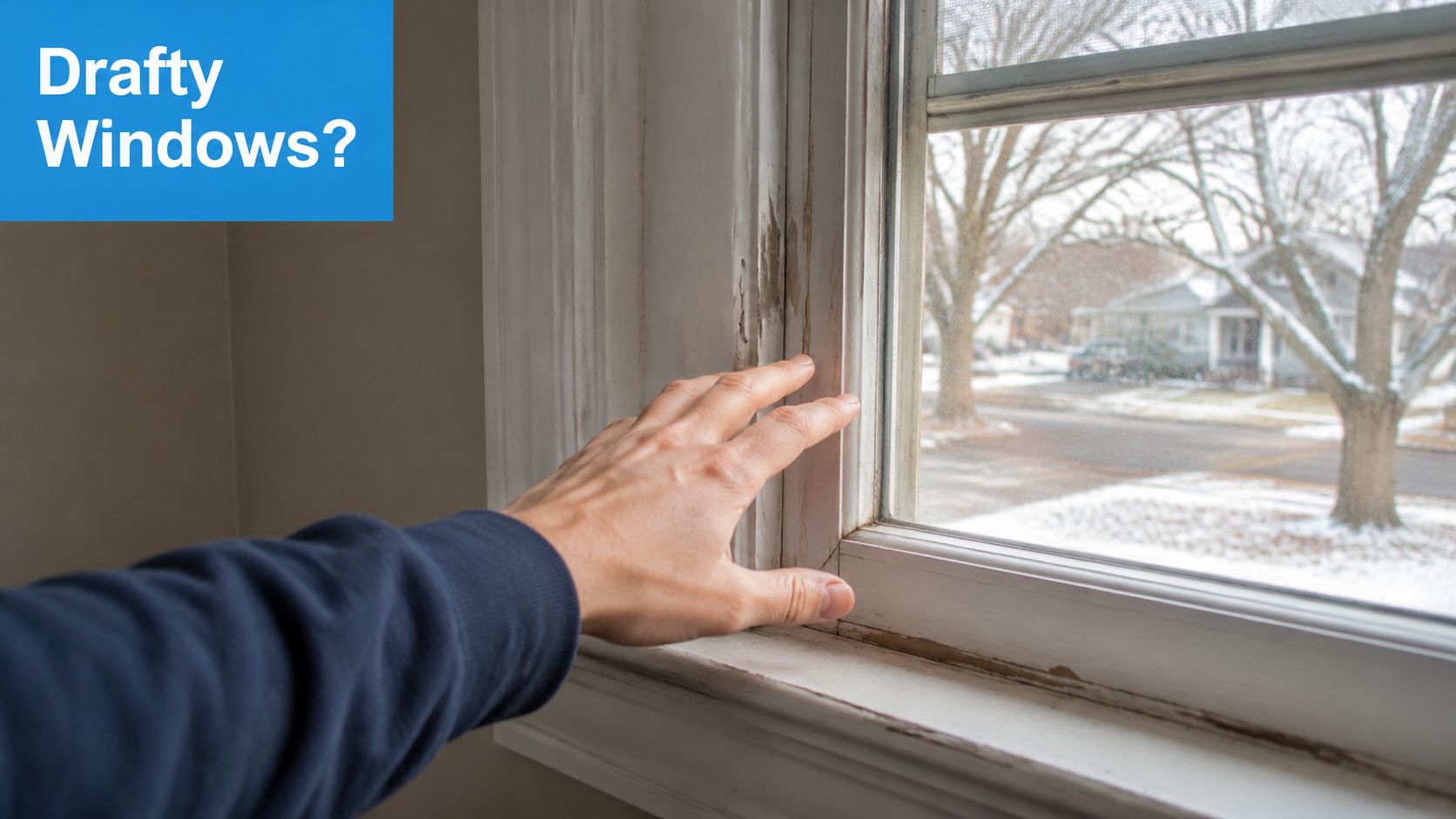
Boise homeowners usually don't wake up one day and randomly decide to replace windows. The house tells them first. You feel it as a draft by the couch. You see it as moisture on the glass. You hear it when traffic and neighborhood noise come right through the frame.
If you want a deeper checklist of local warning signs, review these signs your windows need replacing in Idaho. For most homes, the pattern is pretty obvious once you know what to look for.
The signs that matter most
You feel cold air near the window
If a room feels chilly even when the heat is running, the window assembly is often leaking air or losing too much heat through the glass. Homeowners blame insulation all the time. Sometimes they're right. But old or poorly performing windows are a common culprit.
Condensation or ice forms on the interior side
Interior moisture on cold days is a comfort warning. When it keeps happening, especially with visible frost or icy edges, your current window isn't handling winter conditions well.
The window doesn't open or close cleanly
Sticking, sagging, painted-shut sashes, or locks that don't line up aren't just annoying. They tell you the frame, sash, or hardware has worn out, shifted, or warped.
Practical rule: If a window is hard to operate, assume it will not get better on its own.
You can see damage or failed seals
Cracked glazing, soft wood, frame movement, fogging between panes, and deteriorated weatherstripping all point to a system that's breaking down. Spot repairs may buy time, but they rarely restore full performance.
Outside noise feels too close
Good replacement windows don't just help with comfort. They tighten up the home. If road noise, barking dogs, or neighborhood activity sounds too sharp indoors, your existing windows may be letting in more than light.
Why replacement beats repeated patchwork
A lot of homeowners spend years doing small fixes. New caulk. New locks. A little weatherstrip. Another service call. That works for a while, especially if the window frame is still solid and the glass package still performs.
But once several symptoms show up together, replacement is usually the smarter move. You're not fixing one failing part. You're replacing an underperforming system with one that seals better, operates better, and fits the house the way it should have in the first place.
Choosing the Best Windows for Idaho's Four-Season Climate
The wrong way to shop for windows in Boise is to start with style alone. Grids, color, and frame profile matter, but they're secondary. First look at how the window handles winter heat loss, summer sun, and daily wear.
Generic ratings miss the Idaho problem
National window marketing tends to flatten every climate into the same conversation. That misses a key issue in Idaho. According to National Renewable Energy Laboratory findings cited in the verified data, triple-pane windows with Argon fill reduce heating loss by 45% in climates below 30°F, far beyond double-pane performance. The same verified data also notes that local content around window replacement Boise ID often skips this climate-specific point altogether.
That matters because generic efficiency language doesn't answer the core homeowner question. Will this window keep the room warmer during a long Idaho winter, or won't it?
A good Boise window package isn't just efficient on paper. It has to stay comfortable when temperatures drop and cold sits on your home for days.
What to prioritize in a Boise window package
Start with the glass package. For many homes, double-pane with Argon and Low-E is a solid middle ground. It improves thermal performance over basic air-fill glass and helps with year-round comfort.
If your home has large glass areas, exposed elevations, or rooms that stay cold no matter what you do, triple-pane with Argon deserves serious attention. In Boise, that upgrade is often the difference between a room that looks fine and a room that feels right.
Then look at these details:
- Low-E coating: This helps manage heat transfer through the glass.
- Argon gas fill: This improves insulation inside the insulated glass unit.
- Frame strength: Composite-reinforced sashes hold alignment better over time.
- True sloped sills: These help water drain away instead of sitting where it shouldn't.
- Hardware quality: A window should lock tightly and operate smoothly without forcing it.
For homeowners comparing options, this energy-efficient windows Idaho guide is a useful next read.
Here's a practical comparison:
| Feature | Standard Window (Double-Pane, Air-Fill) | C&C Recommended (Double-Pane, Argon, Low-E) | C&C Premium (Triple-Pane, Argon, Low-E) |
|---|---|---|---|
| Thermal performance | Basic | Strong everyday efficiency | Highest cold-weather focus |
| Winter comfort | More edge chill | Better glass temperature | Best comfort near the window |
| Summer performance | Limited solar control | Better balanced | Strong overall insulation |
| Noise control | Basic | Improved | Better sound reduction |
| Best fit | Budget-driven replacements | Most Boise homes | Cold rooms, larger glass, premium upgrades |
The frame and sash matter too. Slim profiles look nice, but they can't come at the cost of rigidity or drainage. A narrowline frame with reinforced sash construction and a proper sill design gives you cleaner sightlines without sacrificing durability.
One local option homeowners look at is C & C Windows & Doors, which offers American-made replacement windows with composite-reinforced sashes, true sloped sills, Argon fill, ClimaTech Low-E coatings, and optional triple-pane glass for Idaho-specific performance needs.
If you remember one thing, make it this: don't buy a Boise window like you're shopping for a mild-climate house. Buy for the coldest room in your home.
The C&C Windows Replacement Process From Start to Finish
Customers don't mind paying for quality. What they hate is confusion. They don't want surprise measurements, vague scheduling, or debris left behind in the driveway.
That's why a professional replacement process should feel orderly from the first visit to the final walkthrough.
What happens before installation day
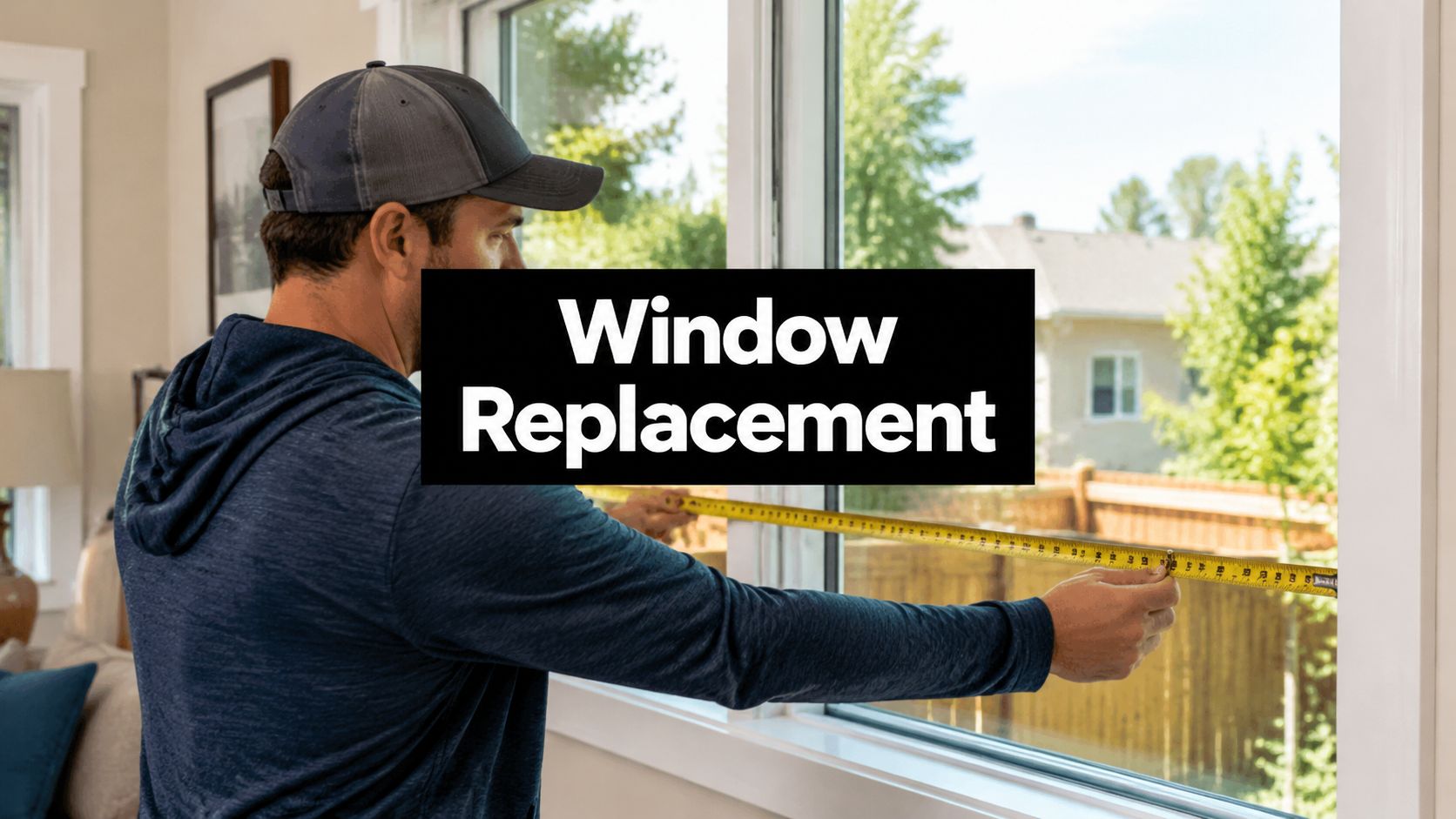
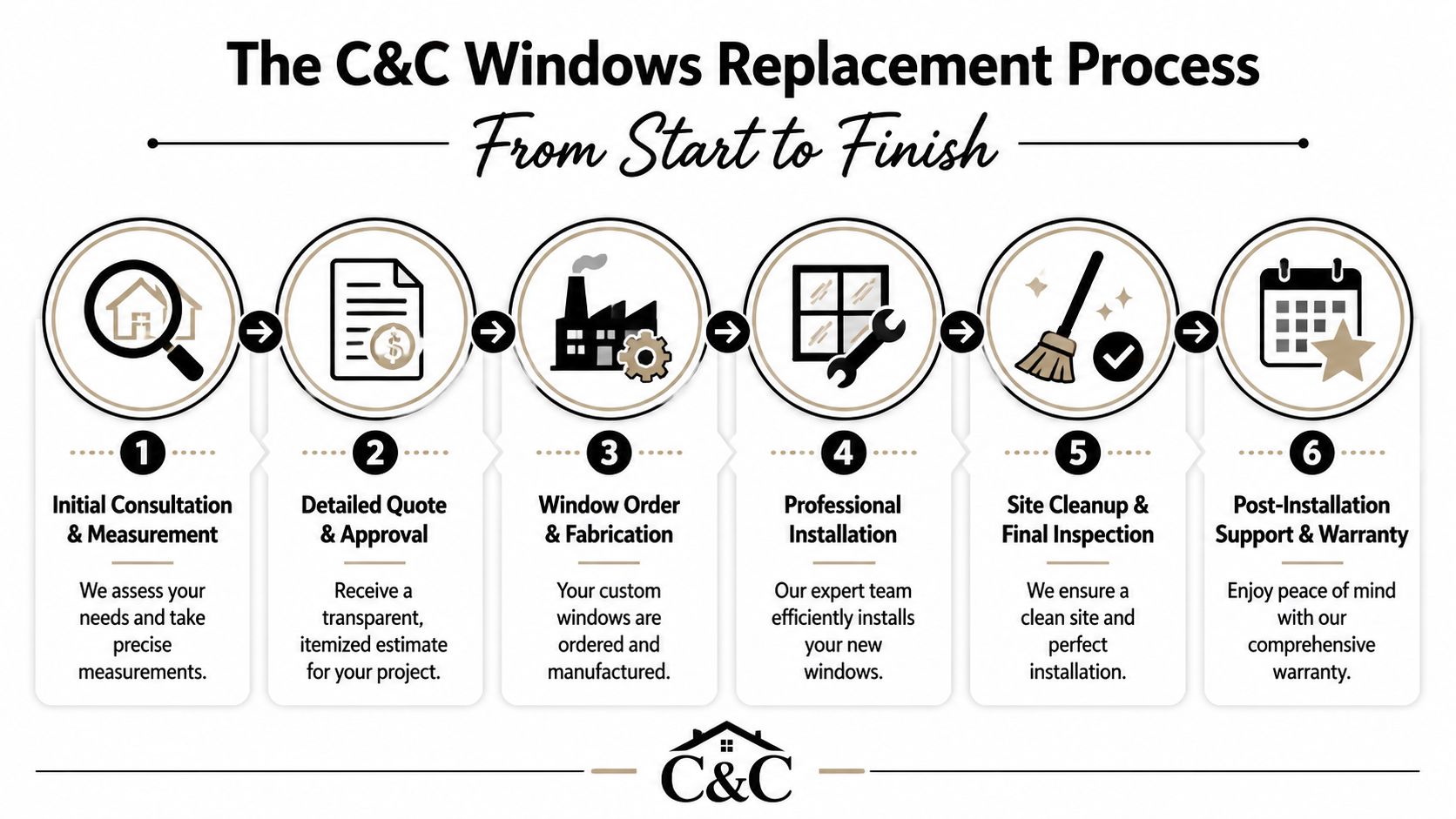
It starts with an in-home consultation. The installer looks at your existing windows, checks condition, talks through style and performance options, and measures each opening carefully. Good measurements aren't paperwork. They're the difference between a clean fit and a future service issue.
After that comes the quote. It should be itemized, understandable, and based on the actual openings in your house. If the estimate feels slippery, the job probably will too.
Then your windows are ordered to the right specifications. That's where product decisions matter. A casement in a windy exposure, a picture window in a front room, and a slider in a tight walkway don't all solve the same problem.
What a clean professional install looks like
Installation day should not feel like a demolition free-for-all. Floors and nearby surfaces need protection. The crew should remove old units carefully, prep openings correctly, set the new windows square, insulate the perimeter, and finish the interior and exterior neatly.
The cleanup standard matters just as much as the set. The verified data shows that in a 2025 Angi survey of Boise homeowners, 68% ranked construction waste management as a top concern, while 0% of local installer websites explicitly described debris-free practices. That gap tells you something important. Homeowners care about jobsite discipline a lot more than many installers communicate.
A debris-free process should include:
- Protected work areas: Drop cloths, surface protection, and controlled removal paths.
- Immediate debris handling: Old materials don't sit piled in the yard or driveway.
- Same-day waste removal: The crew leaves with the mess.
- Final inspection: Operation, lockup, trim, seal lines, and cleanup all get checked.
Clean installation isn't an extra. It's part of correct installation.
When the crew leaves, your windows should operate smoothly, the trim should look intentional, and you shouldn't spend the evening picking nails and insulation scraps out of the flower bed.
Window Replacement Costs and ROI in Boise
Asking for an exact price without seeing the house isn't realistic. Window replacement cost depends on what you're replacing, how many openings are involved, and how far you want to push performance.
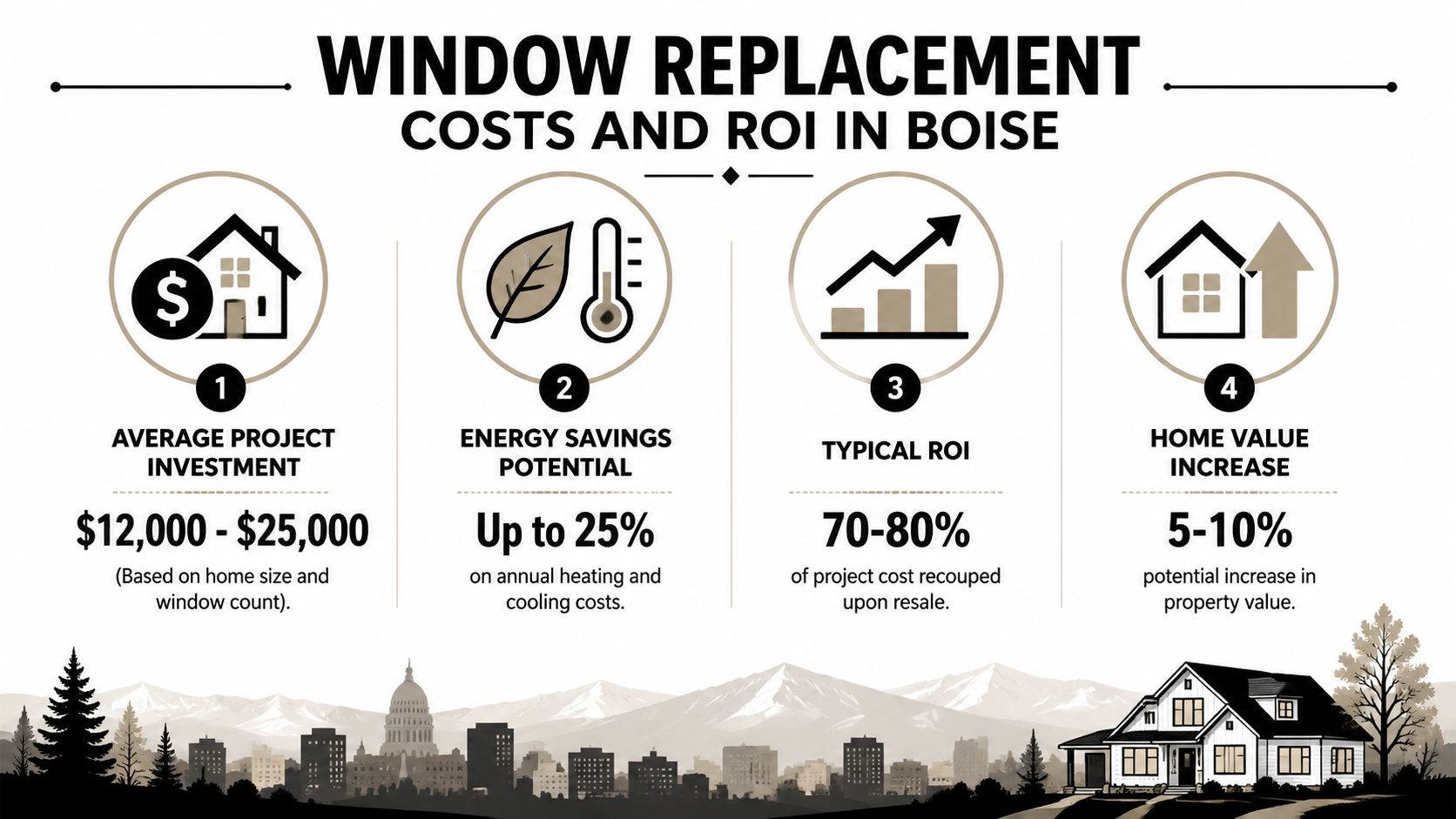
The infographic above includes cost and ROI figures, but I wouldn't treat those numbers as universal pricing guidance. What matters more is understanding what changes the investment, then getting a real in-home quote for your specific house. This overview of window replacement cost in Boise Idaho is a good place to start.
What actually drives the price
Three things move the price most.
First is window style. A simple picture window isn't priced the same way as an operable casement or a specialty shape. Hardware, screen design, and operating mechanism all affect cost.
Second is size and condition of the opening. A straightforward insert replacement differs from a project that reveals rot, trim damage, or the need for additional finish work.
Third is performance level. Basic double-pane and upgraded Argon Low-E packages do not cost the same, and triple-pane moves the project into a different performance tier.
A few other factors can matter too:
- Material and finish choices
- Interior and exterior trim needs
- Access challenges
- Whether you're replacing a few windows or doing the full house
Where the return comes from
The return isn't one single number. It comes from several benefits working together.
You get better day-to-day comfort. Cold spots near the glass are reduced. Rooms become more usable. Heating and cooling equipment doesn't have to fight weak openings as hard.
You also improve curb appeal. New windows sharpen the exterior lines of the home and help interiors feel cleaner, brighter, and more finished. That's useful whether you're staying put or preparing to sell.
The best ROI on windows isn't only financial. It's the fact that you stop noticing your windows for the wrong reasons.
There's also the value of avoiding repeat repairs on aging units that still don't solve the problem. Cheap patch jobs often look cheaper a year later.
Timelines Permits and What to Expect in the Treasure Valley
Window projects feel easier when you know the rhythm of the job. Most anxiety comes from not knowing what happens when, how long the house will be disrupted, and whether permit issues are going to appear late.
A realistic project timeline
The first phase is consultation and measurement. That visit establishes scope, confirms openings, and helps narrow product choices. After approval, the order goes into production and the installation date gets scheduled based on product lead time and crew availability.
Installation itself can move quickly on straightforward jobs. More complex homes, specialty windows, or projects with trim repair can take longer. Weather can also affect exterior finish work, especially during colder stretches.
A good timeline conversation should cover:
- When final measurements are confirmed
- How ordering and scheduling will be communicated
- Whether installation happens all at once or in phases
- What parts of the home will be inaccessible during work
- When final touch-ups and walkthrough happen
When permits come into play
A standard like-for-like replacement often has a simpler path than a project that changes opening size or structural conditions. Once you alter dimensions, reframing and permit questions can enter the picture.
Historic areas, multi-unit properties, and homes with unusual exterior conditions may also need extra attention before work starts. That's one reason local experience matters. You want an installer who checks requirements early instead of improvising after materials arrive.
If you're planning a straightforward replacement, ask one direct question upfront: Are we keeping the existing opening size, or are we changing structure? That answer usually tells you whether permit review will stay simple or get more involved.
Making the Right Choice Warranty Financing and Installer Questions
A polished sample window doesn't mean much if the warranty is weak, the labor coverage is thin, or the installer won't answer basic process questions. These aspects define whether homeowners make a safe purchase or an expensive gamble.
Warranty matters more than the sales pitch
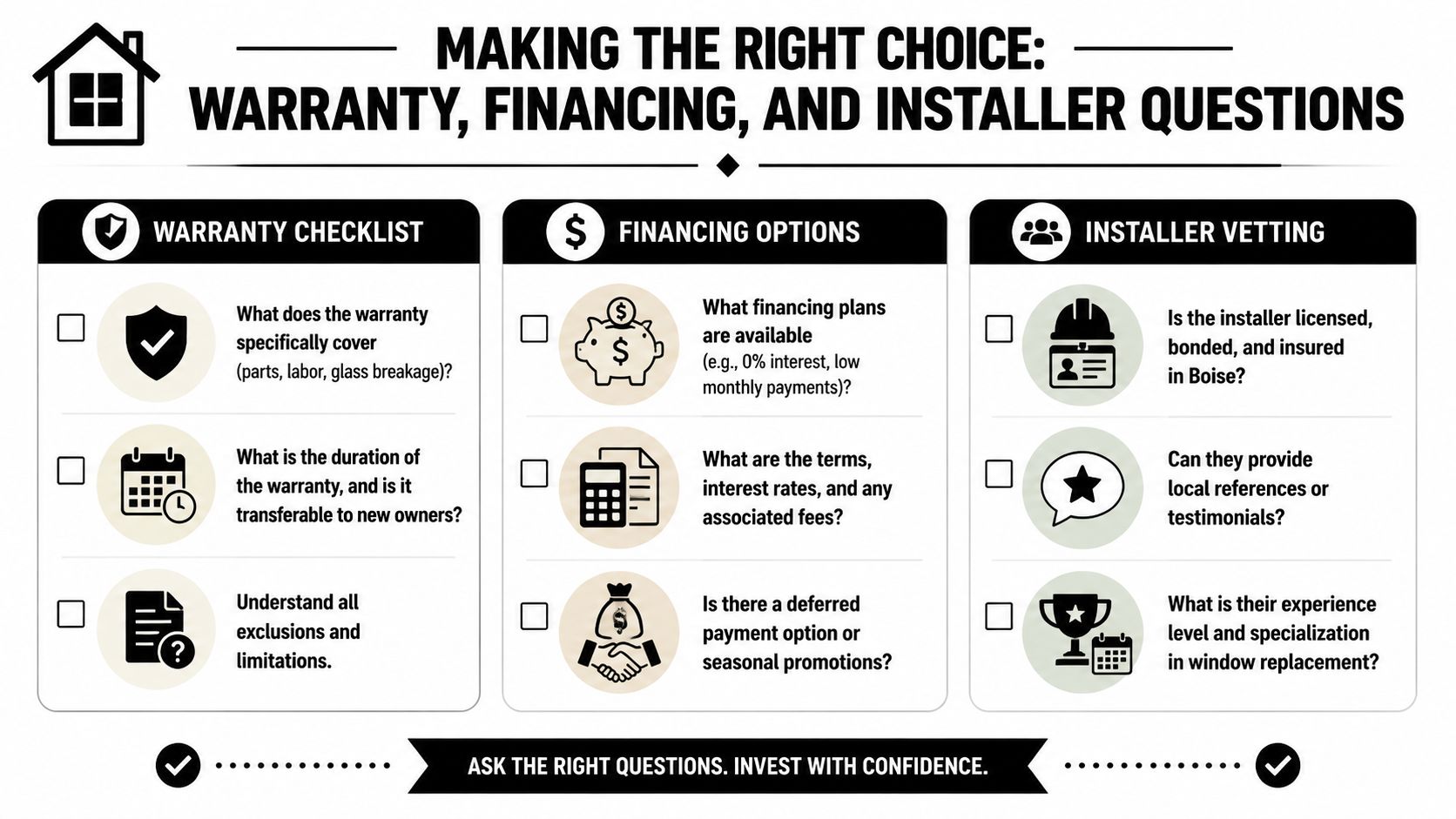
Start with coverage in writing. You want to know what applies to the product, what applies to labor, how service requests are handled, and whether the terms are easy to understand.
Financing matters too, but only after the fundamentals are solid. Monthly payment options can help homeowners move forward with a better window package instead of settling for the cheapest unit available. A financing plan should support a smart decision, not distract from a bad one.
Use this checklist when you're comparing installers:
- Ask about labor coverage: Is labor covered in a meaningful way, or only the product?
- Ask who performs the installation: Employees, trained crews, or rotating subcontractors?
- Ask about cleanup standards: What exactly happens to old frames, glass, packaging, and jobsite debris?
- Ask about measurement responsibility: Who owns the final fit if something is off?
- Ask about service after install: Who comes back if a sash needs adjustment?
Questions worth asking before you sign
Some questions expose weak operations very quickly.
"Show me what your warranty covers, not just the headline."
Ask whether the installer is licensed, bonded, and insured. Ask whether the crew has replacement experience, not just general construction experience. Ask how they protect floors, landscaping, and nearby finishes. Ask how long service support typically takes after installation if an adjustment is needed.
You should also ask about payment timing, communication during delays, and whether financing is available through a known provider such as Synchrony. Clear answers are a good sign. Evasive ones usually stay evasive after the contract is signed.
Your Top Window Replacement Questions Answered
Can I replace just a few windows now
Yes. You don't have to do the whole house at once.
Many homeowners start with the worst rooms first. That might be the primary bedroom, a drafty living room, or a street-facing window that leaks comfort and noise. The key is making sure the new units are measured and specified correctly so future phases still feel consistent.
Do new windows help with outside noise
They can, and the improvement is usually most noticeable when your current windows are loose, thin, or poorly sealed.
Glass package, airspace, frame construction, and installation quality all affect sound control. In practical terms, homeowners often notice that upgraded insulated glass and tighter installation reduce the sharpness of outside noise, even if they don't create total silence.
Are the windows American made and do you serve the full Treasure Valley
American-made options are available, and many homeowners prefer them for build quality, consistency, and warranty confidence.
Service across the Treasure Valley typically includes Boise, Meridian, Eagle, Nampa, Caldwell, Kuna, Garden City, and Star. If you're outside those areas, ask directly before scheduling so you know whether site visits and installation are available for your address.
Should I choose double-pane or triple-pane
If your current issue is mild and you're balancing budget with efficiency, a well-built double-pane Argon Low-E package can make sense.
If you have persistent winter discomfort, large glass exposure, or you want the strongest cold-weather performance available for a replacement window, triple-pane deserves a hard look. In Boise, that's often the more climate-aware choice.
If you're planning C & C Windows & Doors for your home, schedule a free in-home consultation and get a same-day estimate based on your actual openings, performance goals, and installation needs.