If you're in the Treasure Valley and you've spent another winter nudging the thermostat up because the living room feels chilly near the glass, you're not alone. A lot of Idaho homeowners start thinking seriously about replacement windows when drafts become part of daily life, condensation shows up on cold mornings, or a remodel budget finally makes room for long-postponed upgrades.
That's where an Energy Efficient Windows Idaho 2026 Guide needs to be practical, not vague. You need to know which ratings matter, which upgrades help in Idaho's cold-to-mixed climate, what utility rebates reward, and how to avoid paying for features that sound impressive but don't move the needle in your home.
Table of Contents
- Why 2026 Is the Year to Upgrade Your Idaho Windows
- Understanding U-Factor SHGC and Other Key Window Ratings
- What ENERGY STAR 7.0 Means for Your Window Project
- Best Window Types and Upgrades for Treasure Valley Homes
- Window Replacement Costs and Rebates in Idaho
- Professional Installation and Simple Window Maintenance
- Finding Your Trusted Window Partner in Boise
Why 2026 Is the Year to Upgrade Your Idaho Windows
A January morning in Boise makes window problems easy to spot. The family room feels chilly even with the heat running. By July, that same room turns bright and hot by midafternoon. If your blinds flutter on a windy day or the floor near the glass always feels colder than the rest of the room, your windows are acting more like a weak spot in the wall than part of your insulation.
Older Idaho windows often struggle because our climate asks them to do two jobs well. They need to hold indoor heat during cold snaps and block too much solar heat during hot, dry summer stretches. A window that falls short in either season can leave you paying for comfort twice, once on the furnace side and again on the air-conditioning side.
The Department of Energy notes earlier in this guide that windows can account for a large share of home energy loss and heat gain. In practical terms, that means replacement can affect more than curb appeal. It can change how stable a room feels hour by hour.
Why Idaho homes feel the difference faster
Treasure Valley weather exposes weak windows in a very direct way. Winter finds every draft. Summer exposes glass that lets in too much sun. Shoulder seasons add another wrinkle, because sunny afternoons can warm a room quickly even when mornings start cold.
That mix is why homeowners sometimes get mixed messages when shopping. Thicker glass sounds like the answer, but glass alone is only one part of the system. The frame, the spacer between panes, the air seal, and the installation all work together, much like layers in a winter jacket. If one layer is weak, you still feel the cold.
A good local example is the difference between a newer sealed unit and an older builder-grade window in an east-facing bedroom. On paper, both are "double-pane." In real life, one may hold a steadier temperature and cut down drafts, while the other still leaves the room cold at sunrise and stuffy by evening.
Why 2026 stands out
For Idaho homeowners, 2026 lines up several practical reasons to act at the same time.
- ENERGY STAR 7.0 has raised the bar. Products that meet current standards are easier to compare by actual performance, not just sales language.
- Idaho Power rebates can change the math. If your project qualifies, better-performing windows may reduce your out-of-pocket cost while also lowering monthly energy use.
- Energy costs and comfort expectations are pushing the same direction. Homeowners are paying closer attention to rooms that never feel right, especially home offices, west-facing living areas, and upstairs bedrooms.
- Timing with other exterior work can save hassle. If you are already planning paint, siding, trim, or broader remodeling, replacing windows in the same project often means cleaner detailing and less disruption.
This is also a good year to be pickier. Instead of asking, "Do I need new windows?" a better question is, "Which windows make sense for my part of Idaho, my sun exposure, and my utility costs?" That shift leads to better choices.
If your home sits outside the Treasure Valley, local conditions still matter. Homeowners comparing options in eastern Idaho can use the same climate-first approach when reviewing replacement windows for Idaho Falls homes, especially where colder winters put even more pressure on window performance.
A window project should improve comfort in February, reduce overheating in August, and keep those gains for years. In Idaho, that combination is what makes 2026 a smart time to upgrade.
Understanding U-Factor SHGC and Other Key Window Ratings
Window labels can feel like alphabet soup the first time you read them. The good news is that only a few ratings do most of the heavy lifting when you're shopping for Idaho windows.
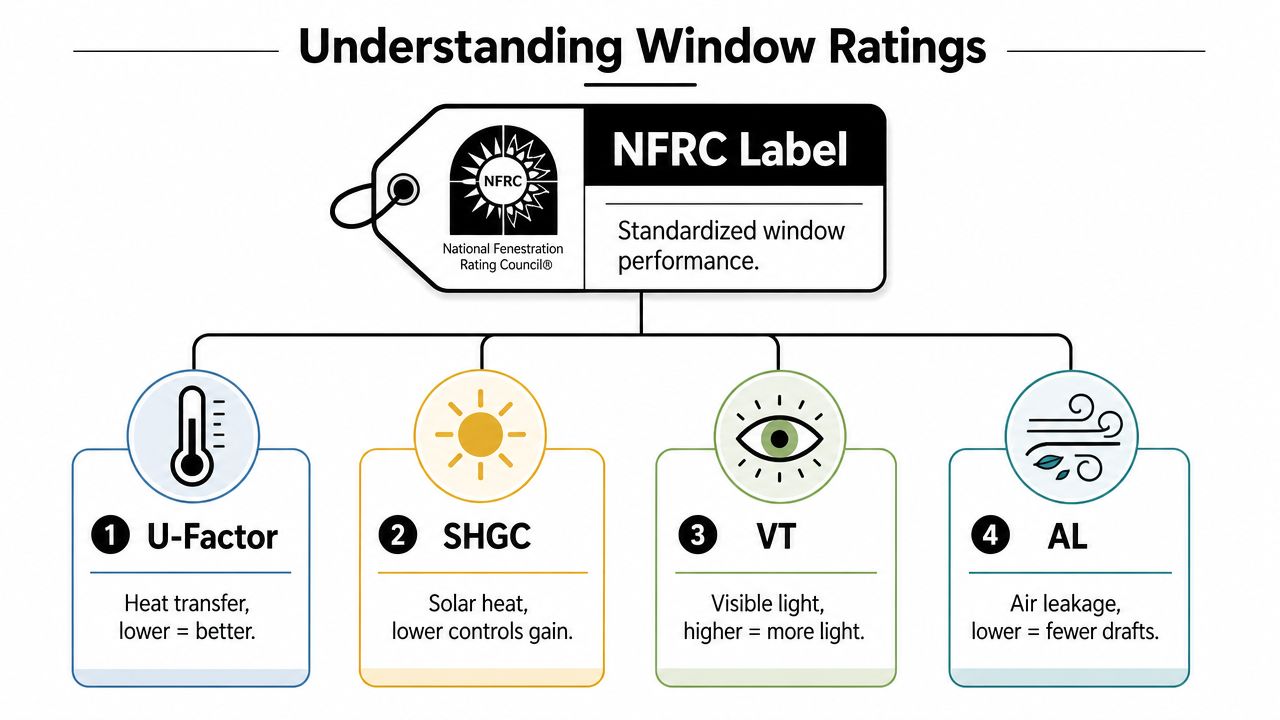
The label to know is the NFRC label. It's the standardized scorecard that lets you compare one window to another on the same basis.
U-factor is your winter coat rating
If you remember one metric, make it U-factor. It's similar to the insulation value of a winter coat. The lower the number, the better the window resists heat moving out of your house during winter.
For Idaho conditions, independent guidance recommends aiming for U-factor under 0.30, along with air leakage 0.3 or less and condensation resistance in the 50–70 range, as explained in this 2026 window performance guide.
That same guidance also notes that argon gas fills and warm-edge spacers help reduce edge-of-glass heat loss and lower condensation risk. That matters because the edge of the glass is often the weakest thermal zone on a window.
If you're comparing products for colder Idaho conditions, a useful local reference point is this overview of replacement windows in Idaho Falls, where cold-weather performance is a central concern.
SHGC is like sunglasses for your house
SHGC stands for Solar Heat Gain Coefficient. It tells you how much solar heat the window lets in.
A simple way to picture it is sunglasses. Some sunglasses let in more light and heat. Others block more. In a home, lower SHGC can help control overheating from intense sun exposure, while a balanced number can still allow useful daylight and some passive warmth.
People often get tripped up. They hear “lower is better” and apply that to every rating. That's true for U-factor and air leakage, but SHGC is more situational. In Idaho, the goal is usually balance, not a one-size-fits-all minimum.
VT AL and condensation resistance
Other ratings still matter, just in a supporting role:
- Visible Transmittance (VT): This tells you how much visible light comes through the glass. Higher VT usually means a brighter room.
- Air Leakage (AL): This reflects how much air sneaks around the window assembly. Lower is better if you want fewer drafts.
- Condensation Resistance: This estimates how well the window resists interior moisture buildup in cold weather.
A good Idaho window doesn't just insulate well in the center of the glass. It performs well at the edges, at the frame, and when the wind is pushing against the house.
When you read the label this way, the numbers start to make sense. U-factor handles winter heat loss. SHGC manages solar gain. VT affects daylight. AL tells you whether the window is likely to feel drafty. That's enough to sort good products from weak ones without getting buried in jargon.
What ENERGY STAR 7.0 Means for Your Window Project
You are standing in a Boise showroom in January. Two windows look nearly the same. Both are labeled "energy efficient," both have polished sales sheets, and both promise comfort. ENERGY STAR 7.0 helps you sort out which one is more likely to hold up during an Idaho winter instead of relying on polished wording.
For Treasure Valley homeowners, that matters more in 2026 than it did a few years ago. Our window choices have to handle cold snaps, summer sun, and energy bills that make efficiency more than a nice extra. The newer ENERGY STAR standard gives you a stricter filter for products sold as efficient, which is useful when you are comparing real performance instead of marketing language.
What the newer standard changes
In plain terms, ENERGY STAR 7.0 raises the bar. A window that qualifies under the newer standard is generally being held to tougher efficiency targets than older products that once counted as good enough.
That does not mean every qualifying window is identical. It means the floor is higher.
For an Idaho home, that higher floor is helpful because small differences on a label can turn into noticeable differences in comfort. A window can look fine in a brochure and still leave the room near it feeling chilly on a windy evening. Newer qualifying products are more likely to avoid that "why does this room still feel cold?" problem that frustrates homeowners after installation.
Why the label matters more than the sales pitch
Marketing terms are loose. NFRC ratings and ENERGY STAR qualification are not.
The key point is to compare whole-unit performance, not just the center of the glass. A window works like a winter coat. The warm fabric matters, but so do the zipper, cuffs, and seams. With windows, the frame, spacer, sash, and edges of the glass all affect how the full unit performs in an Idaho house.
That is why a strong glass package alone does not tell the whole story. If you are considering colder-exposure rooms, upper elevations, or larger openings, it helps to read up on triple pane windows for Idaho winters alongside the ENERGY STAR label so you can see where added insulation may pay off.
How to use ENERGY STAR 7.0 in a real Idaho buying decision
Use ENERGY STAR 7.0 as a screening tool, then look one layer deeper.
A solid shortlist usually includes:
- NFRC-rated performance numbers
- Current ENERGY STAR qualification
- A U-factor that fits Idaho's heating season
- A frame and spacer system designed for full-window performance
- An installer who can explain how the rated product will be installed in your wall opening
That last point is easy to miss. A high-performing window still needs proper installation to deliver the comfort you paid for. In practical terms, ENERGY STAR 7.0 helps you avoid outdated "efficient enough" options and focus on products that make more sense for Boise, Meridian, Eagle, Nampa, and the rest of the Treasure Valley in 2026.
Best Window Types and Upgrades for Treasure Valley Homes
Style affects energy performance more than many homeowners expect. The way a window opens, seals, and is built changes how much air sneaks through and how the unit behaves through Idaho's weather swings.
The easiest way to think about window types is this: some are naturally tighter, some are naturally better for airflow, and some are best when you want glass and efficiency without ventilation.
How common styles compare
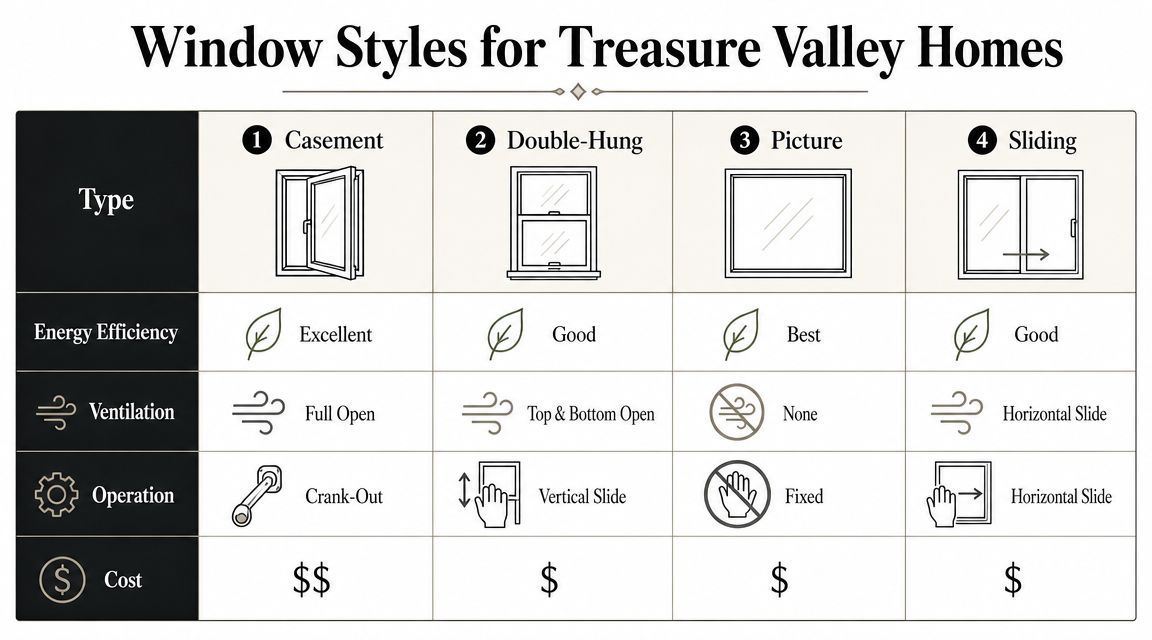
Here's how the main options usually fit Treasure Valley homes:
| Window type | Best use | Energy behavior | Ventilation |
|---|---|---|---|
| Casement | Bedrooms, living areas, spots needing tighter seals | Often strong because the sash closes firmly against the frame | Excellent |
| Double-hung | Traditional elevations and flexible everyday use | Good balance of looks and performance | Good |
| Picture | Views, living rooms, stairwells | Strong because it doesn't open | None |
| Sliding | Wider openings and easy operation | Practical, though often more dependent on track condition and build quality | Good |
A picture window is like a sealed thermos lid. Since it doesn't open, it avoids a lot of the leakage points operable windows have. Casement windows also tend to perform well because they compress against the weatherstripping when shut.
Double-hung and sliding windows can still be excellent choices. They just rely more on precise manufacturing and installation to stay tight over time.
If you want a deeper look at cold-climate glass packages, this page on triple-pane windows for Idaho winters gives a useful local overview.
Upgrades that matter in Idaho
Many projects succeed or fail at this point. The base window style matters, but the upgrades inside the unit often make the bigger comfort difference.
- Triple-pane glass: In colder Idaho conditions, triple-pane assemblies are often favored because they add insulation and can also help with outside noise.
- Low-E coatings: These thin coatings help manage radiant heat transfer, which is a major reason modern windows feel different from older clear glass units.
- Argon gas fills: Argon works as an invisible insulating layer between panes.
- Warm-edge spacers: These improve the perimeter zone, where windows often lose heat first.
- Well-designed frames: A strong frame and sash system helps the entire unit stay square, sealed, and durable.
Matching the upgrade to the room
You don't always need the same setup everywhere in the house. A west-facing room with harsh afternoon sun may need a different solar balance than a north-facing bedroom that mainly struggles with winter chill.
That's why room-by-room thinking helps:
- Cold bedroom or nursery: Prioritize low U-factor and tight air sealing.
- Sunny bonus room: Focus on balancing solar gain so the room doesn't overheat.
- Street-facing living room: Triple-pane can be attractive for both insulation and sound control.
- View wall or dining area: Picture windows can deliver strong efficiency while keeping the opening visually clean.
The best window package for a Treasure Valley home usually isn't “the fanciest one.” It's the one that solves the specific comfort problem in each part of the house.
A smart project blends style, glass package, and orientation. That's how you get windows that feel better day to day, not just windows that look better from the driveway.
Window Replacement Costs and Rebates in Idaho
A Boise homeowner gets two window quotes in 2026. One looks cheaper at first glance. The other costs more, but the glass package has a lower U-factor and may qualify for a larger utility rebate. On paper, the difference can feel small. Over a full project, it can change both your upfront cost and how the house feels during January cold snaps and August sun.
That is why cost planning in Idaho works best when you look at three buckets together. The window price, the installation scope, and the rebate details all matter.
A recent 2026 energy-efficient window cost and savings review estimated whole-home installed pricing at $18,000 to $25,000 for high-performance vinyl and reported payback periods ranging from 10 to 15 years to 15 to 20+ years. The same review says energy-efficient windows typically reduce heating and cooling bills by 5% to 20%, depending on climate, home condition, and insulation quality.
What those numbers mean for an Idaho home
Window replacement usually sits in the same budget category as a roof, HVAC upgrade, or a kitchen refresh. It affects daily comfort, operating costs, upkeep, and curb appeal all at once.
The energy savings piece is real, but it is not identical from house to house. An older Treasure Valley home with aluminum frames, failed seals, or obvious drafts often has more room for improvement than a newer home with decent existing windows. Idaho's climate adds another layer. Winter heat loss matters, but so does controlling summer sun in rooms that bake in the afternoon.
A good way to frame it is this: windows are less like a coupon and more like a better winter coat for your house. You notice the benefit every season, even if the full financial return takes time.
Idaho rebates can change the math
For many Idaho homeowners, the rebate is what turns a “maybe later” project into a “let's price this out now” project.
As noted earlier, Idaho utility rebates for qualifying windows reward lower U-factor levels. In plain English, windows that slow heat loss more effectively may qualify for more money back. That makes spec sheets more than paperwork. They directly affect your net cost.
Here is the current rebate structure referenced earlier for homes with electric heat:
| 2026 Idaho Power Window Rebates (Electric Heat) | Rebate Per Window |
|---|---|
| U-factor 0.29 to 0.23 | $180 |
| U-factor 0.22 and below | $225 |
That small jump on the spec sheet can add up fast on a full-house project.
Ask for the NFRC-rated U-factor for the exact window being ordered before you sign. The rated number should also appear clearly in your paperwork. If a contractor only says the window is “ENERGY STAR” or “high efficiency,” that is not enough to compare rebate eligibility accurately, especially with 2026 buyers paying closer attention to ENERGY STAR 7.0-level performance.
In Idaho, the right glass package can affect comfort in January, cooling load in summer, and the rebate amount on the same order.
How to compare quotes without getting lost
Homeowners often compare window quotes the way they compare appliances. Brand against brand, model against model. Replacement windows are trickier because one quote may include work that another leaves out.
Use a short checklist:
- Ask for full scope in writing. Include removal, disposal, trim, sealants, exterior finishing, and any repair allowances.
- Request NFRC labels or performance data. That is how you verify U-factor instead of relying on sales language.
- Break out upgrades line by line. Triple-pane glass, grid patterns, specialty coatings, tempered glass, and color upgrades should be priced separately.
- Check local price context. This guide to window replacement costs in Boise, Idaho helps you compare estimates with a better sense of local ranges.
- Ask how rebates are documented. You want to know who provides the paperwork and what model information will appear on the invoice.
One more tip helps. Compare the cost per problem solved, not just the cost per window. If one quote fixes draftiness in bedrooms, cuts harsh west-side heat, and qualifies for a better rebate, it may be the stronger value even if the starting number is higher.
Financing can also make sense for homeowners who want to complete the project before another winter or before summer cooling bills climb again. The main goal is to avoid dropping to a weaker window package just to hit a lower sticker price.
Professional Installation and Simple Window Maintenance
A high-performance window can underperform fast if the installation is sloppy. Even a great glass package won't help much if the frame isn't air-sealed properly or water management around the opening is weak.
That's why installation deserves as much attention as the product itself.
What good installation looks like
A professional crew should start with accurate custom measurements. Replacement windows aren't interchangeable boxes. If the opening is measured loosely, the installer may end up compensating in the field with extra filler, awkward shimming, or trim tricks that don't solve the underlying fit problem.
The next issue is water control. Good installers pay attention to flashing details, sill condition, and exterior sealing so water has a path away from the opening instead of into the wall assembly.
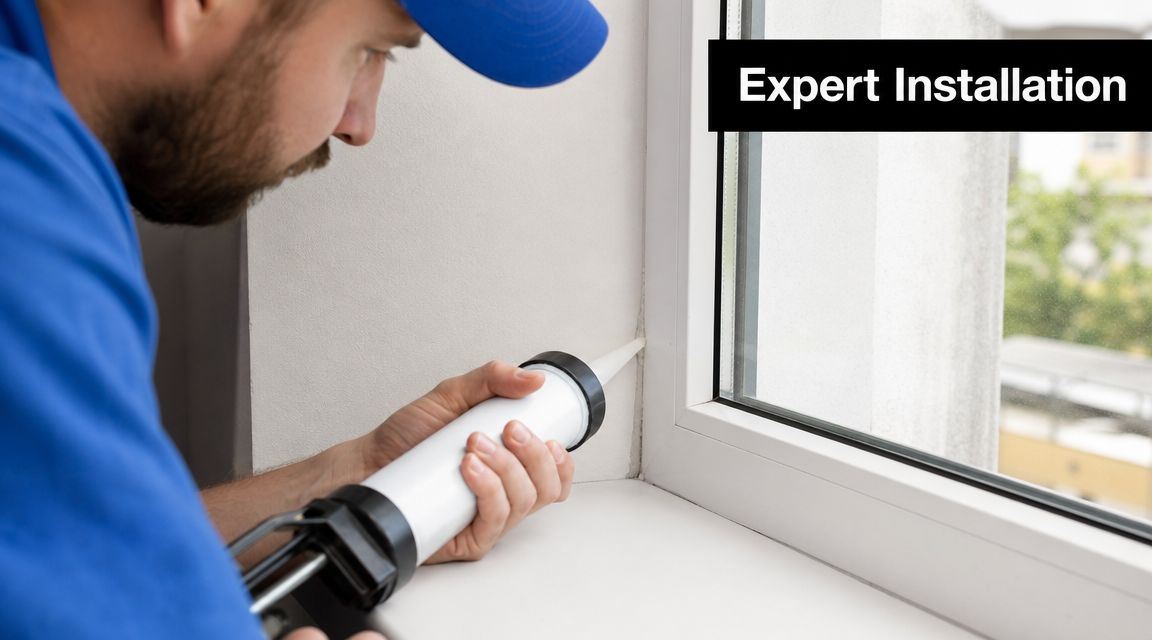
Then comes air sealing. Comfort often hinges on this step. If the frame-to-opening connection is poorly sealed, you can end up with new windows that still feel drafty.
Questions homeowners should ask
Use a short checklist during estimate appointments:
- How are the openings measured? You want a clear process, not guesswork.
- How is the unit air-sealed? Ask what materials and steps are used around the frame.
- What happens if trim or sill issues are found? Good crews have a plan for damaged substrates.
- How is the site protected and cleaned? A careful install should respect floors, furniture, and landscaping.
A window installation should solve drafts and water risk at the opening, not just replace the visible frame.
Maintenance that keeps windows performing
Modern replacement windows don't need complicated upkeep, but they do benefit from regular attention.
- Clean the tracks and sills: Dirt buildup can interfere with smooth operation.
- Inspect weatherstripping: Look for wear, flattening, or gaps.
- Check locks and latches: A window that doesn't close squarely may not seal as intended.
- Watch for failed caulk lines outside: Exterior sealant should stay intact and bonded.
- Operate the windows periodically: Even less-used units should be opened and closed now and then.
Simple maintenance helps the window keep doing what you paid for. It also helps you catch small issues early, before they turn into comfort complaints or moisture problems.
Finding Your Trusted Window Partner in Boise
It is easy to feel confident after comparing glass packages, frame materials, and ENERGY STAR labels at the kitchen table. The harder part starts when two bids land in your inbox and both sound polished. In Boise, Nampa, Meridian, and the rest of the Treasure Valley, the installer you choose often determines whether those windows feel tight and comfortable in January and manageable during a smoky, sun-heavy August.
A good window company does more than sell a product line. It helps you match the right window to Idaho conditions, orders the unit accurately, installs it correctly, and stays available if something needs attention later.
What to look for in a local installer
Start with how the company explains the project. If a salesperson can clearly walk you through window ratings, sizing, lead times, and installation steps in plain language, that is a strong sign. If every answer stays fuzzy, the work often does too.
A strong Boise-area window partner should bring a few specific things to the table:
- Treasure Valley climate experience: They should understand our hot summer sun, winter cold snaps, wind exposure, and the difference between a shaded North End home and a newer subdivision house with big west-facing glass.
- Comfort with performance data: They should be able to discuss NFRC labels, especially U-factor, without sidestepping basic questions.
- A clear plan for the opening, not just the window: Good installers talk about measurement, air sealing, trim conditions, and water management because the opening works like the lid on a cooler. If it does not close tight, the insulation inside cannot do its job.
- Labor warranty clarity: Product warranties matter, but homeowners also need to know who handles service calls and installation-related issues.
- A consultation that reduces confusion: You should finish the appointment with a better grasp of your options, not a thicker fog of sales language.
For many Idaho homeowners planning a 2026 project, U-factor still deserves extra attention. As noted earlier in this guide, local rebate programs and cold-weather comfort both tend to reward lower U-factor windows. A contractor who understands that local context can help you avoid choosing a window that looks good on paper but misses the mark for your home, heating setup, or rebate goals.
Why local trust beats generic promises
Replacement windows involve a chain of small decisions. Measuring, ordering, scheduling, weather timing, trim repair, installation quality, and paperwork all have to line up. One weak link can turn an upgrade into a headache.
That becomes even more important with replacement work because every house has its own quirks. An older Boise bench home may have different trim conditions than a newer Meridian build. A local company has usually seen more of those real-world surprises before, which often leads to better planning and fewer last-minute problems.
Reputation also works differently at the local level. A Boise-area installer has to keep serving the same neighborhoods, which tends to encourage clearer communication and more consistent follow-through.
If you want a Boise-based team that understands Idaho's climate, offers factory-trained installation, provides custom measurements and same-day estimates, and installs American-made replacement windows and patio doors built for long-term comfort, C & C Windows & Doors is a strong place to start. They serve Treasure Valley homeowners who want energy-efficient performance, careful installation, and support that does not disappear after the job is done.