
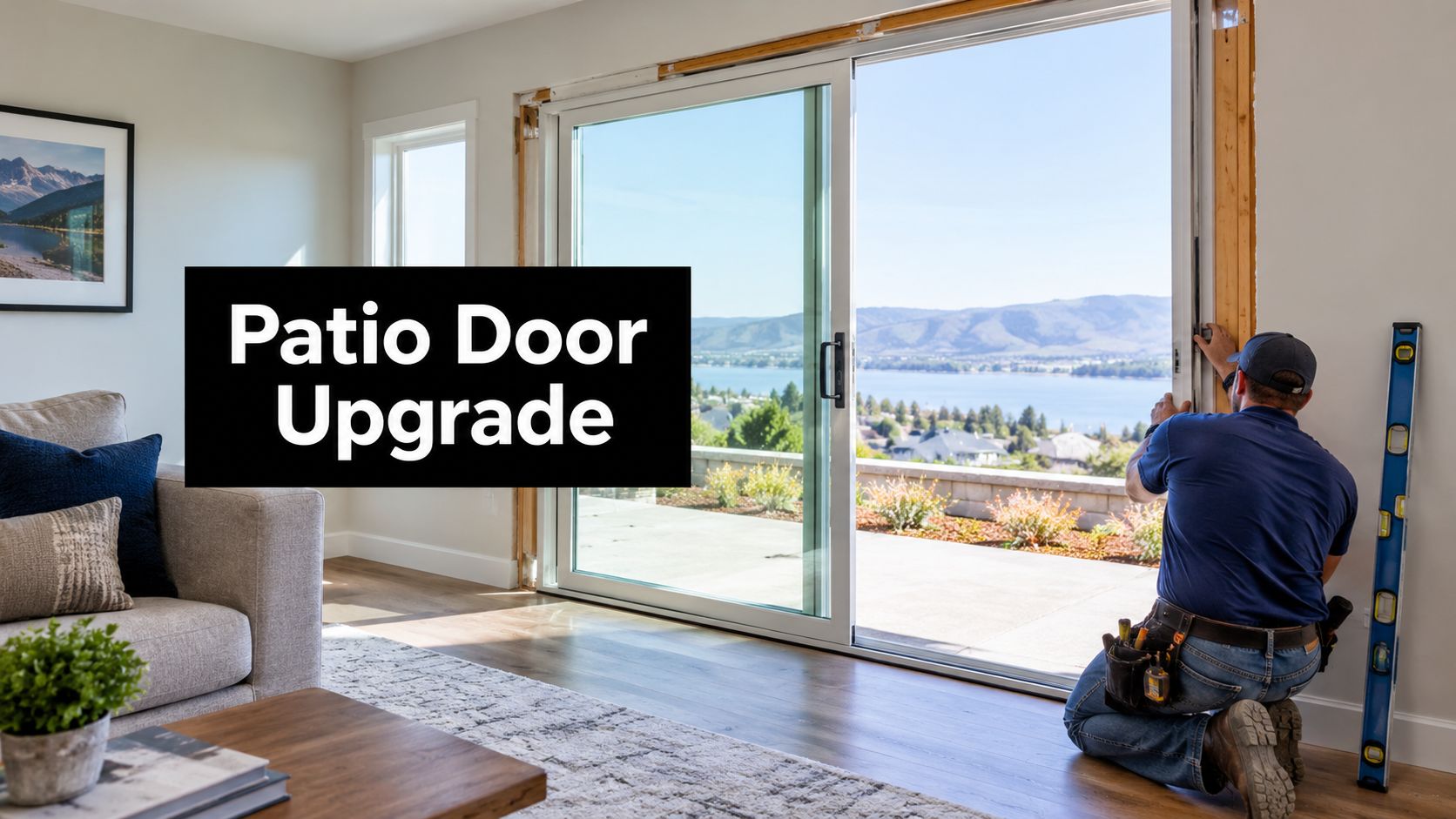
Your patio door may still look decent from across the room, but the daily signs are harder to ignore. It drags on the track. The lock feels loose. In winter, the chair near the glass feels colder than the rest of the room. In summer, the sun turns that same spot into a hot zone by late afternoon.
That's the moment many homeowners start searching for patio door replacement in Richland, WA. Some need a full replacement. Others only need repairs, better weather sealing, or a clearer path through local permitting and code questions. The tricky part is that most advice online skips the details that decide whether the project goes smoothly.
Table of Contents
- Why Richland Homeowners Replace Patio Doors Now
- Patio Door Types and Materials That Fit Richland Homes
- Energy Performance Upgrades That Matter in Richland WA
- What Patio Door Replacement Costs in Richland and How to Pay
- Permitting Installation Timeline and Code Compliance in Richland
- Repair or Replace and How to Choose a Qualified Local Installer
- Warranty Maintenance and Long Term Value for Your New Patio Door
Why Richland Homeowners Replace Patio Doors Now
On a cold Richland morning, the furnace is running, but the space near the patio door still feels a few degrees behind the rest of the room. The door scrapes a little, the latch needs an extra push, and the track collects dust faster than it should. For many homeowners, that combination is the start of a replacement project.
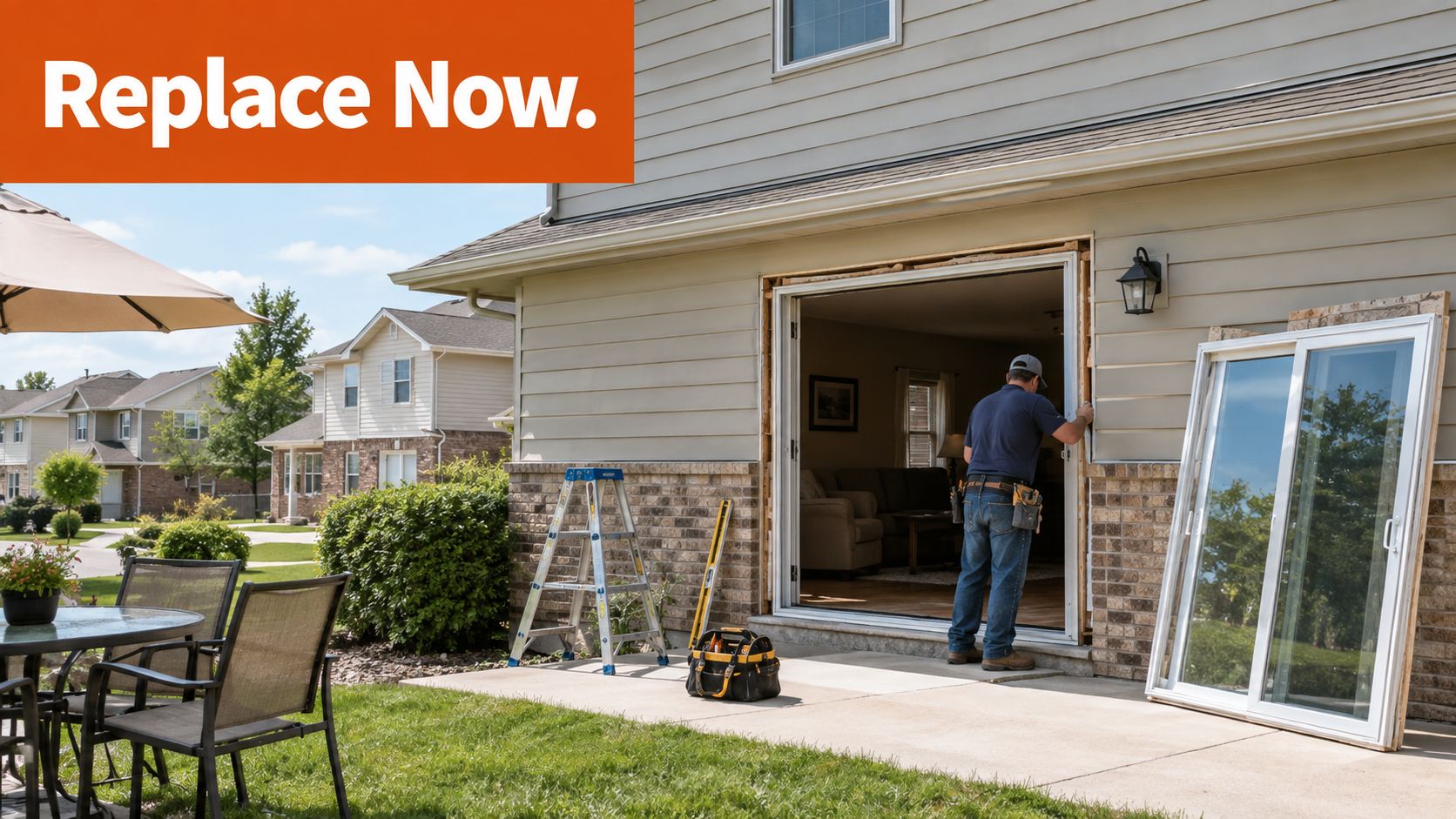
A lot of Richland homes were built in the mid-1980s, and many still have older patio sliders from that period. After a few decades, these doors often reach the same stage at the same time. The rollers wear down. Weatherstripping gets stiff. Locks loosen. Older glass also falls short of current performance standards, especially in rooms with a lot of afternoon sun.
Age matters more than style trends
Homeowners often start by asking whether the door looks dated. The better question is how the whole unit is functioning.
A patio door works like a small wall section with moving parts built into it. If the rollers are worn, the panel drags. If the frame has shifted, the lock may stop lining up cleanly. If the weatherstripping has hardened, small air leaks can show up long before the door looks badly damaged. That is why an older patio door can feel frustrating every day even when it still looks acceptable from across the room.
Practical rule: If sticking, drafts, and lock trouble are all happening together, treat it as a system issue instead of a one-part repair.
That point matters in Richland because replacement is not always the only answer. A newer door with one failed lockset may be a repair job. An original 1980s slider with worn rollers, air leakage, and cloudy glass usually points in a different direction. Replacing one part on a door that is wearing out in several places is a bit like putting new tires on a car with a failing transmission. The new part may help, but it does not solve the bigger problem.
Richland's climate makes weak patio doors easier to notice
Richland's dry inland climate puts comfort problems near glass on display. Richland climate data shows low annual precipitation and a cool annual average temperature, which helps explain why heat loss and air leakage stand out so quickly around large openings.
In practical terms, homeowners tend to notice three things first:
- Cold-edge comfort problems: The room is heated, but the seating area by the glass still feels cool.
- Draft and dust issues: Small air leaks are easier to feel in a dry climate.
- Daily operation problems: The door becomes annoying to open and close, even before it fully fails.
Richland owners are also weighing more than appearance. They want a door that operates smoothly, locks securely, and meets current expectations for energy performance. That is where local code and product ratings start to matter. Washington energy code affects what qualifies as an acceptable replacement, and permit requirements can change depending on whether the opening stays the same or is being altered.
Those details are easy to miss early on. They also shape whether a project should stay in the repair category or move to full replacement.
Patio Door Types and Materials That Fit Richland Homes
Door style affects how the room works every day. Frame material affects how the door ages, how much upkeep it needs, and how well it handles temperature swings. Those are separate decisions, and it helps to keep them separate.
Comparing sliding, French, and bi-fold doors
A sliding patio door is the most familiar option in Richland homes from the mid-1980s era. One panel stays fixed while the other moves, so it doesn't need indoor floor space to swing open. That makes it practical for breakfast nooks, tighter living rooms, and patios where furniture sits close to the opening.
A French swinging door works more like a front entry door with glass. It can feel more traditional and gives a wide opening feel, but it needs clearance to swing. In some layouts, that's no problem. In others, it interferes with furniture placement.
A bi-fold door opens in sections and creates the strongest indoor-outdoor connection. It suits remodels where entertaining flow matters most, but it also demands careful planning for threshold details, wall opening size, and installation precision.
Choosing a frame material
Think of the frame as the door's skeleton. Two doors can have similar glass but feel very different over time because the frames behave differently.
- Vinyl: Usually a practical, low-maintenance choice. It doesn't ask for much upkeep and works well for homeowners who want dependable performance without routine refinishing.
- Fiberglass: Often chosen when homeowners want a more rigid feel and good thermal behavior with limited maintenance.
- Wood: Warm and classic in appearance, but it asks for more care. If you love the look, go in expecting maintenance to be part of ownership.
- Aluminum-clad wood: A blend approach. The interior can keep a wood look while the exterior adds a more durable protective shell.
The right material isn't the one with the fanciest brochure. It's the one that fits how much maintenance you'll actually do.
Matching the door to the house
Here's a simple way to think about the match.
| Door or Material Choice | Best Fit in the Home | What to Watch |
|---|---|---|
| Sliding door | Smaller rooms, existing slider openings, simple traffic flow | Track quality and air sealing matter a lot |
| French door | Traditional layouts, formal patios, wider clear access feel | Needs swing space |
| Bi-fold door | Larger remodels, entertaining-focused spaces | Installation complexity |
| Vinyl frame | Low-maintenance households | Appearance preferences vary |
| Fiberglass frame | Performance-focused upgrades | Product availability may vary by line |
| Wood or aluminum-clad wood | Homes prioritizing architectural character | Maintenance expectations |
A young family may choose a smooth-gliding slider because it saves space and handles constant traffic. A homeowner remodeling for aesthetics may prefer French doors. Someone reworking a back wall for entertaining may decide bi-fold is worth the planning.
The best answer usually comes from the floor plan first, then the finish and style second.
Energy Performance Upgrades That Matter in Richland WA
Energy labels confuse a lot of homeowners because the terms sound technical. They're simple once you connect them to what you feel standing near the glass.
The three numbers that matter most
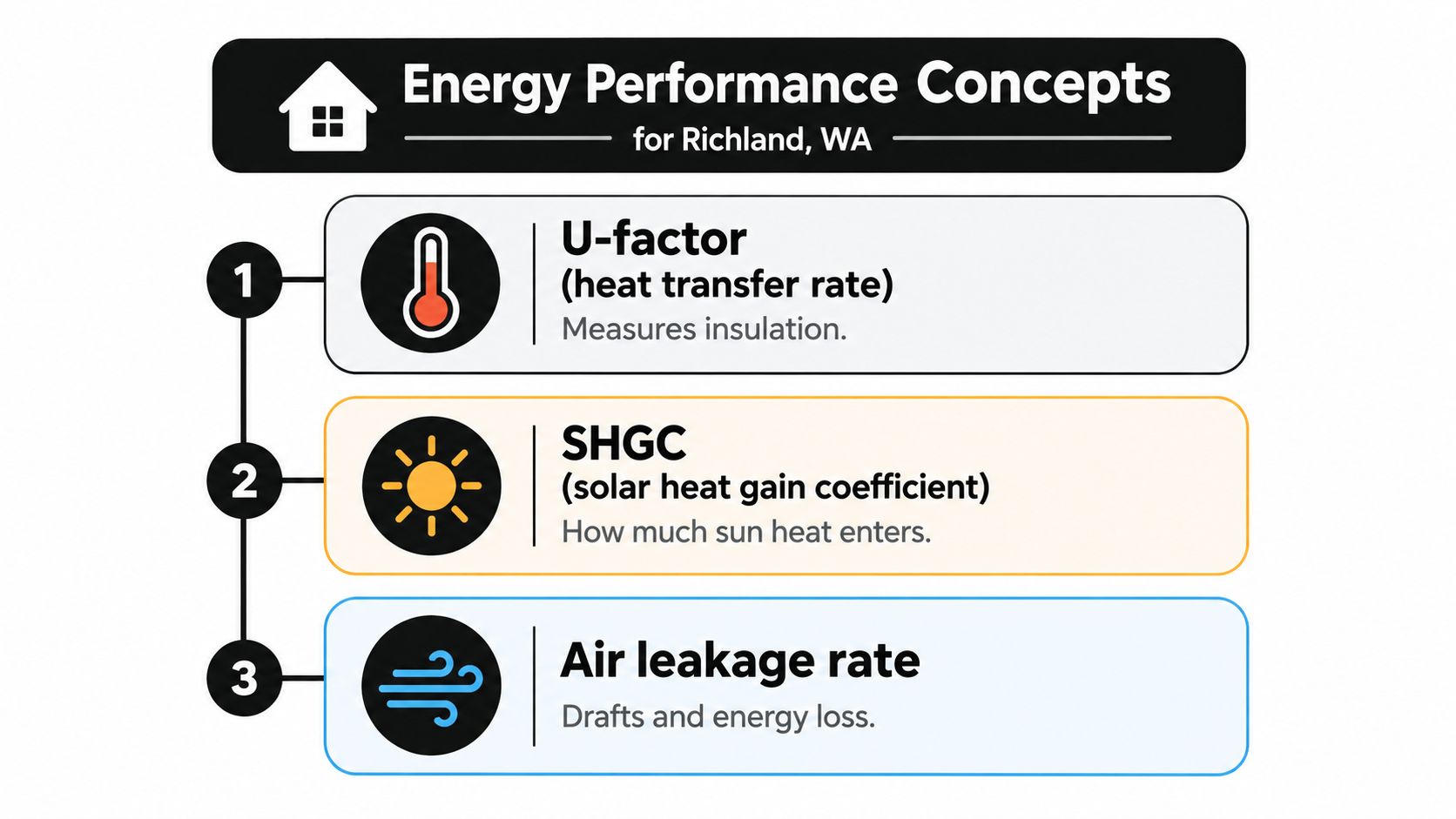
Start with U-factor. ENERGY STAR explains that U-factor is the rate of heat transfer through a window or door, and lower values mean better insulation. It also notes that window and door U-factors generally range from about 0.25 to 1.25, while SHGC is measured on a 0-to-1 scale, with lower SHGC meaning less solar heat enters the home. You can read that directly in ENERGY STAR's overview of independently tested and certified energy performance.
Think of U-factor like a thermos. The lower the number, the better the door is at resisting heat moving through it.
Now add air leakage. That's different. Air leakage is about drafts, not just heat transfer through the glass or frame. A door can have decent insulating glass and still feel uncomfortable if outside air sneaks around moving parts and seals.
Then there's SHGC, or solar heat gain coefficient. That tells you how much solar heat gets through the glazing. In a sunny inland market, that matters for rooms that overheat.
What to look for on a replacement sliding door
For sliding patio doors, ENERGY STAR Version 7.0 sets a maximum air-leakage rate of ≤0.3 cfm/ft2 for sliding doors, and the EPA notes that lower U-factor values mean better insulation in the Version 7.0 specification document. That matters because a slider has more moving seals than a fixed picture window.
A second benchmark matters too. An Andersen summary of ENERGY STAR Version 7.0 notes a Northern-zone U-factor limit of ≤0.26 for patio doors, tightened from earlier criteria, in its overview of the ENERGY STAR 7 update. The same discussion notes that some door assemblies in Washington's code references can be much less efficient, which is why whole-door construction matters.
If you're shopping, ask for these details clearly:
- U-factor: Lower is better for insulation.
- Air leakage rating: Especially important on sliders.
- Glass package: Low-E coatings and gas fills are common upgrades that can improve comfort.
- Whole-door performance: Don't focus on center-of-glass marketing alone.
One example of a product category built around those questions is energy-efficient patio doors from C & C Windows & Doors, which highlights Low-E glass, Argon-filled options, and ENERGY STAR-focused configurations.
Reading labels without getting lost
Homeowners often overfocus on one feature, like triple-pane glass, and skip the label basics. A better approach is to read the label as a package.
If the room feels drafty, don't ask only about glass. Ask how the entire door is sealed, aligned, and installed.
For patio door replacement in Richland, WA, the best-performing choice often isn't the one with the longest feature list. It's the one with the right balance of insulation, solar control, and low air leakage for the opening you have.
What Patio Door Replacement Costs in Richland and How to Pay
The price of a patio door project depends less on a single “average cost” and more on what you're replacing, what you're installing, and how difficult the opening is. That's why two quotes can look far apart even when both say “sliding patio door.”
What drives the total price
Start with the door itself. Material, glass package, hardware, finish, and configuration all affect the number. A standard replacement into an existing opening is usually simpler than changing the size, reshaping the opening, or correcting old framing issues discovered during removal.
Installation details matter just as much as the product. Custom sizing, sill preparation, flashing, trim work, debris removal, and code documentation all add labor and planning. If a quote looks low, make sure it isn't low because something important was left out.
| Cost Factor | What It Includes | Why It Matters in Richland |
|---|---|---|
| Door type | Sliding, French, or bi-fold configuration | Operation style changes product and labor complexity |
| Frame material | Vinyl, fiberglass, wood, or clad construction | Affects maintenance and performance expectations |
| Glass package | Low-E coatings, gas fills, glazing level | Comfort near large glass matters in a temperature-variable climate |
| Hardware and security | Locks, handles, rollers, multipoint systems | Daily use and security concerns are common replacement drivers |
| Opening condition | Existing frame, sill, surrounding trim, structural issues | Older homes may need more prep than expected |
| Permit and inspection needs | Local paperwork and code review | Administrative steps can affect schedule and scope |
Comparing quotes the smart way
A good quote should answer these questions in writing:
- What exactly is being replaced? Full-frame replacement and insert-style replacement aren't the same job.
- Which performance specs are listed? Ask for the actual label values, not just “energy efficient.”
- What site work is included? Trim, sealants, threshold work, haul-away, and cleanup should be clear.
- Who handles permit coordination? Don't assume that part is automatic.
Credits and financing
Federal tax policy can help if the door qualifies. The IRS states that qualifying exterior doors may receive a credit of 30% of the cost, capped at $250 per door and $500 total per year, under the Energy Efficient Home Improvement Credit. That same IRS guidance ties into the broader annual home-envelope credit limit of $1,200 for eligible improvements to a principal residence in the United States.
That doesn't make every project cheap. It does mean homeowners should ask for product documentation and keep records if they expect to claim a credit.
Some installers also offer third-party financing, which can help spread cost over time. The right use of financing isn't to buy more door than you need. It's to avoid delaying a failing opening that's affecting security, comfort, or code compliance.
Permitting Installation Timeline and Code Compliance in Richland
Many patio door projects get fuzzy. Homeowners hear “it's just a replacement,” then later discover that replacing a door between conditioned interior space and the exterior can carry energy-code implications.
Why local code questions matter
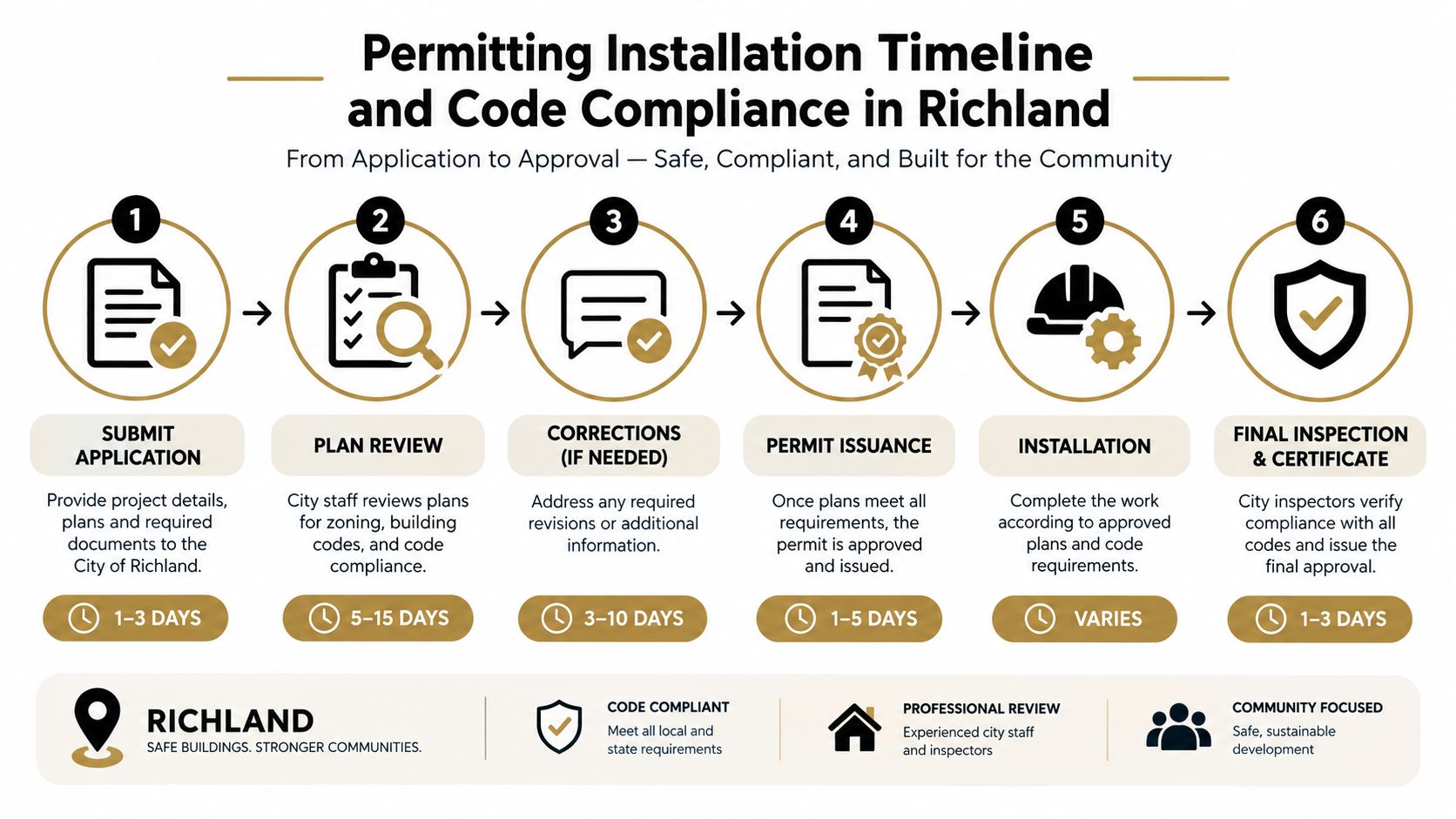
Washington treats the state energy code as the minimum and maximum residential code enforced by local jurisdictions, and the state framework specifically addresses replacement of doors separating conditioned space from the exterior in the Washington State Energy Code system. For a Richland homeowner, that means the local permitting office is the practical point of contact when questions come up.
The important takeaway is simple. Product choice and paperwork are connected. A high-performance door that isn't documented properly can create avoidable delays.
A homeowner checklist for the process
Use this as a working checklist before anyone orders a unit:
Confirm project scope
Is it a like-for-like replacement in the same opening, or are you changing size, swing, or structure?Ask about permit responsibility
Someone needs to determine whether the work requires submittals or inspection steps locally.Request performance documentation
Keep the product data tied to the installed unit, especially if the opening connects conditioned space to outdoors.Verify field measurements
Patio doors punish sloppy measuring. Small errors become big alignment problems.Plan for inspection timing
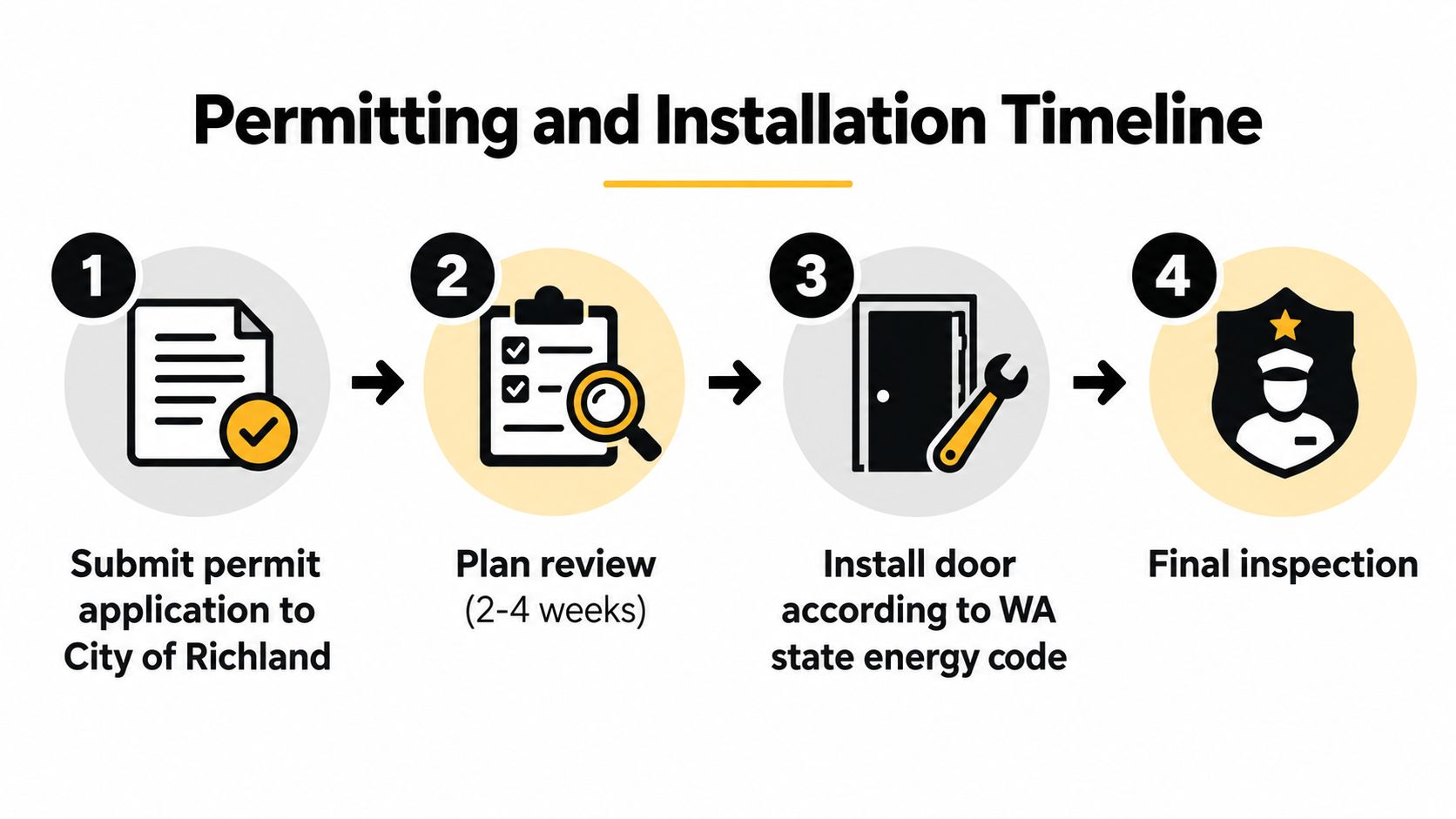
If inspection applies, installation scheduling should reflect that reality.
Code compliance isn't only about passing inspection. It's about avoiding the call six months later when a sale, refinance, or follow-up repair exposes missing documentation.
What the timeline usually feels like
The homeowner experience usually starts with consultation and measurement. After that comes product selection, permit review if needed, order lead time, installation day, and any required closeout.
Not every project moves at the same speed because some doors are standard replacements and others are custom orders. Administrative timing can also vary. If you want a practical look at patio door project considerations from an installer perspective, patio door installation articles from C & C Windows & Doors show the kinds of issues homeowners commonly evaluate before installation.
The strongest project outcome is rarely just “most efficient door available.” It's the combination of the right unit, accurate measurement, proper sealing, and clear compliance records.
Repair or Replace and How to Choose a Qualified Local Installer
A dragging patio door doesn't always need full replacement. That's one of the biggest money-saving truths in this category, and it's also one of the least explained.
When repair may be the better answer
If the frame is sound, targeted repairs can solve the actual problem. Local repair-oriented guidance for Richland points to common repair estimates of roughly $150-$500 for locks, tracks, and tune-ups in its discussion of patio door repair in Richland. That's a very different decision from replacing the full door set.
Repair is often worth considering when:
- The door drags but the frame is solid: Rollers or track work may restore operation.
- The lock feels weak: Hardware replacement can address a security complaint without replacing the whole assembly.
- Air leakage is limited to worn weatherstripping or adjustment issues: A tune-up may help if the core structure is still in good shape.
- Only one component failed: Glass service or hardware service can sometimes extend useful life.
Replacement makes more sense when the frame is failing, the sash is badly worn, the seal and operation problems stack up together, or code and performance upgrades are part of a larger remodel.
How to vet the installer
The installer matters as much as the door. A mediocre install can waste a strong product. A careful install can make a modest product perform the way it should.
Ask questions that reveal process, not just price:
- Who measures the opening? You want custom field measurement, not guesswork.
- What installation steps are included? Ask about sill prep, flashing, alignment, sealants, and final operation checks.
- How is debris handled? Clean closeout is part of a professional job.
- What experience do they have in your area? Local familiarity helps with common home types and permit expectations.
- Can they explain repair versus replace? If every symptom gets pushed toward replacement, be cautious.
A useful starting point for reviewing local contractor considerations is window contractors in Richland, WA, especially if you're comparing how companies discuss measurement, installation quality, and service process.
A qualified installer should be able to say, “This door can be repaired,” when repair is the smarter choice.
Warranty Maintenance and Long Term Value for Your New Patio Door
The first cold evening after installation tells you a lot. The door should glide without scraping, latch without a shove, and feel more comfortable when you stand nearby. If those basics are right from day one, long term value is much easier to protect.
Warranty language matters because patio doors are really a group of parts working together: frame, glass, rollers, locks, weatherstripping, and the installation itself. A good warranty separates product coverage from labor coverage, so you can see who handles what if a seal fails, a roller wears out, or an adjustment is needed. Read the exclusions with extra care. Finish care, glass breakage, and service-call limits are common places where homeowners get surprised.
Maintenance in Richland is usually more about dust, sun, and seasonal movement than heavy moisture. A simple routine goes a long way:
- Vacuum and wipe the track so grit does not grind down rollers.
- Check weatherstripping and corner seals once or twice a year, especially before heating season.
- Clean the glass and frame with methods approved by the manufacturer, so coatings and finishes stay protected.
- Test the lock, handle, and sliding action while small adjustments are still easy.
A patio door works a lot like a well-tuned bike wheel. If dirt builds up or one part gets slightly out of line, you feel it every time you use it. Catching a minor drag early is cheaper and easier than waiting until hardware wears unevenly.
Long term value also means knowing what the upgrade should improve in Richland's dry, heating-dominated climate. Lower winter drafts matter. Better solar control can matter too, but many homeowners notice comfort first: less of that cold-zone feeling near the glass, steadier temperatures in the room, and quieter operation every day. Those are practical gains, not just sales talking points.
Resale enters the conversation for many households, especially when they are improving an older home one project at a time. A new patio door can support that plan because buyers notice operation, condition, and energy-minded updates quickly. Still, the best return usually comes from choosing the right door, getting the installation details right, and keeping the unit maintained so it performs the same way years from now.
The best outcome is straightforward. Choose a door with clear warranty terms, keep up with light maintenance, and expect value to come from daily comfort, reliable operation, and service life.
C & C Windows & Doors offers patio door replacement with custom measurements, debris-free installation, energy-efficient glass options, and financing support for homeowners who want a clearer process from product selection through installation. If you're comparing repair versus replacement or want help understanding performance and installation details, visit C & C Windows & Doors to review their services and request an estimate.