If you're in Nampa and your house feels drafty in January, then overheated by late afternoon in July, your windows are probably part of the problem. Most homeowners notice the same pattern first. A room that never feels quite right, condensation on the glass, outside noise that seems too easy to hear, and utility bills that feel harder to justify every season.
That usually leads to the same search: finding a reliable window company in Nampa, ID without getting buried in vague promises, confusing specs, or quote comparisons that don't prove helpful. The right decision isn't just about who can install a window. It's about choosing the right window package for Idaho's climate, and choosing an installer who knows how to make that product perform the way it should.
Table of Contents
- Navigating Your Window Replacement in Nampa
- Idaho Climate Demands High-Performance Windows
- The Professional Window Installation Process Explained
- Understanding Window Costs and Your Long-Term ROI
- Your Checklist for Vetting Nampa Window Contractors
- Decoding Window Warranties and Service Guarantees
- Choose a Partner Invested in the Treasure Valley
Navigating Your Window Replacement in Nampa
A common Nampa scenario goes like this. The furnace runs, but the back bedroom still feels cold. Summer shows up, the west-facing rooms heat up fast, and the blinds stay closed most of the day just to keep the house tolerable.
Homeowners often start by blaming insulation or the HVAC system. Sometimes that's part of it. But when old windows have weak seals, dated glass packages, or poor fit, they let comfort leak out all year long.
The signs are usually easy to spot once you know what to look for:
- Drafts near the frame: You feel moving air even when the window is closed.
- Condensation issues: Moisture on or between panes points to insulation or seal problems.
- Noise transfer: Traffic, wind, and neighborhood noise come indoors too easily.
- Temperature imbalance: One room feels different from the rest of the house.
- Hard operation: Windows stick, slide poorly, or won't lock cleanly.
Practical rule: If you notice comfort problems in both winter and summer, the issue usually isn't just age. It's window performance relative to Idaho's climate.
Many buying advice resources fall short. Telling homeowners to "get three quotes" sounds responsible, but it doesn't answer the important question. What specs make sense for Nampa? If one quote includes a basic double-pane unit and another includes a high-performance triple-pane package, those aren't equal offers, even if the opening sizes match.
A better approach is to make decisions in the right order. First, match the window to the climate. Second, match the installer to the product. Third, judge the proposal by long-term value, not just by the first number on the page.
That framework keeps you from overpaying for the wrong features, and it keeps you from underbuying a window that won't solve the comfort problem you started with.
Idaho Climate Demands High-Performance Windows
Nampa doesn't reward average windows. Idaho homes deal with a wide seasonal swing, and for this climate, the best-performing setup is typically triple-pane vinyl with Low-E coating, argon gas fill, and a U-factor at or below 0.27 according to this guide on energy-efficient windows for Idaho's climate. That same source notes that high-performance triple-pane windows often land between 0.15 and 0.22 U-factor, while many double-pane units fall between 0.25 and 0.30.
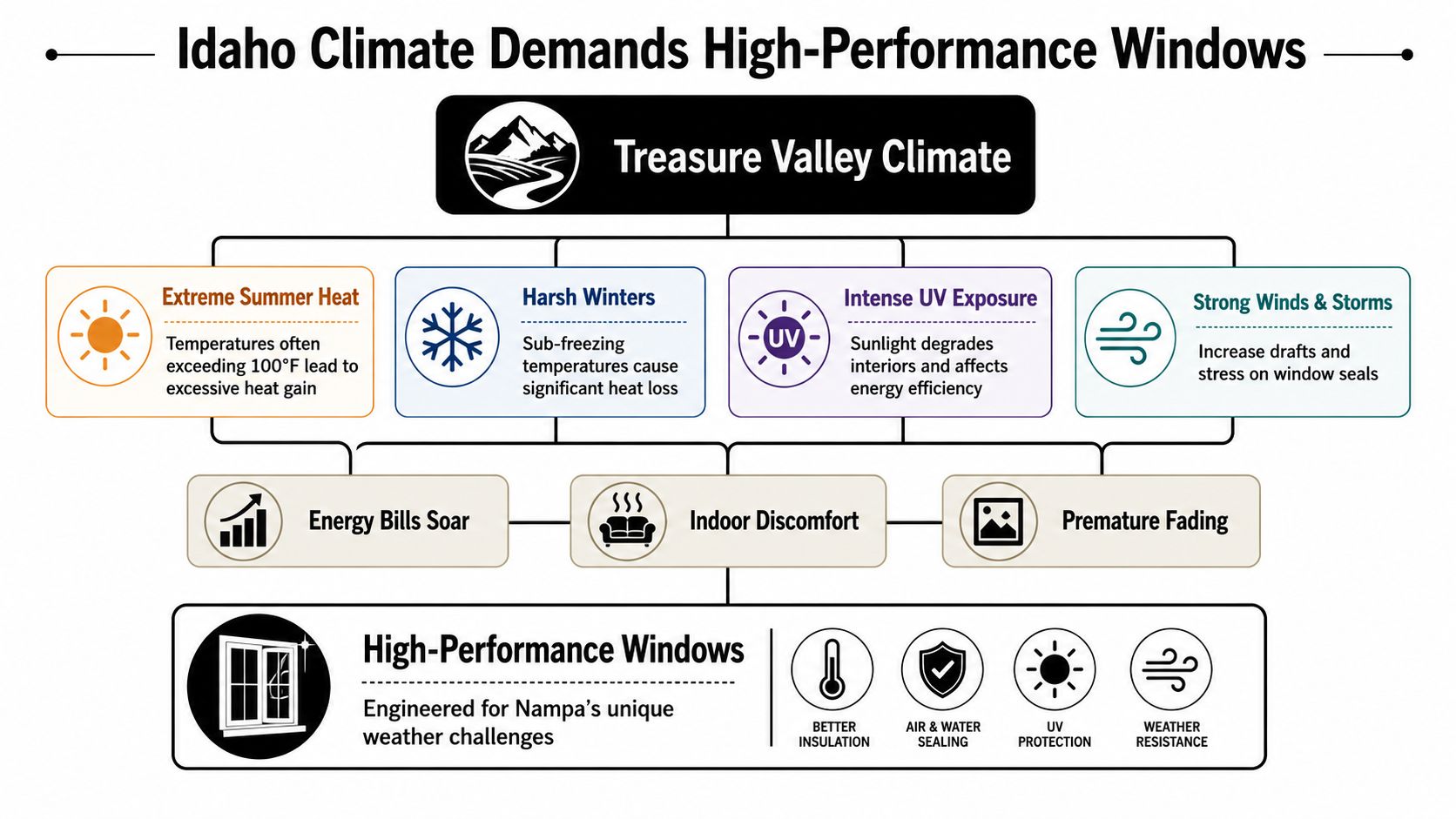
What matters most in Nampa
Think of U-factor as the window's winter coat. The lower the number, the better it resists heat loss. For homeowners in Nampa, that matters on cold nights when weak glass packages turn the area near the window into the least comfortable part of the room.
SHGC, or Solar Heat Gain Coefficient, works more like sunglasses. It controls how much solar heat passes through the glass. Under the updated Northern climate zone criteria, which includes Nampa, windows must meet a maximum U-Factor of 0.22 or lower and a minimum SHGC of 0.17 or higher under ENERGY STAR 7.0 Northern climate zone requirements.
That matters because these aren't soft targets. They're the most stringent U-factor requirements this zone has seen for residential windows.
A low-performing window can look fine in a showroom and still struggle badly once it faces a full Idaho summer and winter cycle.
How to read the label without getting lost
Homeowners don't need to memorize every acronym, but they do need to know what affects comfort and operating cost. The specs worth paying attention to are simple:
| Feature | What it does | Why it matters in Nampa |
|---|---|---|
| Triple-pane glass | Adds another insulating layer | Helps control both cold-weather loss and summer heat gain |
| Low-E coating | Reflects heat energy | Supports more stable indoor temperatures |
| Argon gas fill | Improves insulation between panes | Helps the unit perform better than air-filled glass packages |
| U-factor | Measures heat transfer | Lower is better for Idaho winters |
| SHGC | Measures solar heat gain | Helps balance winter benefit and summer control |
For many homes, triple-pane isn't a luxury add-on. It's the practical answer to a climate that asks a lot from the glass. If you're comparing products, use the performance label as your filter, not the sales language.
For a deeper local breakdown, this Idaho energy-efficient windows guide is a useful reference point when comparing packages.
The Professional Window Installation Process Explained
A great window installed poorly becomes an average result fast. Most homeowner complaints after replacement don't start with the glass package. They start with measurement errors, rushed fitting, weak sealing, or sloppy finish work.
The process should feel organized from the first visit. It shouldn't feel improvised.
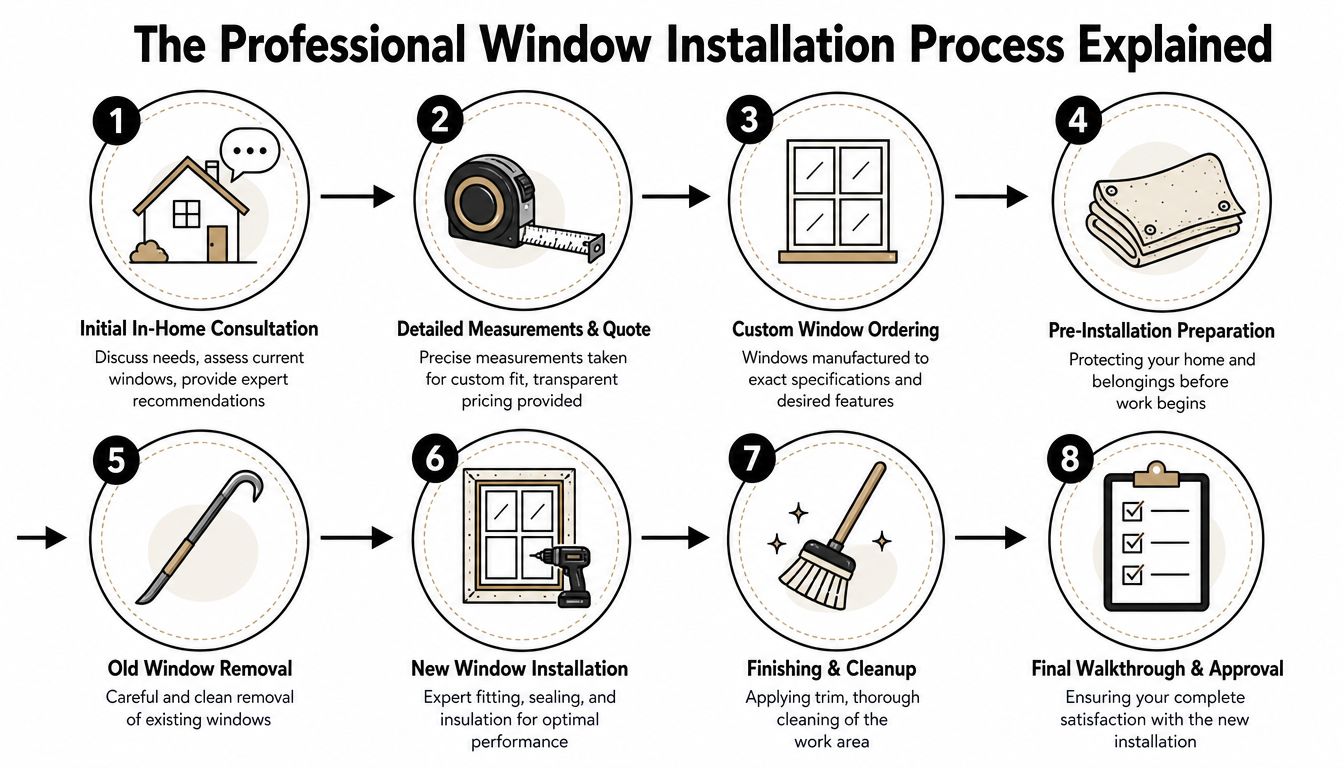
What should happen before installation day
The first appointment should happen in the home, not just over the phone. A professional installer needs to look at the existing openings, confirm the condition of the surrounding areas, and take custom measurements. That part isn't optional. Replacement windows don't perform well when they're treated like off-the-shelf inserts for every opening.
A solid pre-install process usually includes:
- In-home evaluation of the current windows, operation issues, and comfort complaints.
- Precise measuring of each opening, because old homes rarely give identical dimensions from room to room.
- Product discussion based on exposure, style, and energy goals.
- Clear quote review so the homeowner understands what's included.
- Scheduling and prep guidance for the installation day.
If the consultation feels rushed, the install often does too.
What a clean installation day looks like
On install day, the crew should protect flooring and nearby surfaces before any removal starts. Old windows should come out carefully so the surrounding area isn't damaged. The new unit should be set square, insulated correctly, sealed cleanly, and checked for operation before trim and finishing are completed.
A professional process usually includes these visible signs of care:
- Protection first: Drop cloths, attention to interior finishes, and controlled work areas.
- Deliberate removal: Old units come out without unnecessary damage to trim or wall surfaces.
- Fit and seal: The crew checks alignment, operation, insulation, and weather sealing before moving on.
- Debris-free cleanup: Glass, fasteners, packaging, and dust shouldn't be left for the homeowner to manage.
- Final walkthrough: The installer should demonstrate operation and answer questions before wrapping up.
The easiest way to judge installation quality is simple. Open, close, and lock every window before the crew leaves.
This overview of what to expect from a window installation is a good benchmark for what a homeowner should see from a professional crew.
Understanding Window Costs and Your Long-Term ROI
Window pricing matters, but price by itself is a weak decision tool. A low quote on a weak glass package can cost more over time if the home stays uncomfortable and utility bills don't improve.
That's why the better question is this. What are you getting for the money, and how long will those benefits last?
What changes the price
Not every replacement project is priced the same, even when the home size is similar. Several variables move the final number:
- Window style: Double-hung, casement, picture, and sliding windows don't require the same hardware or construction.
- Glass package: Double-pane and triple-pane perform differently and cost differently.
- Frame material and design: Vinyl remains a common fit for Idaho because it balances efficiency and maintenance.
- Installation complexity: Existing condition, opening irregularities, and trim work affect labor.
- Patio door scope: Larger moving glass units add another layer of product and installation detail.
That's why comparing line items matters more than comparing totals. A quote should tell you what type of glass, what efficiency level, and what installation scope you're buying.
How to think about return instead of just price
For older homes with inefficient windows, energy performance can shift the math. According to Angi's Nampa window market page, ENERGY STAR 7.0-compliant windows can reduce heating and cooling costs by up to 25% in cold climates like Idaho's when homeowners upgrade from older, inefficient windows, as noted on Angi's Nampa window information page.
That doesn't mean every home will land at the same result. House orientation, window condition, shade, HVAC habits, and air sealing all affect the outcome. But it does mean performance specs can create a measurable return, not just a cosmetic improvement.
There's also a broader national benchmark worth knowing. ENERGY STAR certified windows, doors, and skylights can reduce heating and cooling energy bills by an average of up to 13% nationwide compared to non-certified products, according to ENERGY STAR window and door savings information.
A practical way to evaluate ROI is to look at four buckets:
| ROI area | What to evaluate |
|---|---|
| Utility savings | Whether the new package is likely to reduce heating and cooling waste |
| Comfort | Whether the cold-room and hot-room problem should improve |
| Home value | Whether curb appeal and perceived quality improve |
| Service life confidence | Whether the product and installation are built to last |
Financing can also matter. Many homeowners don't want to wait through another heating season or another summer just to save up for the full project. Reputable companies often offer financing options so the home starts performing better right away while the cost gets managed over time.
Your Checklist for Vetting Nampa Window Contractors
The installer matters as much as the window. A strong product can underperform if the crew cuts corners on fit, insulation, or sealing. If you're hiring a window company in Nampa, ID, the best protection isn't collecting random quotes. It's asking sharper questions than most homeowners ask.
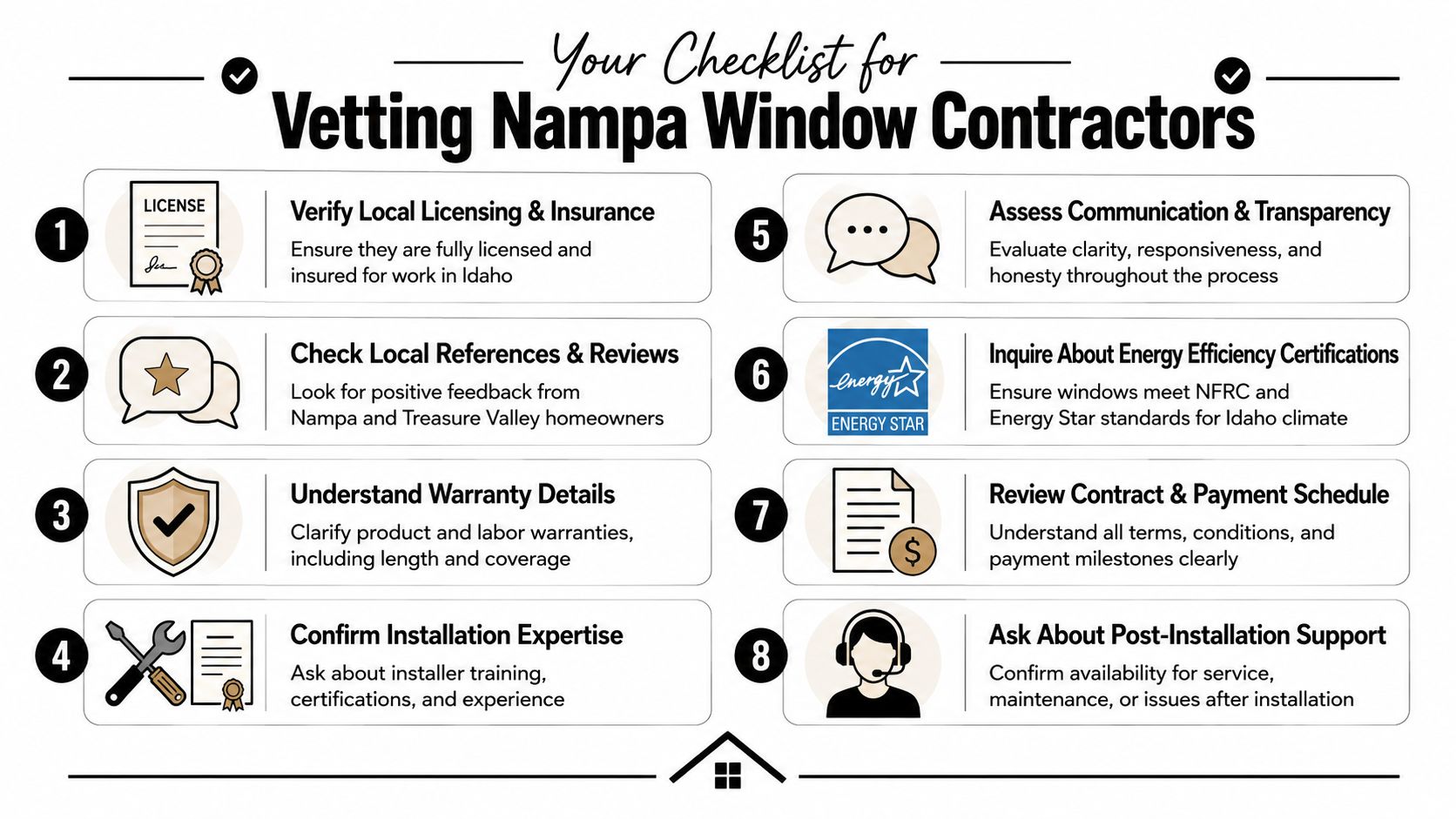
Questions that expose the difference fast
A serious contractor should answer these clearly and without deflection:
- Are you licensed and insured for Idaho work? You want confirmation before anyone touches the house.
- How much local experience do you have in the Treasure Valley? Local weather knowledge matters because product selection and install details change by climate.
- Are your installers factory-trained on the products you install? Product familiarity reduces mistakes.
- Do you take custom measurements before ordering? If the answer is vague, that's a warning sign.
- What does cleanup look like after work is done? Professional crews leave the site orderly, not chaotic.
- What warranties cover product and labor? If labor coverage is weak, the homeowner may be left sorting out install issues alone.
This guide on questions to ask a window contractor is a helpful reference to keep nearby during estimate appointments.
Red flags homeowners should take seriously
Bad hiring decisions usually announce themselves early. Homeowners just talk themselves out of noticing.
If a contractor avoids specifics on measurements, warranty coverage, or who will actually perform the installation, slow the process down.
A few warning signs stand out:
- No clear local footprint: If it's hard to tell where the company operates from, service after the sale can become difficult.
- Spec-light proposals: If the quote doesn't clearly identify the glass package and efficiency level, you can't compare it properly.
- Overfocus on price alone: Cheap often means stripped-down product, rushed labor, or both.
- Unclear communication: Delayed callbacks and fuzzy answers before the sale rarely improve after the deposit.
- Weak documentation: The contract should be readable, specific, and complete.
One more detail matters if energy performance is part of your goal. Under the updated ENERGY STAR 7.0 process, residential fenestration manufacturers must submit air leakage test reports that are less than 10 years old to the FenStar verification site for certification, according to the FGIA update on ENERGY STAR 7.0 requirements. That tells you the certification standard isn't casual. Current verification matters.
Decoding Window Warranties and Service Guarantees
Most homeowners hear "lifetime warranty" and assume they're fully covered. Sometimes they are. Sometimes they aren't. The difference is in who covers what.
Product coverage versus labor coverage
A manufacturer's warranty usually covers the physical window itself. That can include defects in materials, glass unit problems, or hardware issues, depending on the written terms.
A labor warranty covers the installation work. That's the part that protects you if the problem isn't the window, but how it was fitted, sealed, insulated, or finished.
Those are not the same thing. If a company talks only about product coverage, ask directly what happens if operation issues or air leaks trace back to installation.
What lifetime really means
Lifetime limited warranty language can be valuable, but "limited" is doing real work in that sentence. Homeowners should ask for the written terms and check these details:
- Who backs the warranty: The manufacturer, the installer, or both.
- What events are excluded: Not every issue is covered.
- Whether labor is included: Many misunderstandings often originate here.
- How service is handled locally: A local service path matters when you need help.
A good warranty doesn't replace good installation. It supports it. The best outcome is still a correctly specified window, installed cleanly the first time, by a company that will still answer the phone years later.
Choose a Partner Invested in the Treasure Valley
By the time a homeowner narrows the field, the decision usually becomes clearer. The strongest choice isn't the company with the fastest pitch or the cheapest starting price. It's the one that can match the right product to Idaho's climate, install it correctly, and stand behind the work long after the truck leaves.
That standard matters in the Treasure Valley because window replacement here isn't generic. Homes need products engineered for major seasonal swings, careful measurements, and installation crews who know how local conditions affect long-term performance.
A local company should bring more than a catalog. It should bring climate-specific product guidance, a defined install process, and real accountability after the sale. That includes knowing which glass packages make sense for Nampa, how to measure each opening correctly, and how to deliver a clean, debris-free finish homeowners can trust.
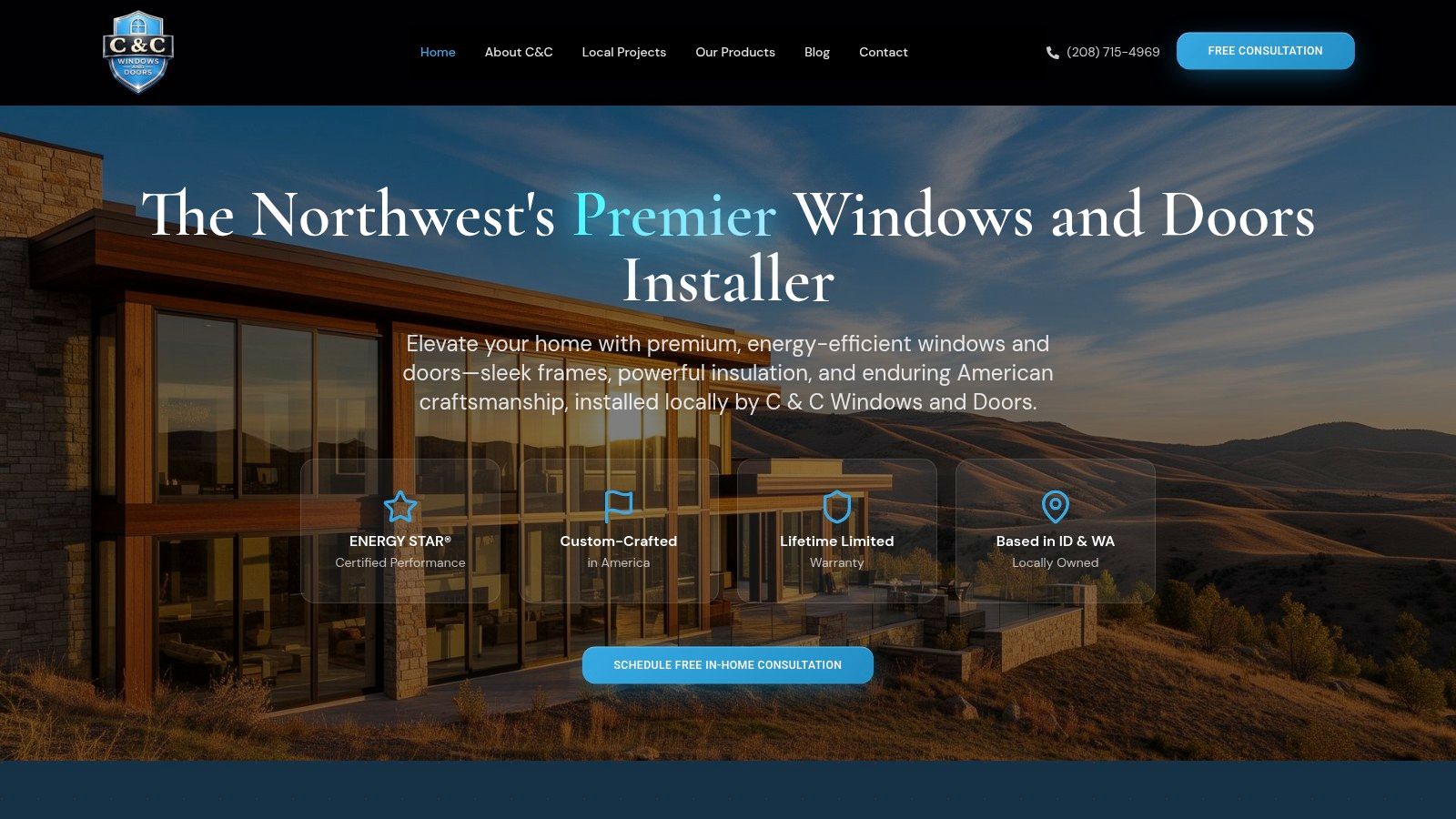
C & C Windows & Doors fits that profile well. The company is a local, factory-trained installer with 13 years of experience serving the Treasure Valley, including Nampa, and provides free in-home consultations plus a lifetime limited warranty on products and labor, as described on the C & C Windows & Doors company website. They install windows engineered for Idaho's climate and focus on meticulous installation quality, which is exactly what homeowners should look for after working through the checklist in this guide.
For homeowners who want practical confidence, that combination matters more than sales language. Local experience matters. Factory training matters. Climate-appropriate products matter. A real warranty matters. When all four show up together, the buying decision gets a lot simpler.
If you're ready to talk through your project with a local team that understands Nampa homes, schedule a free in-home consultation with C & C Windows & Doors. You can get custom measurements, product guidance built around Idaho's climate, and a clear plan for replacing your windows without the usual guesswork.