If you're reading this in Boise, there's a good chance your windows are reminding you they matter. Maybe the west side of the house heats up every summer afternoon. Maybe you feel a draft near the living room in January. Maybe traffic noise or smoky air makes you think twice before opening anything at all.
That's usually when the casement versus double-hung question gets real. It stops being about showroom style and starts being about how your house feels day to day. In the Treasure Valley, windows have to deal with hot sun, cold snaps, dust, smoke, and the kind of wind that finds every weak seal.
Homeowners often start with one simple question: which is better? The honest answer is that each style does some jobs better than the other. The right choice depends on where the window is going, what problem you're trying to solve, and how you use that room. A front bedroom on a busier street has different needs than a kitchen facing the backyard or a second-story room where easy cleaning matters.
This Casement vs Double Hung Windows Boise Homeowner Guide is built around those real trade-offs.
Table of Contents
- Choosing the Right Windows for Your Boise Home
- Understanding Casement and Double Hung Windows
- Head to Head Comparison Key Differences for Homeowners
- Boise Specific Considerations Performance in the Treasure Valley
- Cost ROI and Long Term Value
- Making Your Decision A Checklist for Boise Homeowners
- Your Next Steps Partnering with a Local Expert
Choosing the Right Windows for Your Boise Home
A lot of window projects start with frustration, not design inspiration. A homeowner notices one room never feels comfortable. The furnace runs, but the room near the front windows still feels chilly. Summer arrives, and the same space turns into the warmest part of the house by late afternoon.
That's when the window style matters more than commonly expected. The frame, the way the sash moves, the seal it creates when closed, and the way it vents all affect comfort in a Boise home. The best-looking option on paper can still be the wrong fit if it doesn't match the room, exposure, or how your household lives.
In this area, I'd narrow the decision to a few practical questions first:
- Do you want the tightest possible seal? That usually pushes the conversation toward casement windows.
- Do you want easier indoor cleaning on upper floors? Double-hung windows often make more sense there.
- Is the room facing strong afternoon sun or a busier street? Performance details matter more than style clichés.
- Are you trying to preserve a traditional look? Double-hungs often fit that goal better.
Practical rule: Don't choose a window style for the whole house until you've looked at each elevation, each room function, and how the house behaves in both August and January.
Some Boise homes need one answer throughout the house. Many don't. Older homes, split-level layouts, and houses with mixed exposures often benefit from choosing by use case instead of forcing one style everywhere.
Understanding Casement and Double Hung Windows
A window's performance starts with how it opens and how it seals. In Boise, that affects more than appearance. It changes how a room handles January cold, August heat, road noise, and smoke-heavy days when you want the house closed up tight.
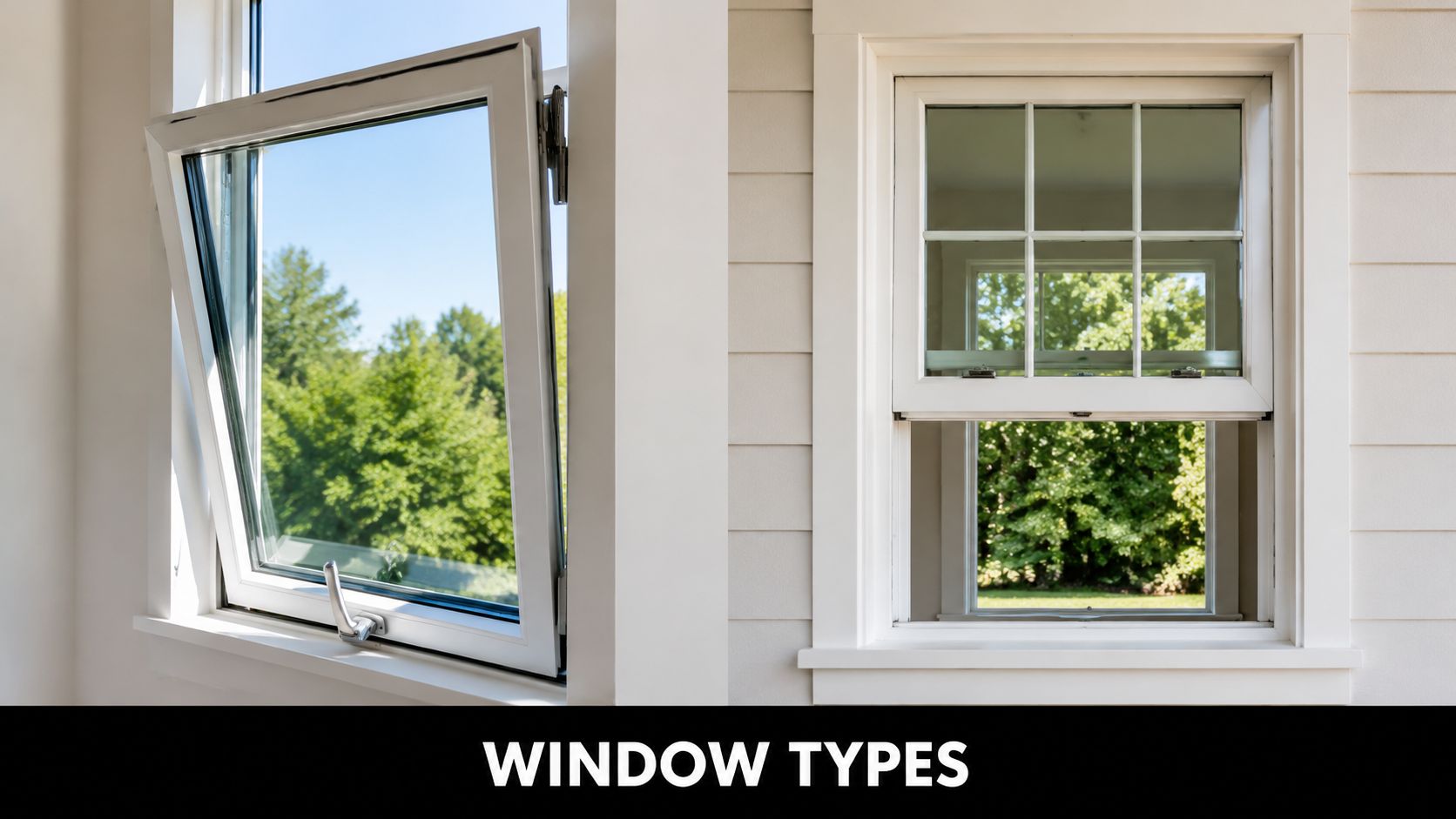
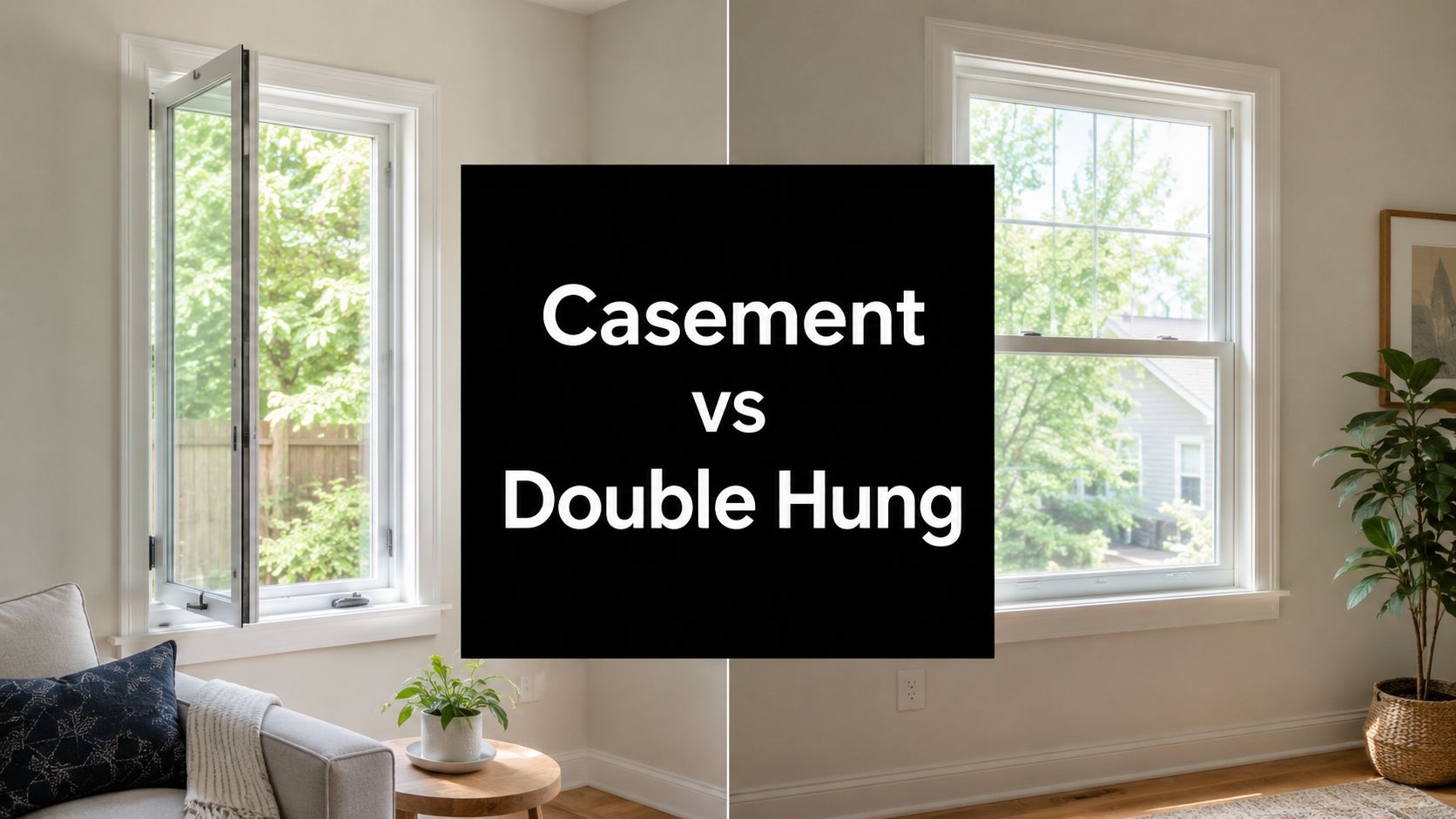
What a casement window is
A casement window is side-hinged and swings outward, usually with a crank. When it closes, the sash pulls tight against the frame. That matters in a place with hot summers, cold snaps, and windy afternoons, because the closing action tends to create a tighter seal than a window that slides.
Casements also give you a cleaner view. There is usually no horizontal meeting rail through the middle, so they work well where homeowners want to frame the foothills, the backyard, or more daylight from a narrower wall space.
The trade-off is practical. An outward-swinging sash can be awkward over a kitchen sink, near a walkway, or anywhere exterior space is tight. Screens also sit on the inside with most casement setups, which changes cleaning and maintenance compared with other styles.
What a double-hung window is
A double-hung window has two sashes that slide up and down. You can open the bottom, the top, or both a little. Many newer models tilt in for easier cleaning, which is one reason homeowners still ask for double-hung windows used in Boise homes, especially on second stories and front-facing elevations.
This style fits a lot of houses in the Treasure Valley. It looks right on traditional homes, older neighborhoods, and remodels where a modern casement would stand out too much. It also gives you controlled ventilation. Opening the top sash can help release warm air without creating as much direct draft at seating level or near a bed.
The compromise is in the design itself. Two moving sashes, a meeting rail, and sliding weatherstripping usually do not seal the same way a compression-style casement does.
Why the mechanics matter
Homeowners often focus on style first. Day to day, the hardware and sash movement usually matter more.
A casement closes by pressing into the frame. A double-hung closes by bringing sliding parts together. That difference affects air leakage, sound control, ease of operation, and how the window behaves after years of dust, sun exposure, and regular use.
In Boise, those details show up fast. West-facing rooms get punished by afternoon sun. Winter drafts are more noticeable in bedrooms and living rooms. During wildfire season, a tighter-closing window can make a real difference when the goal is keeping outside air out, not just opening for a breeze.
Head to Head Comparison Key Differences for Homeowners
A Boise homeowner usually starts feeling the difference between these two window types in the first hard season. It might be a July afternoon on the west side of the house, or a cold January morning in a street-facing bedroom. The style matters, but the daily trade-offs matter more.
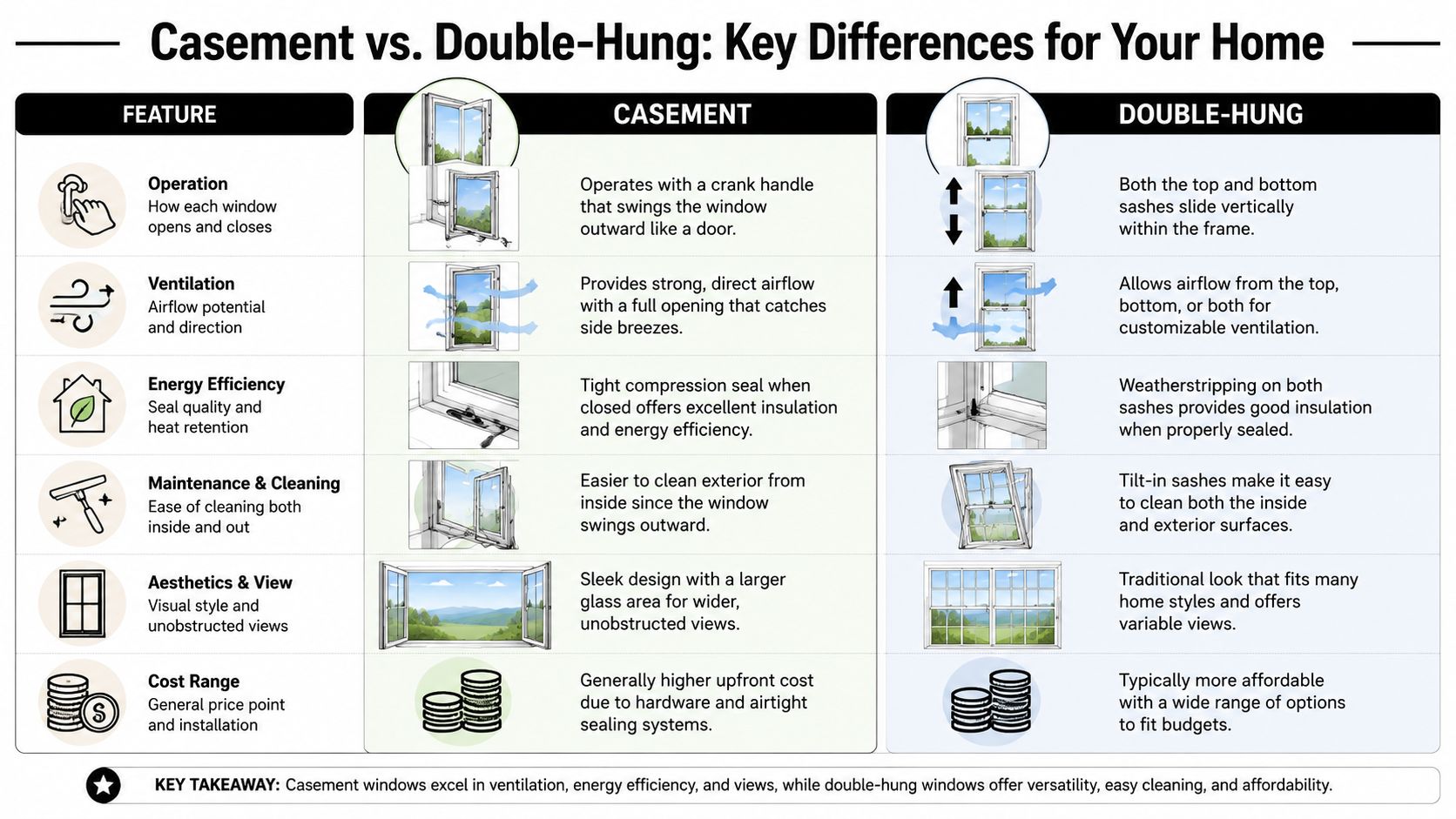
Quick comparison table
| Feature | Casement windows | Double-hung windows |
|---|---|---|
| Operation | Side-hinged, opens outward with a crank | Two sashes slide up and down |
| Seal when closed | Tighter compression-style closure | Sliding contact seals between sashes |
| Ventilation | Opens fully, often pulls in more direct airflow | Allows top, bottom, or split ventilation |
| Cleaning | Depends heavily on placement and exterior access | Often easier to clean from indoors |
| View | More uninterrupted glass | More traditional divided look |
| Style fit | Often works well in modern and transitional homes | Often fits classic and historic styles |
| Cost position | Usually priced higher, especially with larger units or upgraded hardware | Usually more budget-friendly in standard sizes |
Energy efficiency and sealing
This is the clearest performance split.
A casement closes by pulling the sash tight against the frame. A double-hung closes by sliding two sashes into place. In real houses, that usually means the casement has the edge for air control, especially after years of use, dust, and seasonal expansion.
That matters in Boise. In summer, tighter sealing helps hold cooled air inside during long hot evenings. In winter, it helps cut down on the cold draft people notice first near beds, sofas, and dining tables. During smoke season, a tighter-closing window also gives homeowners a better starting point when the goal is keeping outside air out.
A well-built double-hung can still perform well. It just asks more from the weatherstripping, sash alignment, and installation quality.
Ventilation and everyday use
Ventilation is where the decision gets more personal.
Casements are better at flushing a room out fast. Open one on a mild spring day and you get a wide, direct opening that can catch side breezes well. That works nicely in living areas, kitchens, and rooms where stale heat tends to build up by late afternoon.
Double-hungs give you more control. You can lower the top sash to let warm air escape, raise the bottom for fresh air, or use both for a gentler flow. That setup often fits bedrooms and upstairs rooms better, where people want ventilation without a stronger draft blowing straight across the room.
If the house backs up to a busy street or seasonal smoke is a concern, the advantage shifts back toward whichever window stays closed tighter most of the year. Ventilation matters, but Boise homeowners often spend long stretches with the windows shut.
Cleaning maintenance and accessibility
This part gets overlooked until the first time someone has to wash second-story glass or deal with hardware after a few dusty summers.
Double-hungs are usually easier to manage from indoors, particularly on upper floors. Tilt-in versions make routine cleaning simpler, and there is no outward-swinging sash to work around on a walkway, patio, or tight side yard. For many two-story homes, that convenience is a real point in their favor.
Casements have their own advantages. Over a kitchen sink, the crank is often easier to reach than a sash lock and lift rail. In a hard-to-reach corner, that can make the window more pleasant to use every day. Hardware does need to stay adjusted and in good shape, and the sash needs clearance outside to open properly.
Appearance view and room fit
Some homeowners care most about the view. Others care most about matching the house.
Casements give you a cleaner sheet of glass with less interruption through the middle. If a room looks out toward the foothills, a greenbelt, or a backyard you use every evening, that cleaner view is noticeable. You can see examples of casement window designs that fit Idaho homes and compare that look against the lines of your own house.
Double-hungs usually look more at home on traditional elevations. In older Boise neighborhoods, cottages, colonials, and many remodels, they tend to match the scale and character of the exterior more naturally.
The practical answer is room by room. Choose based on how that window will be used, what direction it faces, and how much the house depends on that opening for view, airflow, quiet, or curb appeal.
Boise Specific Considerations Performance in the Treasure Valley
A generic national comparison won't help much if it ignores how Boise homes really behave. The Treasure Valley has hot summers, cold winters, smoke season concerns, big swings between sunny exposures and shaded sides, and neighborhoods with very different traffic and architectural character.
Where Boise weather changes the decision
On paper, it's easy to say one style is “better.” In practice, Boise makes the answer more specific.
For a west-facing room that bakes in late afternoon, the style matters, but so do the glass package and performance upgrades. For a cold north-facing bedroom, the closed-window seal matters a lot more than how charming the window looks from the street. For a room that gets used heavily in shoulder seasons, ventilation strategy can matter just as much as efficiency.
A better Boise-focused guide compares use cases like street-facing bedrooms, sunny west exposures, and noise-prone locations, then ties the choice to measurable efficiency features such as ENERGY STAR 7.0, triple-pane glass, and low-e coatings, as discussed in this Boise-relevant comparison of casement and double-hung windows.
Smoke noise and sun exposure
Wildfire smoke changes how many homeowners think about windows. During smoke events, people often keep windows closed for long stretches. That's when a tighter-closing design can matter more than it does during mild spring weather.
Street noise creates a similar calculation. If the bedroom faces a busier road, the overall build, installation quality, and glass package all matter. In that setting, many homeowners lean toward the style that starts with the stronger closed-window seal, then add glass upgrades based on the room's exposure and noise level.
A few room-by-room observations usually help:
- Street-facing bedrooms: Prioritize the best closed-window performance and glass package you can justify.
- Sunny west-facing rooms: Focus on solar control features, not just frame style.
- Kitchen and breakfast areas: Ventilation convenience often matters more because those rooms get used differently.
- Upper-floor kids' rooms: Ease of cleaning and controlled airflow can move double-hungs up the list.
In Boise, the right window choice is often less about the label on the brochure and more about what the room fights every day: heat, cold, smoke, noise, or awkward access.
Style and room by room fit
The Treasure Valley isn't one architectural style. A North End home, a Meridian subdivision house, and a newer foothills property won't all want the same visual answer.
Double-hungs usually fit older and more traditional exteriors better. Casements often blend naturally into cleaner, newer elevations and can help maximize views where glass area is part of the appeal.
Bedrooms also add a practical layer. Homeowners should always confirm bedroom egress requirements with the installer and local code expectations before committing to any replacement style. That's not a place for assumptions.
Cost ROI and Long Term Value
A Boise homeowner usually feels the budget question first. The difference between casement and double-hung pricing can be manageable on one window and substantial across a full house.
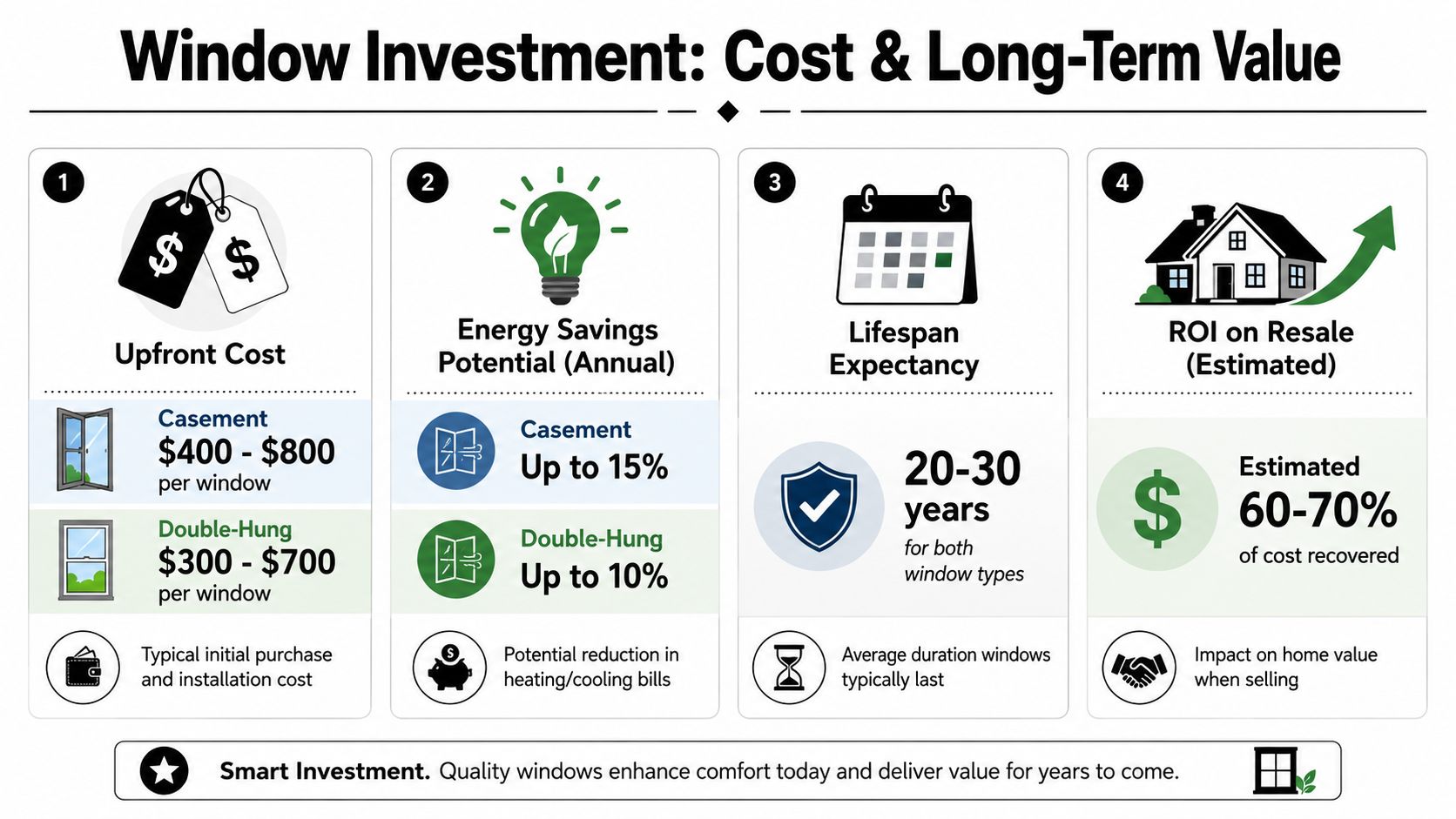
What you pay up front
In the field, double-hungs usually come in lower than casements for a similar opening. Casements cost more because the unit has more hardware to build and more moving parts to support over time, including hinges, a crank mechanism, and multi-point locking components.
That does not mean casements are overpriced. It means the extra cost should buy something you will notice in daily use.
For Treasure Valley homes, that usually comes down to where the window sits and what the room deals with. A west-facing living area that bakes in July, a bedroom that catches winter drafts, or a street-facing room where outside noise carries can justify spending more for the style that better fits the problem. In a hallway, guest room, or upstairs space where cleaning access matters more than maximum sealed performance, a double-hung may be the better buy.
Whole-house replacements make those trade-offs sharper. Many Boise-area projects get better value from a mixed approach than from forcing one style into every room.
Where long term value comes from
Long-term value shows up in comfort, upkeep, and resale fit. Lower utility waste matters, but so does whether the room feels better during a hot August stretch, whether the house stays quieter with the windows closed, and whether you can air out the home during a cool morning without fighting the sash or crank.
I usually tell homeowners to look at payback in two buckets. One is financial. The other is daily use. If a window choice cuts down on drafts, helps during smoke season by sealing tighter when closed, or preserves a foothills view without looking out of place on the house, that value is real even if it does not fit neatly into a spreadsheet.
Homeowners who are weighing project value often look at how window replacement can affect home value and return along with room-by-room performance needs.
A few questions help sort out which option gives better value for your house:
- Which windows are tied to the biggest comfort problem, heat gain, winter chill, noise, or poor operation?
- Are you planning to stay long enough to benefit from better day-to-day performance, or is resale timing the bigger factor?
- Will easier interior cleaning on upper floors save time and frustration year after year?
- Would casements in the hardest-working rooms and double-hungs elsewhere stretch the budget more effectively?
The best return usually comes from matching the window to the room, not from chasing the lowest line-item price.
Making Your Decision A Checklist for Boise Homeowners
Walk through your house on a January morning or during a smoky August week, and the right window choice usually gets clearer fast. The room that always feels colder, the bedroom that catches street noise, or the west-facing living area that heats up before dinner will usually tell you what matters more: tighter sealing, easier cleaning, better ventilation control, or a more traditional look.
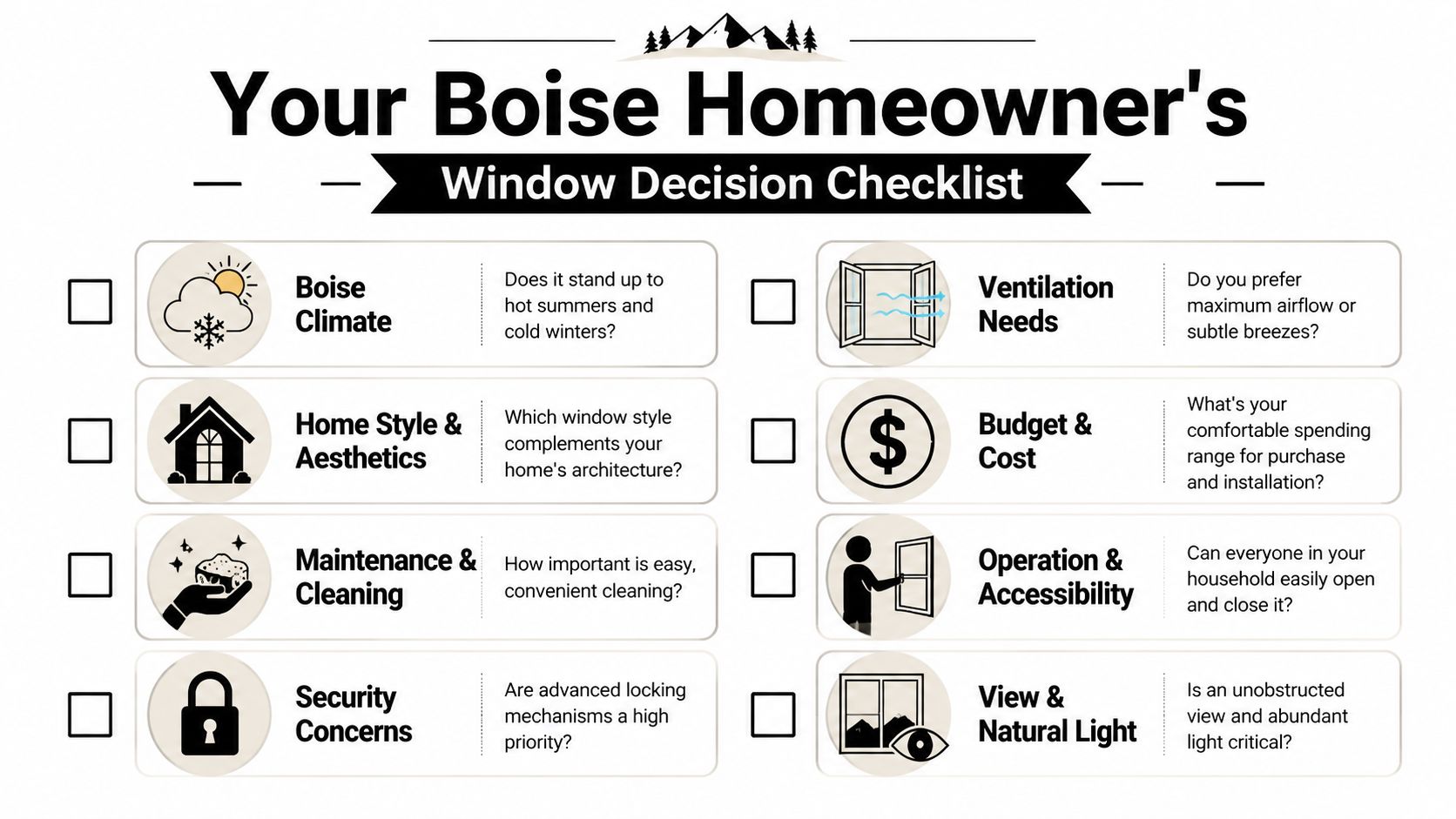
A practical selection checklist
Use this checklist while standing in each room, not from the kitchen table.
- Choose casement first in rooms that struggle with comfort. If a space gets hit by west sun, feels drafty in winter, or needs the tightest shutoff during smoke season, casement usually earns the first look.
- Choose double-hung where day-to-day use matters more than maximum sealing. Second-story bedrooms, kids' rooms, and spots where you want easier interior cleaning often fit double-hungs better.
- Look at the exposure, not just the floor plan. A south or west-facing room in Boise has a different job than a shaded north-side room.
- Account for noise. If the room faces a busier street or picks up neighborhood sound at night, a tighter-closing style can make a noticeable difference.
- Protect the view where it counts. In rooms that look out to the foothills, backyard, or open space, casements often give a cleaner glass area and less visual interruption.
- Match operation to the person using it. Some homeowners prefer a crank over lifting a sash. Others want the simple, familiar feel of a double-hung.
- Keep the exterior style in mind. Double-hungs usually fit older or more traditional Boise homes more naturally. Casements often look better on cleaner-lined remodels and newer elevations.
Best use case: Casements usually make more sense where Boise weather is the problem. Double-hungs usually make more sense where access, cleaning, and classic appearance drive the decision.
When a mixed window plan makes sense
A mixed plan is often the smartest answer.
I see this work well in Treasure Valley homes that deal with several conditions at once. West-facing common areas may benefit from casements because those rooms take the hardest heat load and often need the best closed-window performance. Upstairs bedrooms and bathroom windows may make more sense as double-hungs because they are easier to live with and easier to clean from inside.
That kind of split is practical, not fancy. It lets each room solve its own problem without forcing one window style onto the whole house.
Your Next Steps Partnering with a Local Expert
Once you've narrowed the choice, the next step isn't picking a brochure. It's getting the home evaluated correctly. Window style is only part of the result. Measurements, installation quality, room exposure, and glass package matter just as much.
Ask any installer a few direct questions:
- Which rooms would you put casements in, and why?
- Which rooms are better served by double-hungs?
- How are you accounting for west sun, winter comfort, smoke season, and street noise?
- What performance upgrades make sense for my house, and which ones aren't worth paying for?
- How will you confirm code and egress requirements where needed?
A good installer should give you clear answers without pushing one style everywhere. That's usually the difference between a project that just looks new and one that fixes the problems that made you start shopping in the first place.
If you want help sorting out the right mix of casement and double-hung windows for your Boise-area home, C & C Windows & Doors can walk through the house with you, assess each room's needs, and recommend a practical solution built for Idaho weather. Their local team offers in-home consultations, custom measurements, energy-efficient options, and professional installation focused on long-term comfort, appearance, and value.