
If you're standing near a bedroom window in January and you can feel cold air on your hand, you already know the problem. In July, it flips. The sun pounds that same side of the house, the AC keeps running, and the room still feels off. That's usually when Nampa homeowners start looking seriously at replacement windows.
Window replacement in Nampa, ID isn't just about making the house look newer. It's about fixing comfort problems that old glass, worn seals, weak frames, and sloppy installation create. In a place with cold winters, hot summers, and a lot of sun, your windows have to do real work every day.
That's also why this project keeps coming up for Treasure Valley homeowners. Nampa's population is 114,602, and the Boise-Nampa metro is an estimated 852,423, which supports a large remodeling market. Local cost data also shows window replacement in Nampa typically ranges from $279 to $1.1k per project, with labor reported at 7% below the national average according to the local market snapshot summarized by Nampa Quick Facts. In plain English, there's steady demand here, and homeowners have good reason to treat old windows as a practical upgrade, not a luxury.
Table of Contents
- Your Guide to Window Replacement in Nampa
- Do Your Nampa Windows Need Repair or Replacement
- How Better Windows Conquer the Idaho Climate
- Decoding Window Technology for Nampa Homes
- What to Expect on Window Installation Day
- Your Checklist for Choosing a Nampa Window Contractor
- Frequently Asked Questions About Nampa Window Replacement
Your Guide to Window Replacement in Nampa
Window shopping isn't usually an activity prompted by Saturday boredom; instead, it's driven by everyday household issues. A room feels colder than the rest. Condensation keeps showing up. The frame looks tired. The sash sticks. The outside noise seems louder than it should.
That's the right way to think about this project. Good replacement windows solve a house problem. They're part of the thermal envelope, part of the water management system, and part of the way your home feels to live in.
Why this matters in Nampa
Nampa has a big enough housing base that replacement work stays busy. That matters because busy markets create a mix of good installers, rushed installers, premium products, commodity products, and a lot of confusing quotes. If you don't know what you're comparing, it's easy to buy on price and end up paying twice.
Here's my advice. Ignore the shiny brochure first. Look at the house.
- Cold rooms in winter: That usually points to weak insulation value, air leakage, or both.
- Overheated rooms in summer: That often means solar gain is getting through the glass and frame assembly.
- Fogged glass or failing operation: That's usually a sign the window has moved past a simple tune-up.
- Visible frame wear: Paint failure, soft wood, swelling, and recurring water issues don't fix themselves.
Practical rule: If your windows are affecting comfort every day, this isn't a cosmetic project anymore.
What homeowners should focus on first
The smartest starting point is simple. Figure out whether you need repair, insert replacement, or full-frame replacement. Then make sure the product you choose is built for Idaho conditions, not just marketed as “efficient.”
A lot of window replacement Nampa ID searches lead to generic pages that all sound the same. The useful questions are more specific. Will the new unit control winter heat loss well? Will it handle summer sun without darkening the room too much? Will the installer flash and support it correctly so the rated performance shows up after installation?
That's where homeowners either make a solid long-term decision or buy a label and hope for the best.
Do Your Nampa Windows Need Repair or Replacement
Start with the failure, not the sales pitch
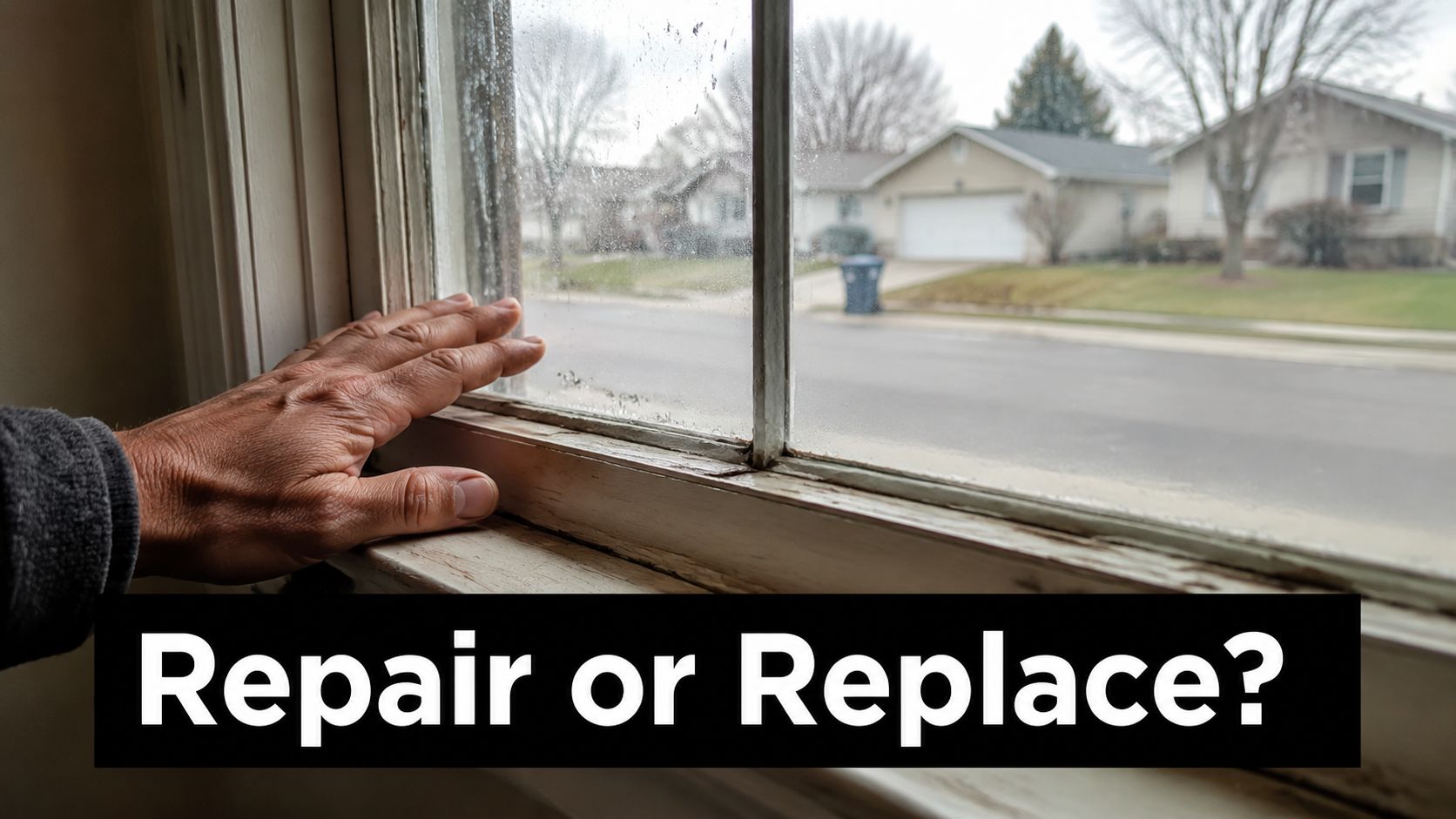
Not every bad window needs full replacement. Some do. Some don't. The honest answer depends on what has failed.
Independent consumer guidance says full replacement is usually justified when frames are rotted, units are drafty, or repeated failures are driving energy loss, and it frames the primary homeowner question as whether you need repair, an insert replacement, or a full-frame replacement for climate-related problems like winter drafts and summer solar gain, as discussed by Sweet Windows on repair versus replacement decisions.
That's the framework I'd use in Nampa too.
Check your windows in this order:
- Frame condition: If the frame is soft, swollen, rotted, or visibly broken down, repair usually stops making financial sense.
- Air movement: If you feel drafts around a closed, locked unit, the problem is bigger than appearance.
- Recurring failure: If locks, balances, seals, or operation keep failing, the window is telling you it's at the end of its useful life.
- Glass condition: Fogging between panes points to a failed insulated glass unit. Sometimes that can be addressed at the glass level, but not if the rest of the unit is also failing.
- Seasonal comfort: One room freezing in winter and overheating in summer usually means the current window package isn't doing its job.
For a closer breakdown of the decision, this guide on when to replace windows vs repair them is worth reading before you get quotes.
When repair still makes sense
Repair is still a smart move in a few common situations. A broken lock. Minor hardware trouble. A limited seal issue. A component problem on an otherwise solid frame. If the core window is still sound, replacing one part may be the better spend.
But homeowners get in trouble when they keep patching a failing unit because each individual repair looks cheaper. Over time, repeated service calls can cost more than solving the actual problem.
A drafty window with a tired frame is not a hardware issue. It's a system failure.
Here's the simple filter I'd use:
| Condition | Better path |
|---|---|
| Minor hardware problem on solid frame | Repair |
| Single issue with otherwise decent unit | Repair or component replacement |
| Drafts plus frame wear | Replacement |
| Rot, repeated leaks, or recurring failures | Full replacement |
If you're torn, don't ask, “Can this be fixed?” Ask, “Will fixing this stop the problem for good?” That question saves people a lot of money.
How Better Windows Conquer the Idaho Climate
What old windows get wrong
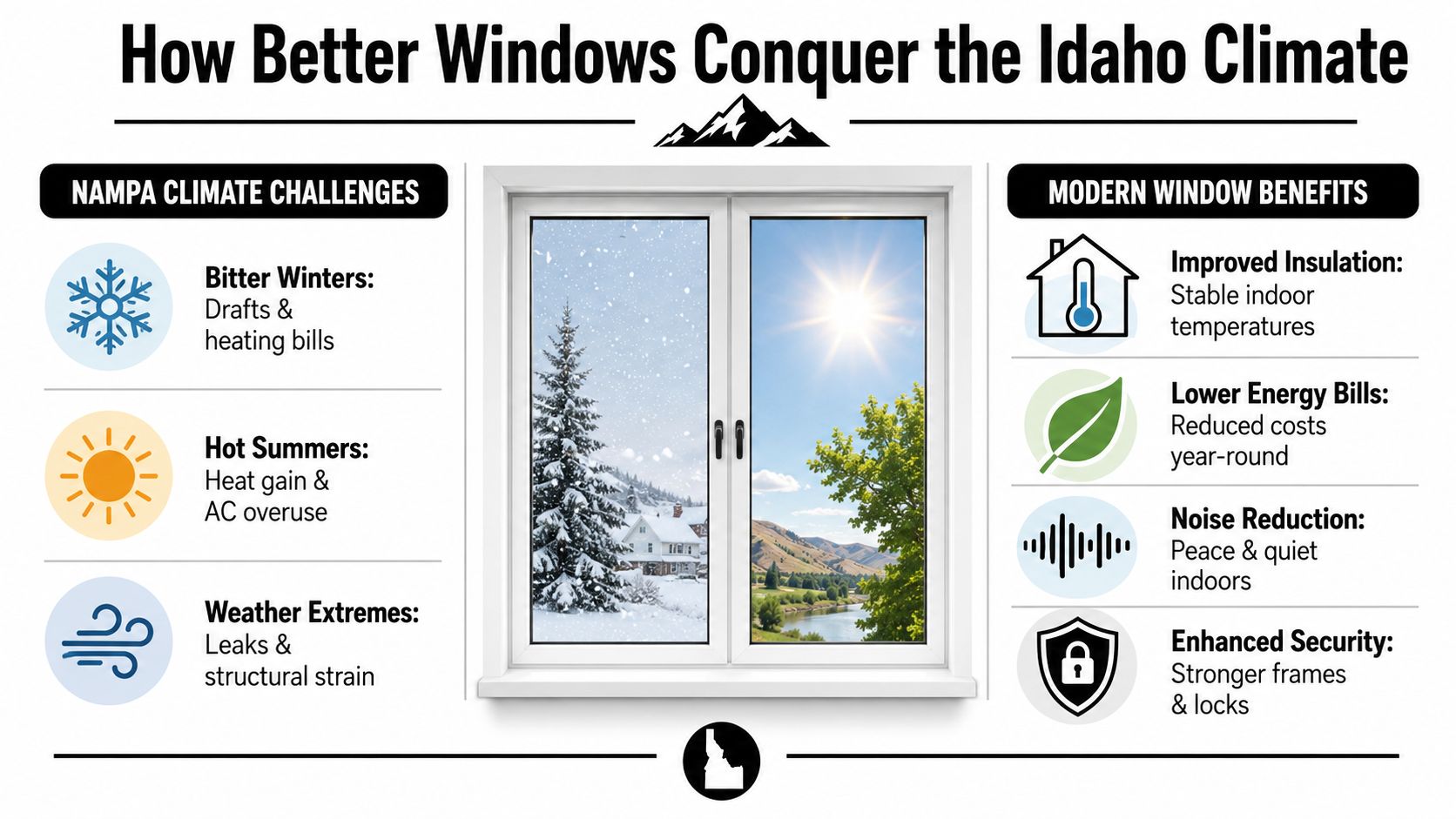
Nampa homes deal with both ends of the weather swing. Winter asks your windows to hold heat in. Summer asks them to control solar gain without turning the house into a cave. Older windows usually fail at both.
That's why “energy efficient” can't just be a sticker on a brochure. The actual test is whether the house feels steadier from room to room and whether your HVAC system gets a break.
Nationally, ENERGY STAR says that if all single-family homes built before 2000 replaced their windows with certified models, homeowners could save about $27 billion annually in energy costs. The same source says certified windows can reduce household energy bills by an average of 12% nationwide, according to ENERGY STAR window performance guidance from Energy Saver.
Those are national numbers, not a promise for your specific house. But they show why this category matters.
What modern glass packages actually improve
In real homes, the benefits show up in ways people notice quickly:
- More even temperatures: Bedrooms, living rooms, and bonus rooms stop feeling like separate climates.
- Less edge-of-window chill: You don't avoid sitting near the glass in winter.
- Better summer comfort: Sun-facing rooms stay more manageable.
- Less outside noise: Better glass packages and tighter assemblies can quiet a room noticeably.
- Better interior protection: Modern coatings can help limit the harsh sunlight that beats up floors and furnishings.
A lot of Nampa homeowners start by chasing lower utility bills. Fair enough. But comfort is usually what convinces them the job was worth it.
For a local look at what high-efficiency options are designed to do in Idaho homes, this guide to energy-efficient windows in Idaho lays out the practical differences in glass packages and performance upgrades.
If a room is uncomfortable in both January and July, the window assembly is almost always part of the reason.
The mistake I see most often is homeowners buying replacement windows as if all insulated glass units are basically the same. They're not. Frame design, glass coatings, gas fill, and installation quality all decide whether the upgrade changes how the house performs.
Decoding Window Technology for Nampa Homes
The label matters more than the sales pitch
If you want better results in a Nampa home, stop judging windows by the frame color and start judging them by the performance package.
The current benchmark to watch is ENERGY STAR 7.0, which raises the bar for window performance and makes climate-zone compliance more important than generic energy-saving claims, as described in EcoWatch's Nampa replacement window overview. That matters because Idaho homeowners shouldn't buy on vague language. They should ask which glass package is appropriate for local conditions and whether triple-pane really offers enough value over a high-performance double-pane option for that part of the home.
For Nampa, the most important technical number to pay attention to is U-factor. Lower U-factor means less conductive heat loss. In plain language, it tells you how well the whole window assembly resists losing indoor heat through the unit. That's a big deal in a climate where winter performance matters.
Here's what the major upgrades do:
- Low-E coating: Think of this as a smart filter on the glass. It helps control heat transfer without making the room feel closed off.
- Argon gas fill: This sits between panes and improves the insulating performance of the sealed unit.
- Triple-pane glass: Adds another layer to improve insulation and often help with noise control.
- Better frame design: A strong frame with solid thermal performance helps the glass package do its job.
- Tighter locking and sash systems: These help the unit close and seal the way it should.
Window Performance Upgrade Options
| Feature | Standard Double Pane | High-Performance (Low-E & Argon) | Triple Pane (Max Performance) |
|---|---|---|---|
| Glass package | Basic insulated glass | Insulated glass with upgraded coating and gas fill | Three layers of glass with upgraded performance package |
| Winter comfort | Basic | Better heat retention | Strongest heat retention |
| Summer control | Basic | Better solar control | Strongest overall control when properly specified |
| Noise reduction | Limited | Better | Usually strongest |
| Best fit | Budget-focused replacement | Most homeowners who want meaningful efficiency gains | Homeowners prioritizing top-tier comfort and performance |
Don't buy upgrades blindly. Put them where they matter most. Bedrooms with winter chill, west-facing rooms with strong afternoon sun, and street-facing rooms often benefit the most from the better package.
If you want a practical buying rule, it's this: choose the window by room exposure and comfort problem, not by showroom talk. That's how you avoid overbuying where you don't need it and underbuying where performance matters.
What to Expect on Window Installation Day
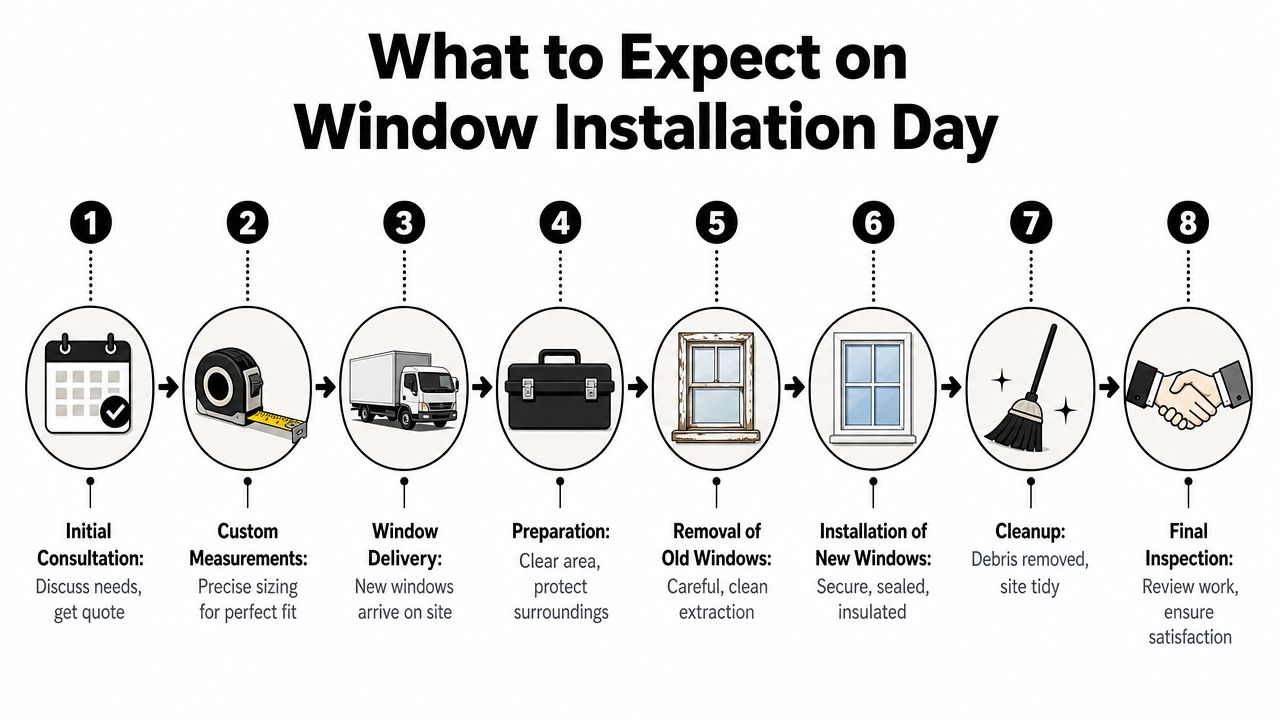
A lot of homeowners worry more about installation day than the product itself. Fair. The wrong crew can turn a good window into a bad result.
What a clean install looks like
A professional install usually feels organized, not chaotic. The crew confirms openings, protects floors and work areas, removes old units carefully, and keeps the worksite controlled instead of piling debris all over the house.
You should expect a process that looks something like this:
- Arrival and walkthrough so everyone agrees on the scope.
- Prep inside the home with basic protection around the work area.
- Old window removal without unnecessary damage to surrounding surfaces.
- Opening inspection to check for hidden issues before the new unit goes in.
- Set, shim, and secure the replacement unit correctly.
- Seal and finish the interior and exterior details.
- Operational check to confirm the sash, locks, and screens work right.
- Cleanup and final review before the crew leaves.
The details that prevent callbacks
Installation often determines the success or failure of the job. Proper installation requires supporting the unit on the sill, using shims as needed, and protecting the sill with a sill pan or rigid sill flashing to preserve drainage and prevent concealed water damage. If the sill support or flashing is wrong, the assembly can leak air or water, which hurts both efficiency and durability, according to the window replacement installation specifications in the field guide.
That's not trivia. That's the difference between a window that performs and one that becomes a problem.
A window can have a strong label rating and still fail in the field if the installer ignores support, shimming, or drainage.
Ask the crew leader what they do at the sill. Ask how they handle shimming. Ask how they protect drainage. If the answer sounds vague, that's a problem.
Homeowners tend to focus on the visible trim line. Installers focus on fit, support, level, plumb, sealing, and water management. The second group is who you want doing the job.
Your Checklist for Choosing a Nampa Window Contractor

A contractor decides whether your new windows perform like they should or disappoint you by the first hard winter. In Nampa, that means more than showing up on time and leaving clean trim. You need someone who understands how our summer sun, winter cold, and wind exposure affect glass choice, frame performance, and installation details.
Start with the conversation. If a contractor talks only about price, brand names, or “energy savings” in general terms, keep looking. A good contractor should explain which features matter for this climate, especially whether the quote includes ENERGY STAR 7.0-compliant options, the actual glass package, and the performance ratings behind it.
Questions worth asking before you sign
Ask direct questions and expect direct answers.
- How long have you been replacing windows in Nampa and the Treasure Valley? Local experience matters because older homes, stucco openings, and sun-beaten elevations all create different problems.
- Are you insured, and can you prove it? Get confirmation before anyone starts work.
- Who is doing the installation? Ask whether the crew is in-house or subcontracted, and who is responsible if something goes wrong.
- How do you recommend the right glass package for this house? They should be able to explain low-E coatings, spacer systems, and whether the window package fits Nampa's climate instead of handing you a generic brochure.
- Can you show me the label details? Ask to see the NFRC label or product performance information so you can verify U-Factor and Solar Heat Gain Coefficient, not just take a sales pitch at face value.
- What happens if you find rot, water staining, or frame damage after removal? You want a clear process, not a surprise change order with no explanation.
- What do your labor and product warranties each cover? Those are two different protections.
If you want a practical way to compare service models, read this guide on choosing between a local installer and a big-box window seller. It helps you see who is measuring, ordering, installing, and servicing the job after the sale.
What a useful quote should include
A quote should let you compare one contractor to another without guessing. If key details are missing, the low number usually gets made up somewhere else.
Look for these items:
- Exact window count and locations. Each opening should be identified clearly.
- Window style and frame material. Vinyl, fiberglass, and composite do not perform the same way.
- Glass and efficiency details. The quote should identify the glass package and give you enough information to verify the window meets the performance level you want for Nampa.
- Installation method. Insert replacement and full-frame replacement should never be treated like the same job.
- Exterior and interior finish work. Trim, capping, sealants, touch-up, and debris removal should be listed.
- Warranty terms in writing. Ask who handles service calls and glass failure claims.
- Payment schedule and financing terms. Read that part carefully before you sign.
C & C Windows & Doors is one company homeowners in this market may compare. They offer replacement windows and doors in the Treasure Valley, including Nampa, with custom measurements, ENERGY STAR 7.0-compliant options, and product and labor warranty coverage. The smart move is to compare that kind of detail across every bid.
The best quote is the one you can verify.
Frequently Asked Questions About Nampa Window Replacement
Do I need to replace every window at once
No. Sometimes a full-house project makes sense. Sometimes it doesn't.
If your worst-performing windows are all on one exposure, or if a few rooms are creating most of the comfort complaints, start there. Prioritize the windows with visible deterioration, chronic drafts, and the biggest seasonal comfort problems. A phased approach can be perfectly sensible if the plan is intentional.
Is a lifetime warranty worth caring about
Yes, but only if you read what it covers.
Homeowners hear “lifetime warranty” and assume everything is protected. That's not always true. Ask whether the warranty covers the product, the installation labor, hardware, insulated glass failure, and service response. A short, clear explanation from the contractor is worth more than a glossy handout.
How long does the process usually feel from your side
Most homeowners experience it in stages. First comes the in-home consultation and measurements. Then the windows are ordered to fit the home. After that comes installation, cleanup, and a final review of operation and finish details.
The exact timeline varies by product, schedule, and scope, so any contractor promising a one-size-fits-all timeline before measuring the job is guessing.
Should I choose insert replacement or full-frame replacement
It depends on the condition of the existing frame and surrounding structure. If the frame is solid and the opening is suitable, an insert replacement can be a clean solution. If the frame has deterioration, water issues, or structural concerns, full-frame replacement is often the smarter move.
Many homeowners make the wrong call by focusing only on short-term price. The cheaper method isn't cheaper if it leaves bad materials in the wall.
What matters most for Nampa homes
If I had to narrow it down, I'd focus on four things:
- A window package matched to Idaho conditions
- A low U-factor and credible efficiency package
- Installation details that protect drainage and air sealing
- A contractor who explains repair versus replacement fairly
That's what makes window replacement Nampa ID worth doing. Not the sales pitch. Not the showroom sample. The finished result in your house, through winter and summer.
If your current windows are drafty, fogged, hard to operate, or just not keeping up with Nampa weather, getting a professional opinion is the next logical step. A good consultation should tell you what can be repaired, what should be replaced, and which performance upgrades are worth paying for in your specific home.
If you want a straightforward second opinion, C & C Windows & Doors offers free in-home consultations for Treasure Valley homeowners who want clear answers on repair vs. replacement, ENERGY STAR 7.0 window options, and what installation approach makes sense for their Nampa home.